Which craft fits depends on one thing: what your baby’s hand can do today.
A palm that will sit still for a stamp suits the handprint vase, tray, canvas or clay slab, while a baby who squirms can make coffee filter flowers or have their hand traced for a paper bouquet.
The ideas run from a paper bouquet that needs no paint to a clay slab that keeps the print as a dent, so the choice is really about how much wet mess you want on the high chair.
1. Coffee Filter Flowers
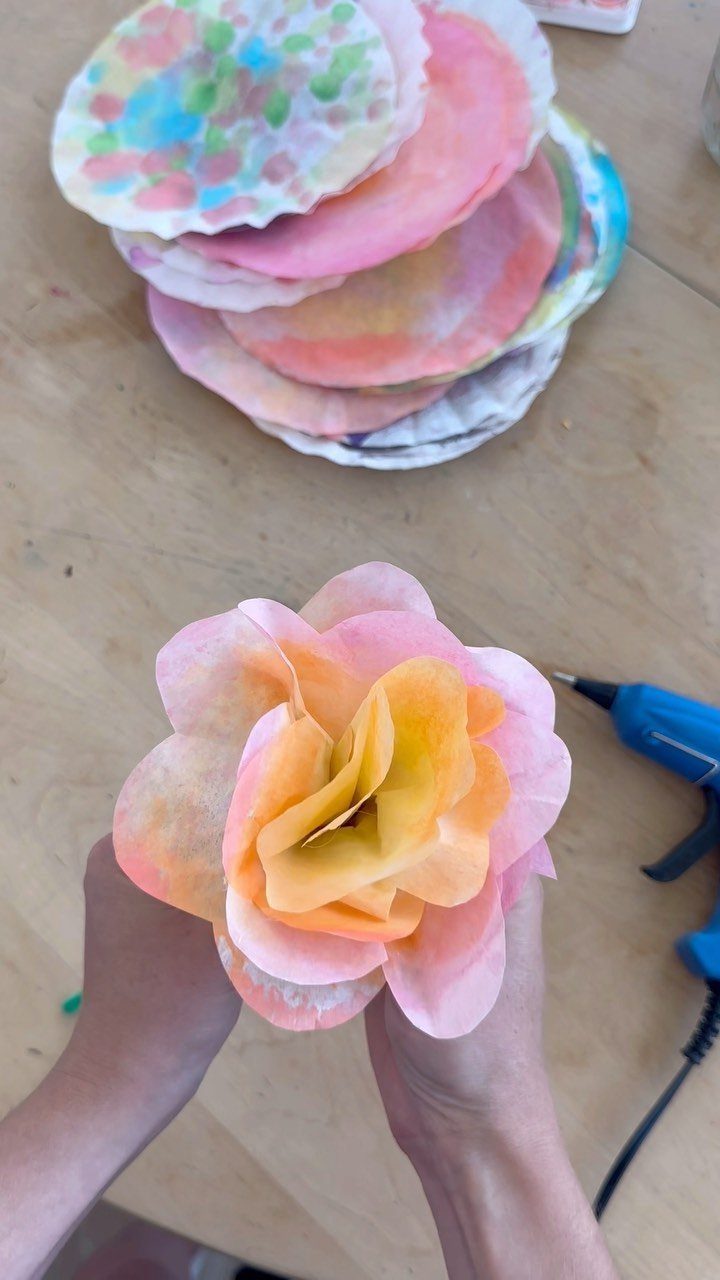
Coffee filters take color well, which is why this craft works for a baby who can only make a mess.
Let your little one smear or dab washable markers or paint on a few filters, then gather each one at the center into a flower.
A glue gun finishes the job faster than white glue, but keep it to the adult’s side of the table.
Two or three tints per flower, pink and orange as here, give the layered look. Make a handful and Mom gets a bouquet.
2. Handprint Ceramic Vase
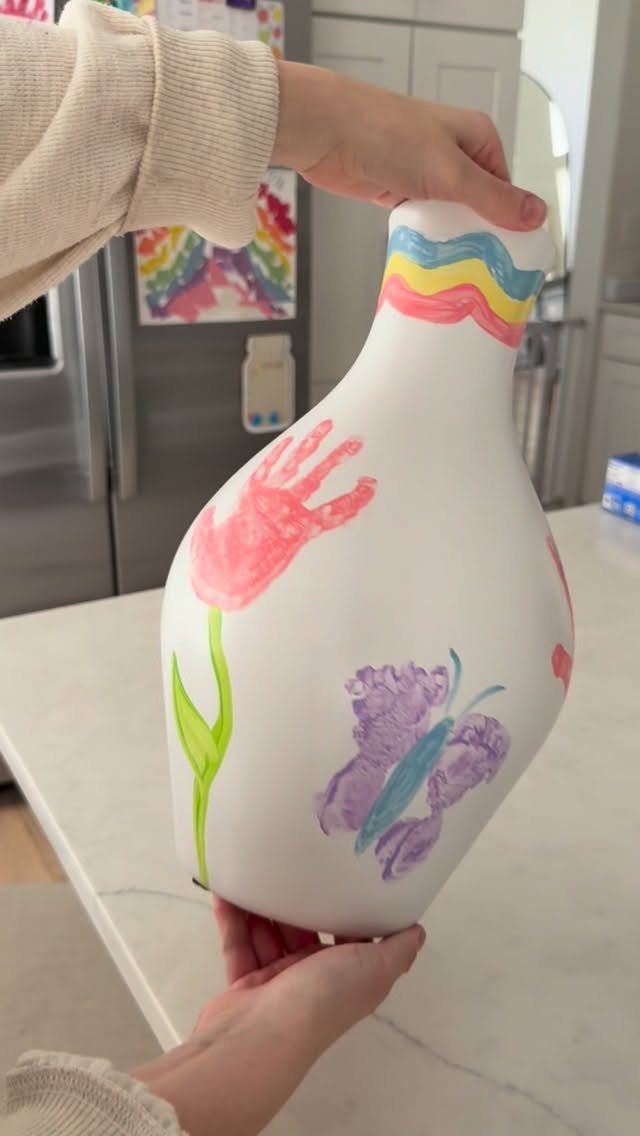
Once a small palm is pressed into pink paint and stamped on its side, an ordinary white vase turns into a keepsake.
The handprint reads as a flower head, so all you add afterward is a stem, leaves and whatever filler you like.
Butterflies and stripes, as on this one, are best painted by an adult after the print, since a baby will not hold still for details. I would stamp first, then decorate around it.
3. Infant Handprint Ceramic Tray
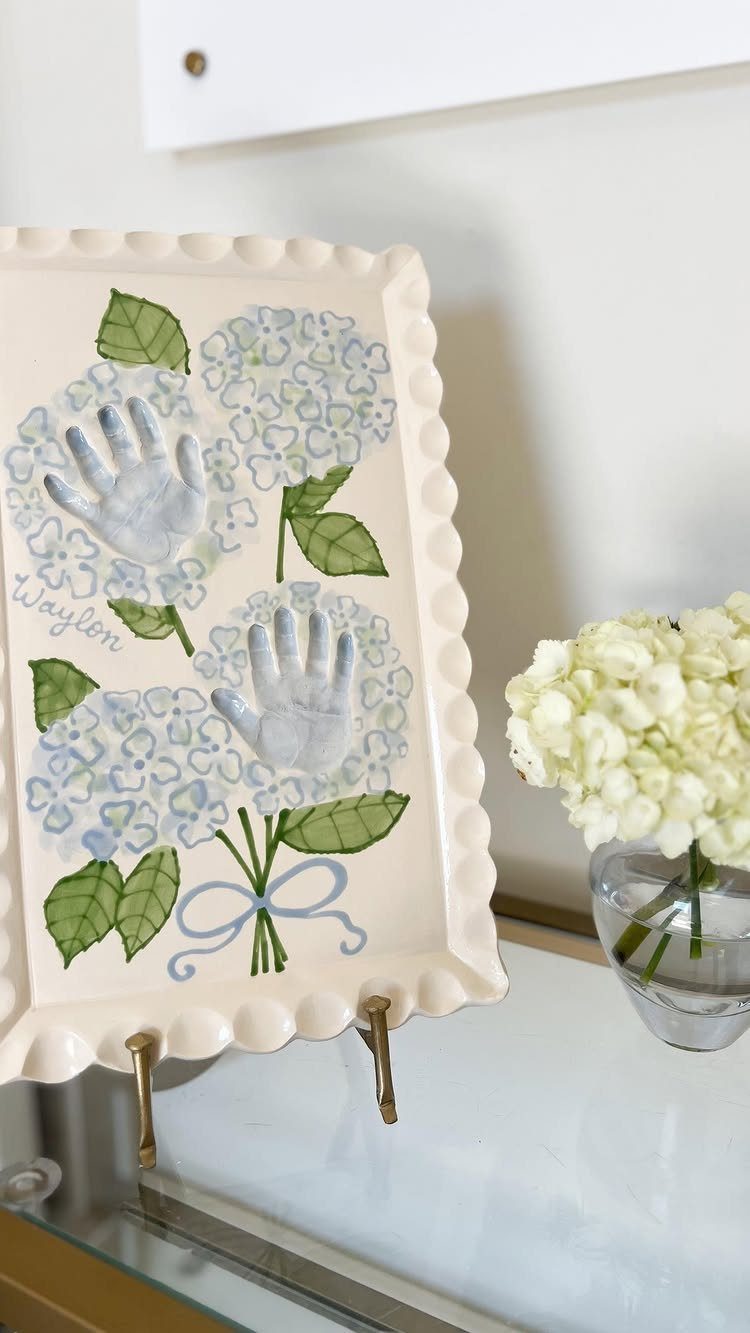
2 tiny handprints can become hydrangea blooms, and that is the best reason I know to choose a tray over a card.
Each print supplies a cluster of petals; dab blue in a few shades to build the rounded head, then add green leaves around it.
A scalloped white edge frames the painting nicely. Write the baby’s name and the year in a spare corner before you finish, so the date is never a guess later.
4. Handprint Flower Card
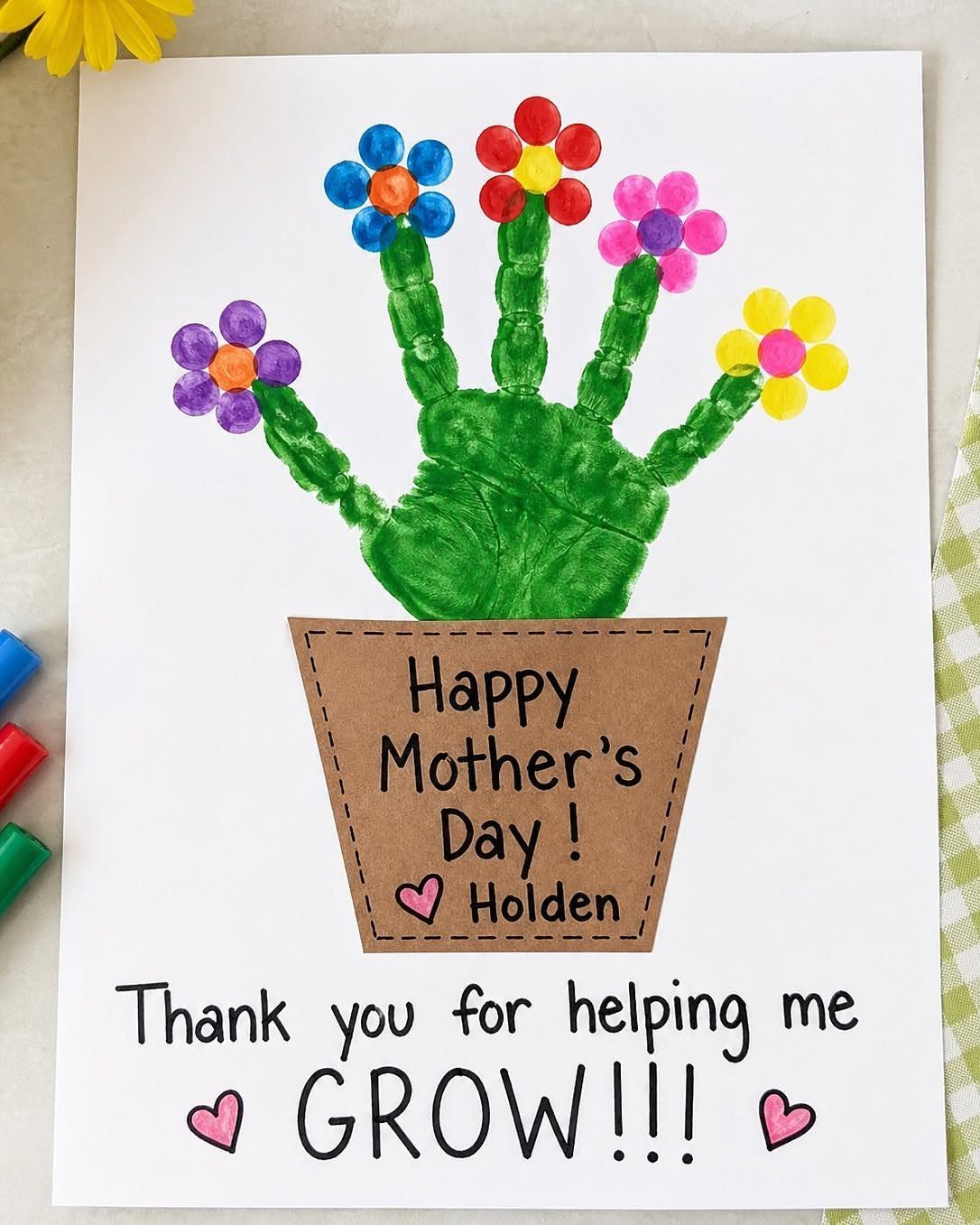
Greeting cards have the lowest barrier of any craft here: paper, green paint and a few ink colors.
Press the baby’s hand in green with fingers up, so they read as stems, then add thumbprint flowers on top in different colors.
Draw a brown pot at the base, and a caption such as "Thank you for helping me GROW" gives the card its punch. Wipe the hand clean right after stamping.
5. Handprint Watering Can
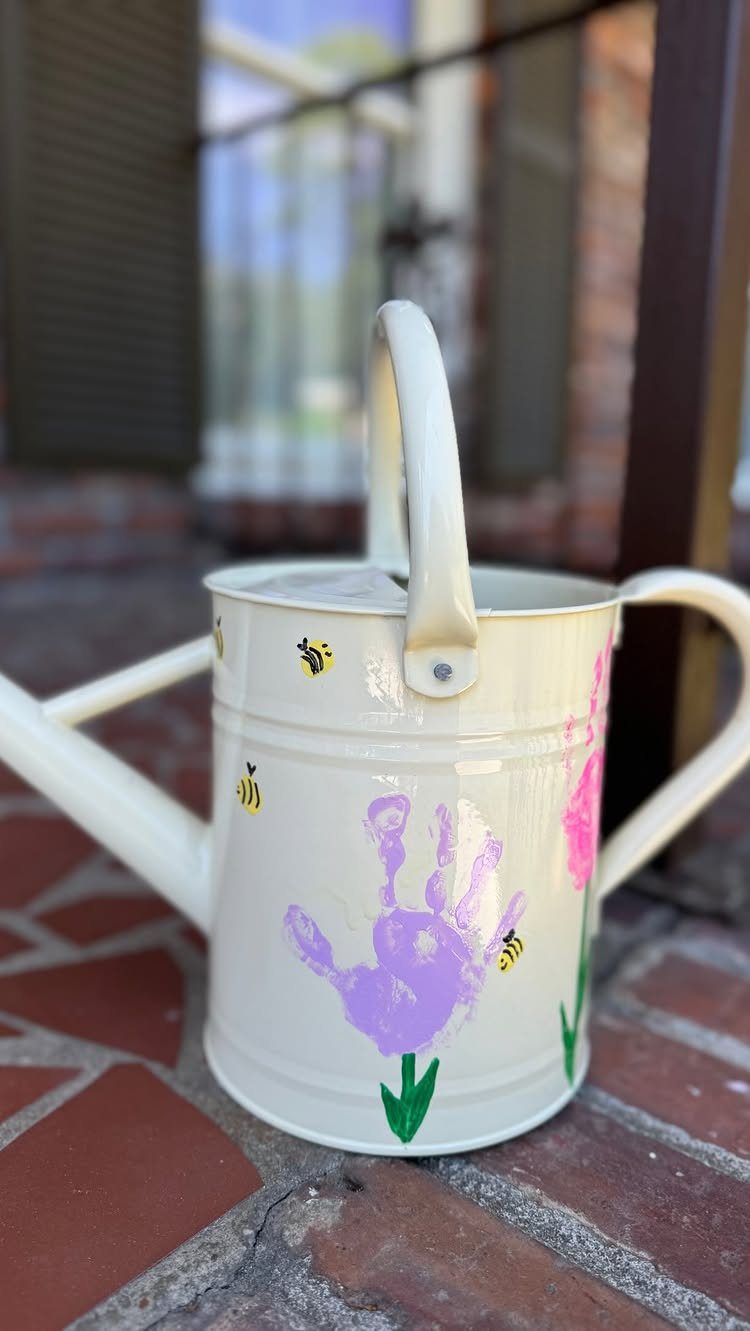
A white metal watering can gives a bold handprint a clean background, and purple stands out on it. Stamp the palm first, then paint stems in green from each finger and add small yellow bees around the blooms.
This one is meant to be used or displayed in the garden, so I would pick a paint made for metal. Practice the stamp on paper first, because you get one try on the can.
6. Handprint Giraffe Keepsake Page
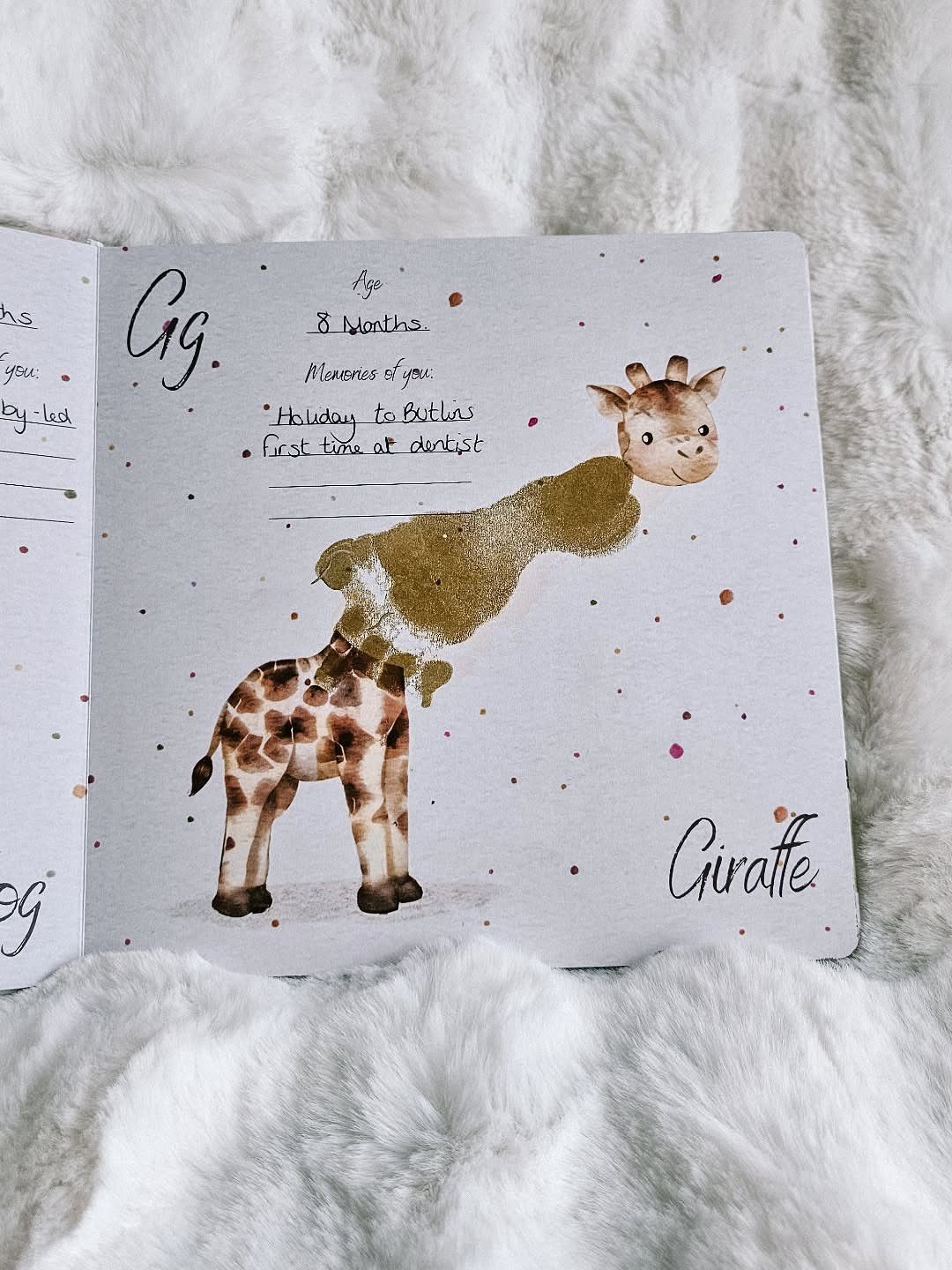
A memory book page turns a gold handprint into a giraffe, and it needs very little paint. Stamp the hand, then add ears, spots and legs with a pen once it dries.
Write the animal’s name and a few notes about your baby’s age and favorite things beside it. Gold looks richer than yellow on a white page, and an older baby’s bigger hand makes a better giraffe.
7. Paper Handprint Flower Bouquet
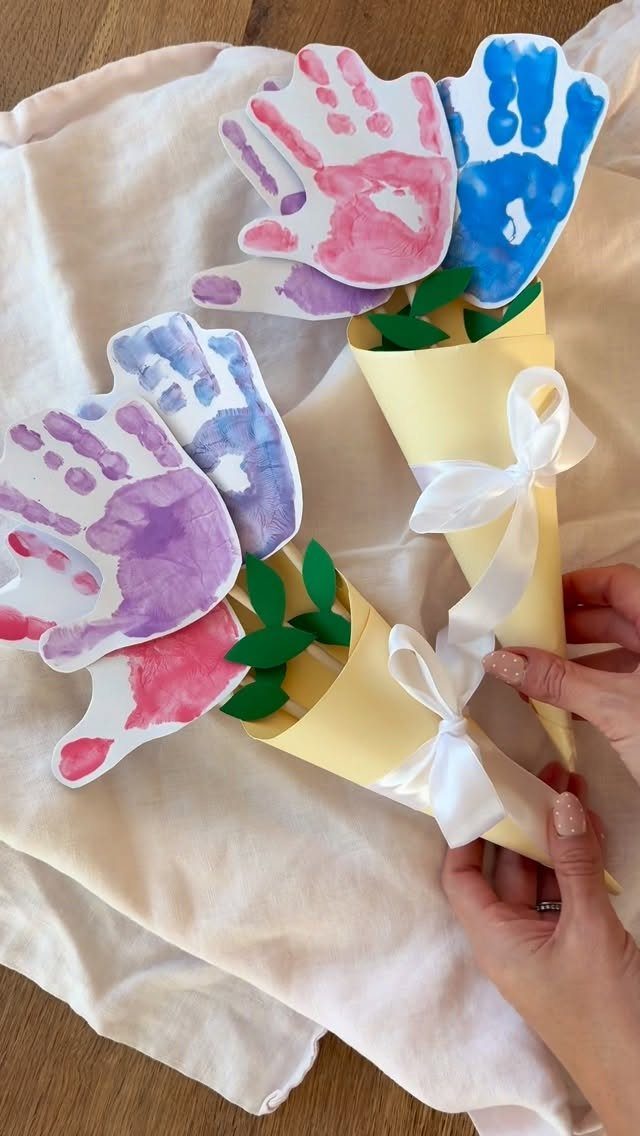
Cut the handprints from colored paper and the bouquet never needs a drop of paint or a wet palm.
Trace the baby’s hand with your own steady grip, cut out a few in pink, blue and purple, and tuck them into a cone rolled from yellow paper.
Tie the cone with a white ribbon so it looks like a real flower wrap. I would trace on cardstock rather than thin printer paper, since the cutouts stand up better.
8. Pressed Flower Handprint Frame
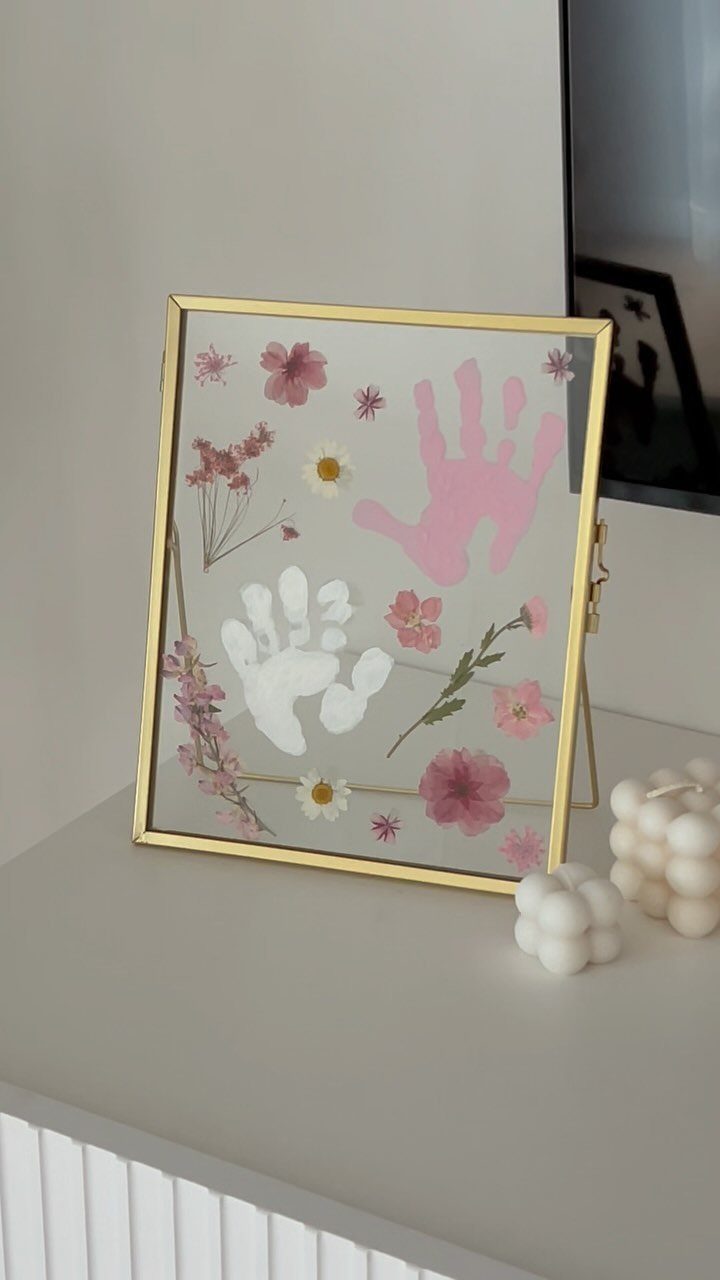
A glass frame lets pressed flowers and two small handprints share one display, and I like it because the print goes on paper, not on anything fragile.
Stamp one hand in pink and one in white, let both dry fully, then arrange dried flowers around them before closing the frame.
Pressed flowers are flat and light, which suits a frame far better than fresh blooms. Lay everything out on the backing first, so you can shift the pieces before committing.
9. Stamped Clay Handprint Keepsake
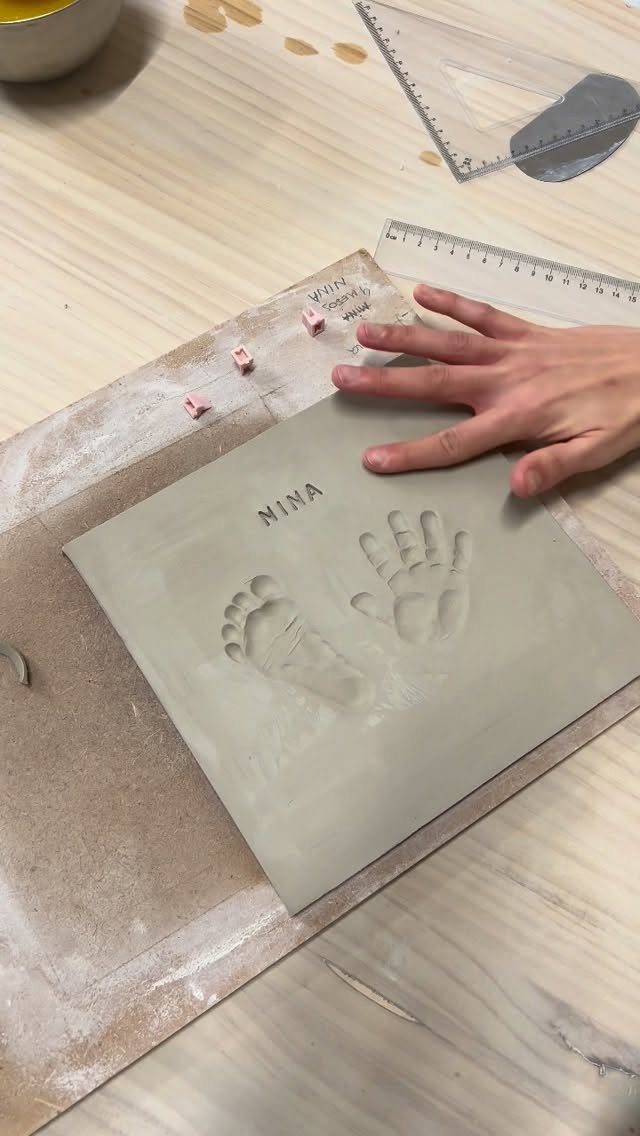
A clay slab keeps the handprint as a physical dent, which paint on paper cannot do. Roll the clay into a square, press the hand and foot in gently, then stamp the baby’s name below with letter stamps.
Smooth the surface first, because any ridge shows up in the print. Add the name before the clay firms up, since letters pressed into dry clay crack the edge.
10. Canvas Handprint Flowers
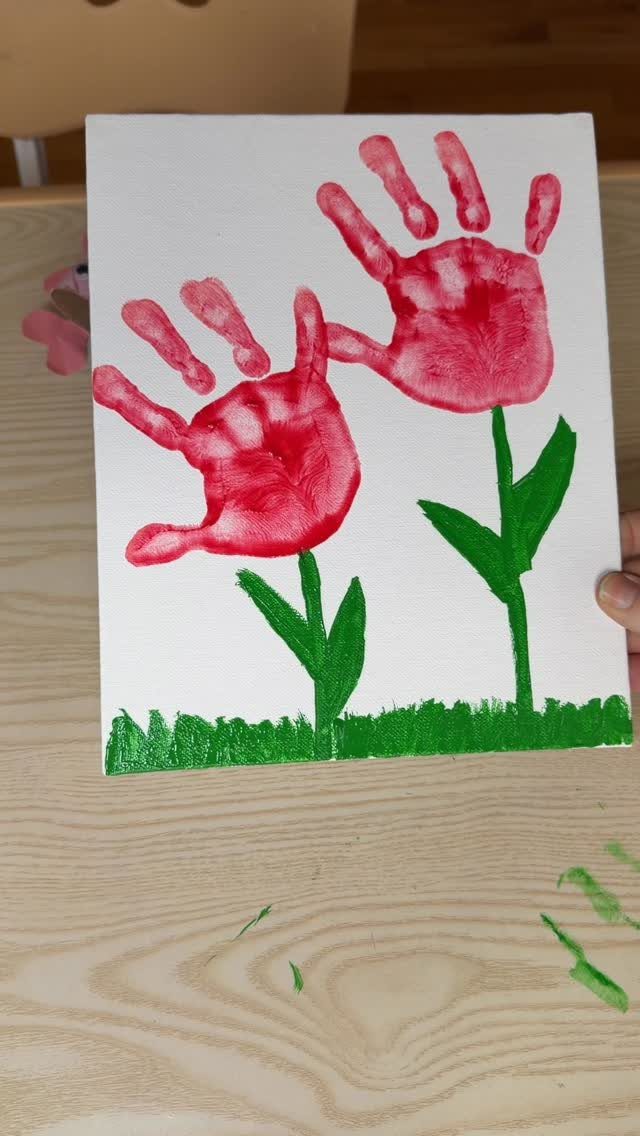
Red handprints on white canvas look bold from across a room, and that is why I would pick red over a pastel.
Stamp 2 hands side by side as the blooms, then paint green stems and a strip of grass underneath once the red is dry.
Painting the stems after the prints keeps them from smearing into the petals. Set the canvas flat while you stamp, so the baby’s hand presses evenly.
Benefits of Mother’s Day Crafts
A baby’s hands are busy learning, and a craft table gives them something new to grip, press and feel.
Squishing paint or clay works the small muscles of the fingers, which is fine motor practice in a form a baby enjoys.
The texture of cool paint on a palm also counts as sensory play. Talk while you work, naming colors and saying what you are doing, so your baby hears language during the activity.
Mom gets a keepsake, and you get a shared activity instead of a gift bought in a hurry. A handmade piece also shows the thought behind it, which is why it tends to outlast store-bought presents.
Motherhood is all about multitasking, which is why a Mother’s Day craft that makes for both a fun Mother’s Day activity and a unique Mother’s Day gift just makes so much sense.
Using Non-Toxic Materials
Babies put their hands in their mouths, so paint safety comes before color choice. Buy paint labeled baby-safe and non-toxic, and check the label before opening it.
Set up the workspace first. A disposable tablecloth or a sheet of wax paper keeps the surface clean, and construction paper, a pen and a frame are all most projects need.
Watch closely so paint never reaches the mouth.
Embracing the Mess
Expect paint on the high chair, the floor and probably your sleeve. Cover the surfaces and put on clothes you can ruin, then stop worrying about it.
A baby will not hold a pose, so a smudged print is normal. Smears and uneven edges are part of what makes the keepsake a record of that exact age.
Plan to make two or three attempts and pick the best one. If your baby gets fussy, stop and try again after a nap; a short, relaxed session beats a perfect result.
Frequently Asked Questions
What are some fun craft activities for infants?
Handprint crafts are the best fit, because a baby only has to press a palm into washable, non-toxic paint or clay.
Coffee filter flowers also work: the baby smears or dabs markers or paint on filters, and an adult gathers each one into a bloom.
Pressing paint through a plastic bag or rolling clay between palms builds grip strength while letting infants feel texture safely.
What are some creative craft ideas for Mother’s Day?
Press the baby’s hand in washable paint, then stamp it on cardstock with fingers pointing up; add petal shapes at each fingertip and you have a bouquet.
For a longer-lasting gift, press a hand into a clay slab and stamp the baby’s name below it. Pressed flowers behind glass next to 2 small handprints make a frame she can display.
What is the newest craft craze?
For infant Mother’s Day gifts, the trend is turning a handprint into a flower or animal.
Hydrangea blooms on a ceramic tray, a gold giraffe on a memory book page and a red flower pair on canvas are all examples. Each one turns a small, imperfect print into a keepsake.