The table you already have decides which of these ideas fits: a bare wood surface suits a Kraft Paper Table Runner, a long table can take a Velvet Table Runner, and a small one does best with a single set of DIY Botanical Pots kept low enough to see over.
The list runs from nearly free options like a Kraft Paper Table Runner, an Autumn Leaf Garland Centerpiece and Handwritten Name Cards to a Velvet Table Runner and Gold Flatware and Candle Holders.
Pumpkins appear in almost every one, and the $30 budget in the first idea shows how far they stretch when you buy them last.
1. Pumpkins and Gourds Along the Table
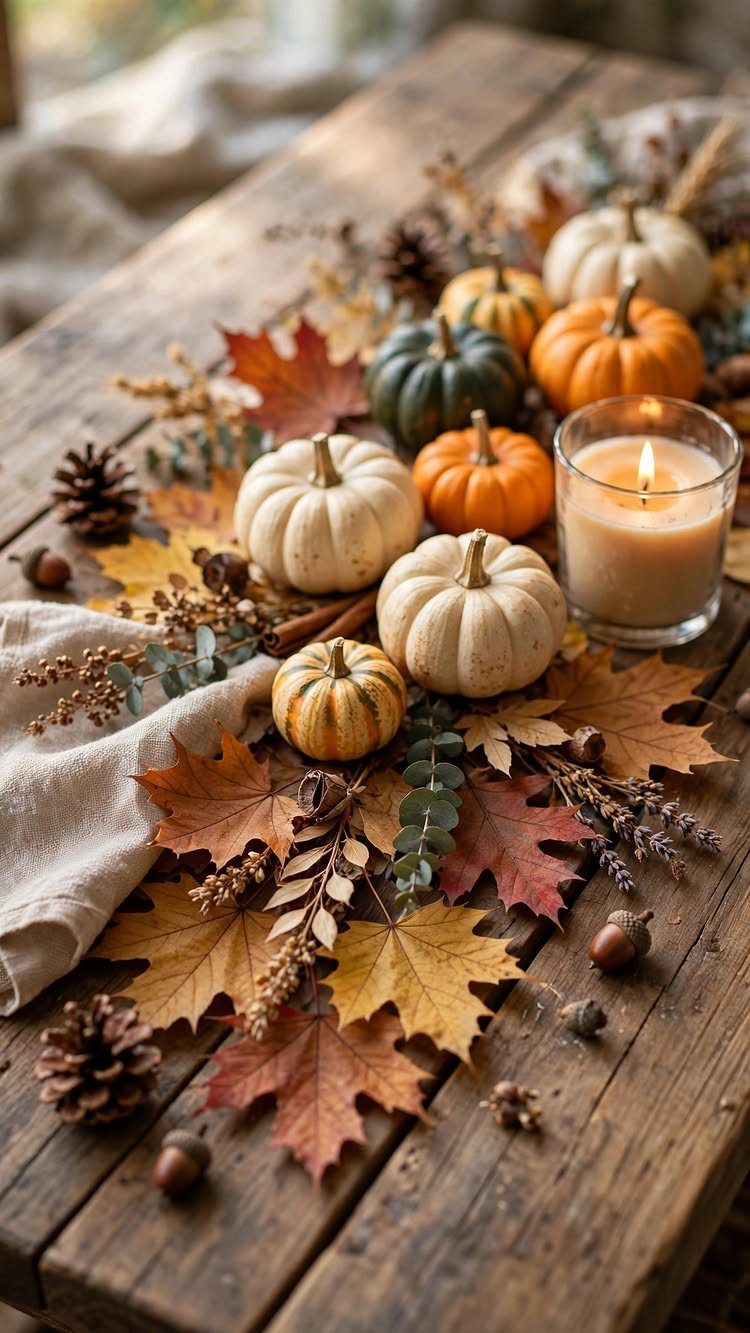
A $30 budget is realistic for this look, because the materials are cheap and sold everywhere in fall. Spend it on a mix of pumpkin sizes and a few gourds with different shapes, then fill gaps with pinecones, acorns and leaves.
Keep the arrangement low and staggered along the center so guests can still see each other across the table. A single candle in the middle gives it a focal point without adding more pieces.
Buy the pumpkins last, close to the day, since they are the bulk of the cost.
2. Dried Flowers Centerpiece
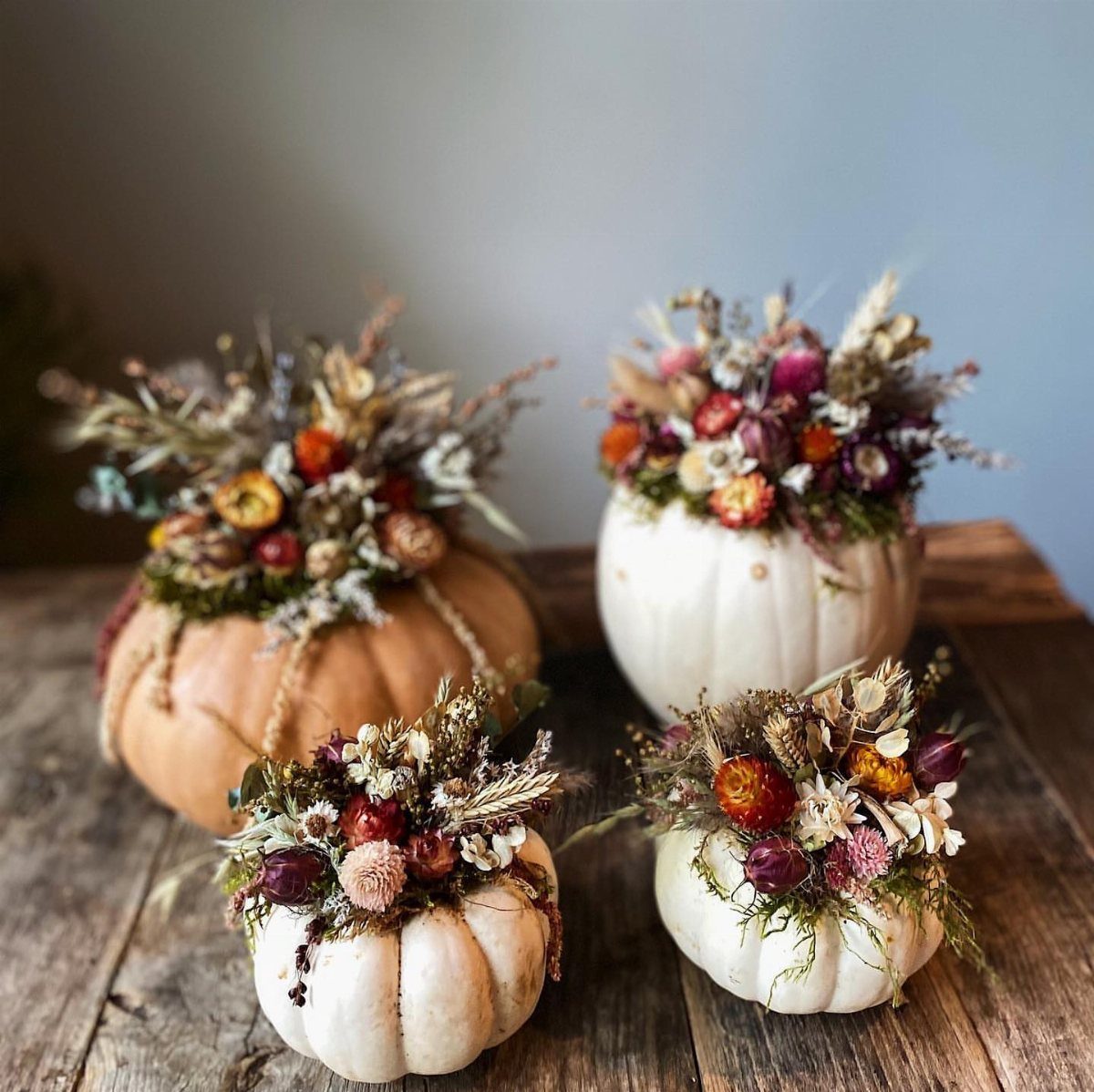
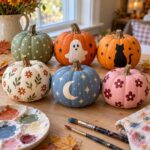
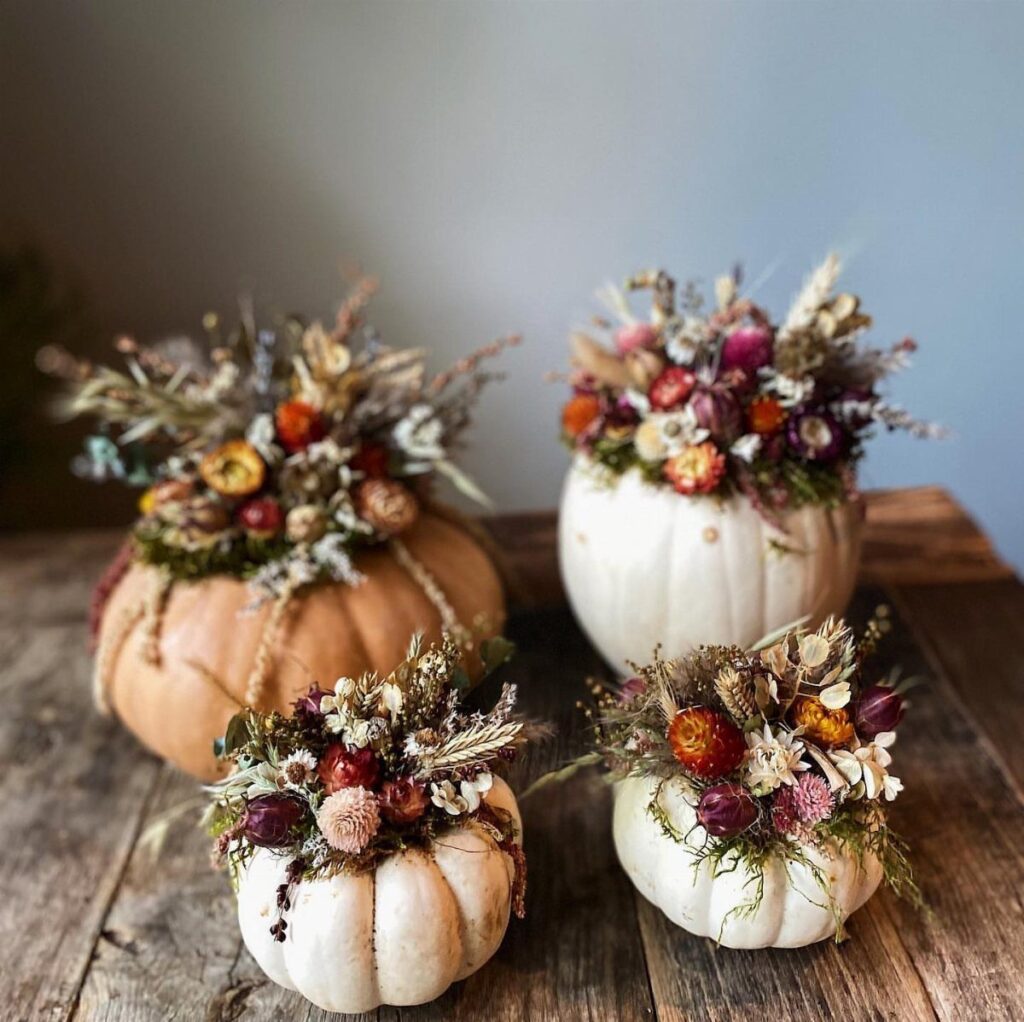
Dried flowers set into the tops of pumpkins make a centerpiece that asks for almost no upkeep. Choose pumpkins in 2 or 3 sizes, orange and white together, and group them in a loose cluster instead of a straight line.
For a minimalist look, keep the flowers to one muted palette so the pumpkins supply all the color. This is also my pick for hosts who want to set the table days ahead, since nothing in the arrangement needs water.
3. Modern Coastal Theme
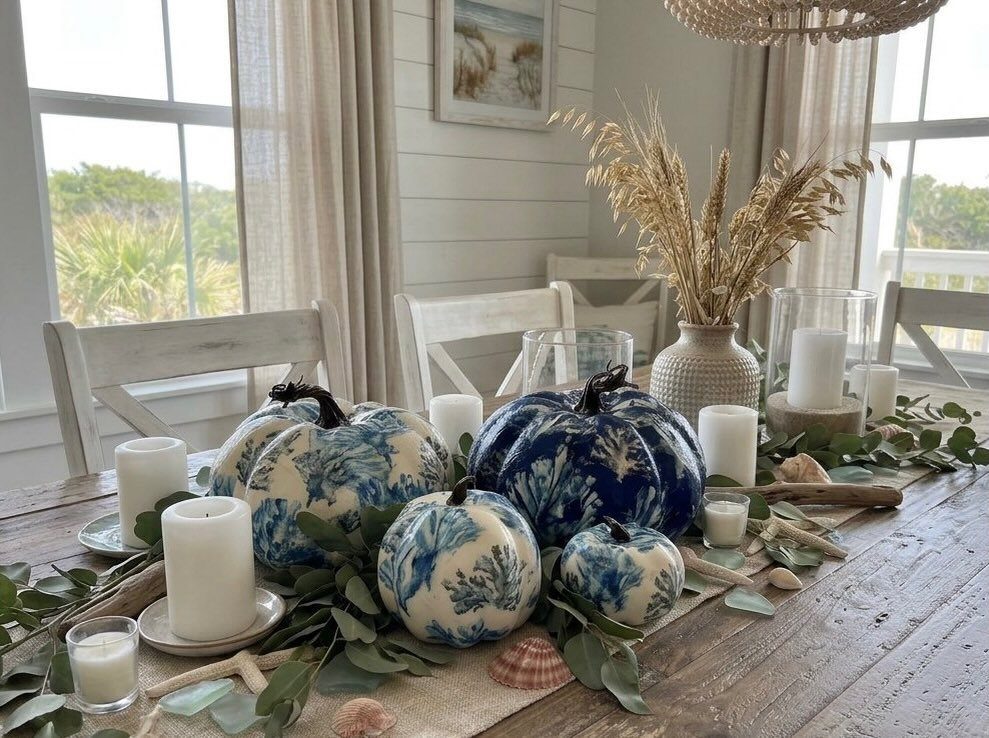
Coastal works for Thanksgiving when you keep the palette strict: blue and white, with natural green and pale shell tones as the only extras. Patterned pumpkins carry the season, so the table still reads as fall.
Eucalyptus is a cheap way to add length and softness between the pumpkins. White candles keep things crisp.
Shells can be gathered from a bowl you already own, which keeps the cost close to nothing. I would skip anything more nautical than that, such as rope or anchors, or the theme turns costume-like.
A farm-inspired table setting—fresh eggs included—therefore feels positively Thanksgiving-like. A basket of freshly baked breads, berries picked in the early morning, and napkins embroidered with ducks, chickens, or turkeys feels festive without being overtly holiday-themed.
4. Layered Textures
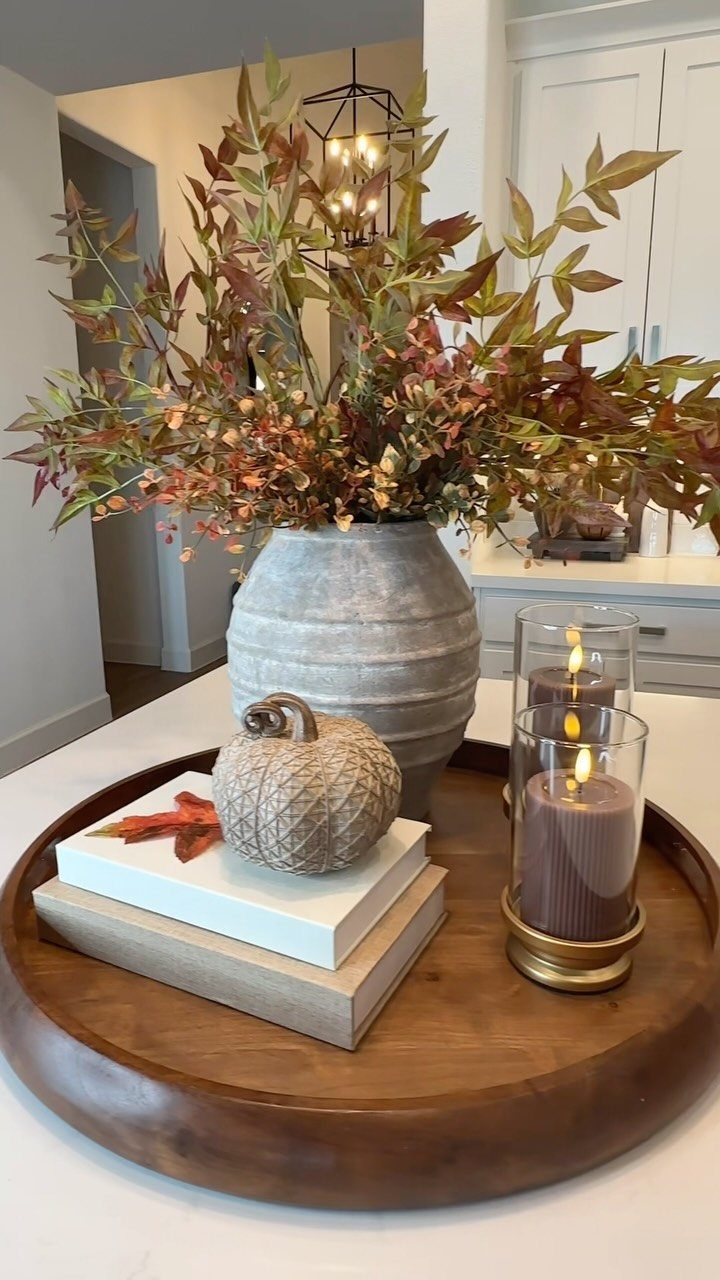
Texture is what makes a small arrangement look expensive. Build it on a wooden tray, which corrals everything into one unit you can lift off the table when dinner is served.
Pair something smooth, like a ribbed vase, with something soft, like a fabric pumpkin, and set the pumpkin on a few books to vary the height. Add candles in glass holders for a hard, glossy contrast.
Stick to one color family, such as neutrals with a single autumn accent, so the mix of materials feels deliberate.
5. Handwritten Name Cards with Small Seasonal Tokens
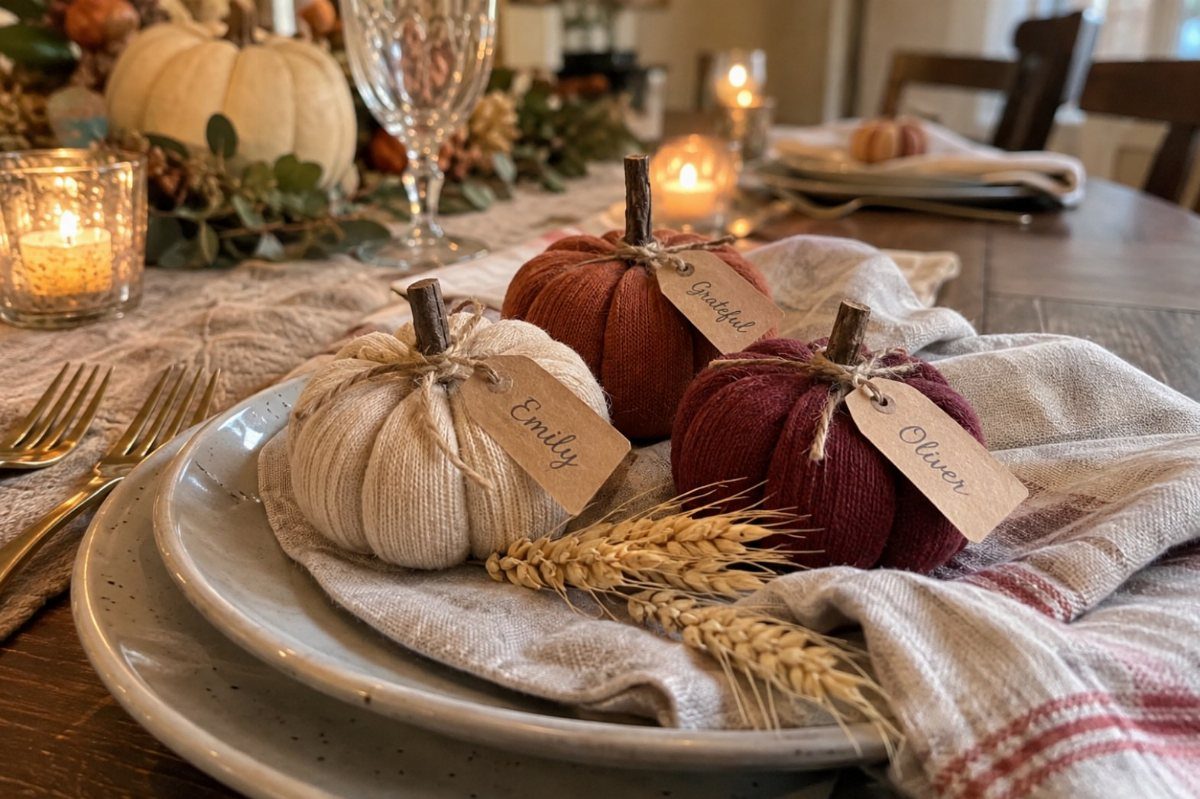
Fabric pumpkins double as place cards, and guests can take them home. Tie or tuck a handwritten tag onto each one, with a guest’s name on most and a single word like "Grateful" on a few.
Use a pen with a fine tip and write all the tags in one sitting so the handwriting matches.
Pumpkin tokens can run white, orange and burgundy, but the tag paper should stay the same cream or kraft stock on every place setting, because the repeated paper is what lets the color variety read as a plan instead of a jumble.
Unlike real pumpkins, fabric ones can be bought early and reused every year.
6. Apples and Pears Centerpiece
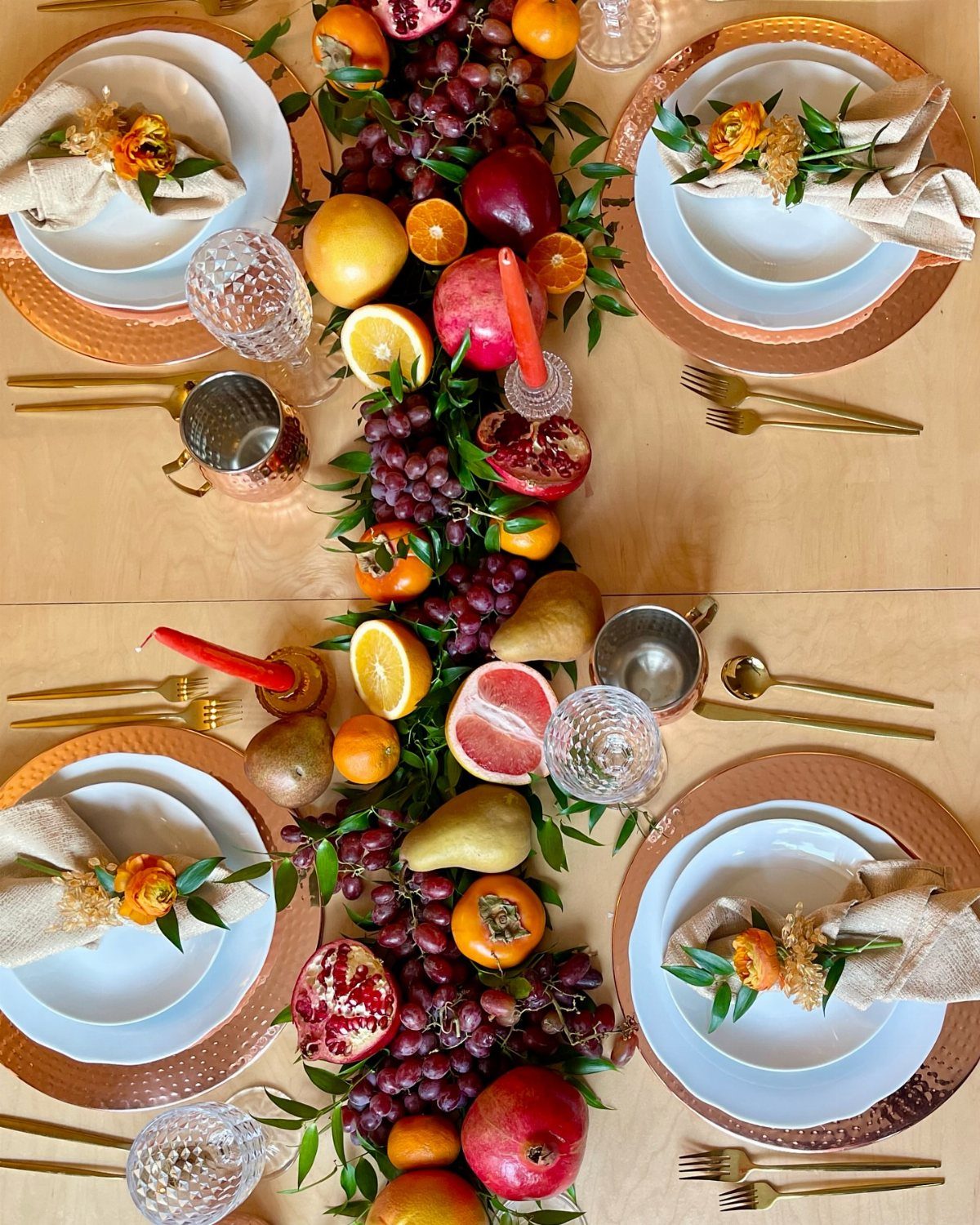
Fruit is the cheapest way to fill a long table runner with color. Grapes, pomegranates, apples, pears and citrus, laid in a continuous line down the center, give you a full centerpiece from the produce aisle.
Mix round and oblong shapes, and let the grapes drape between the larger fruit to hide gaps. Copper chargers pick up the warm tones of the pears.
Buy firm fruit, and set it out the day before at most, so nothing bruises. Afterward, it can be eaten, which no plastic centerpiece can claim.
7. Gold Flatware and Candle Holders
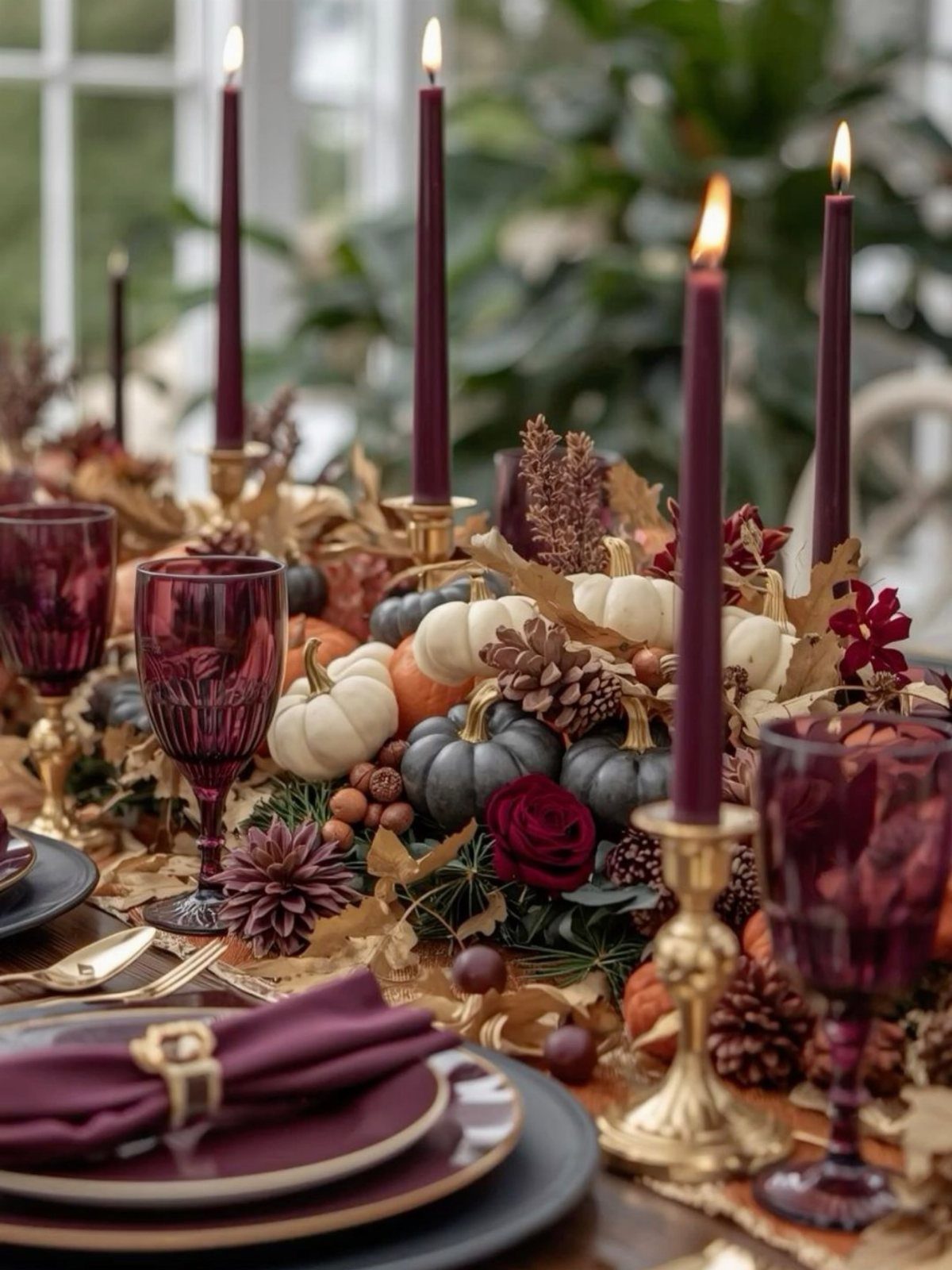
Gold holds up best when it repeats: candle holders and flatware in the same warm metal read as one decision. Purple candles and glassware give it a deeper, jewel-toned twist on the usual orange.
If the holders and forks come from different sets, check that the golds match in tone, since a yellow gold beside a brassy one looks like a mistake.
8. Velvet Table Runner
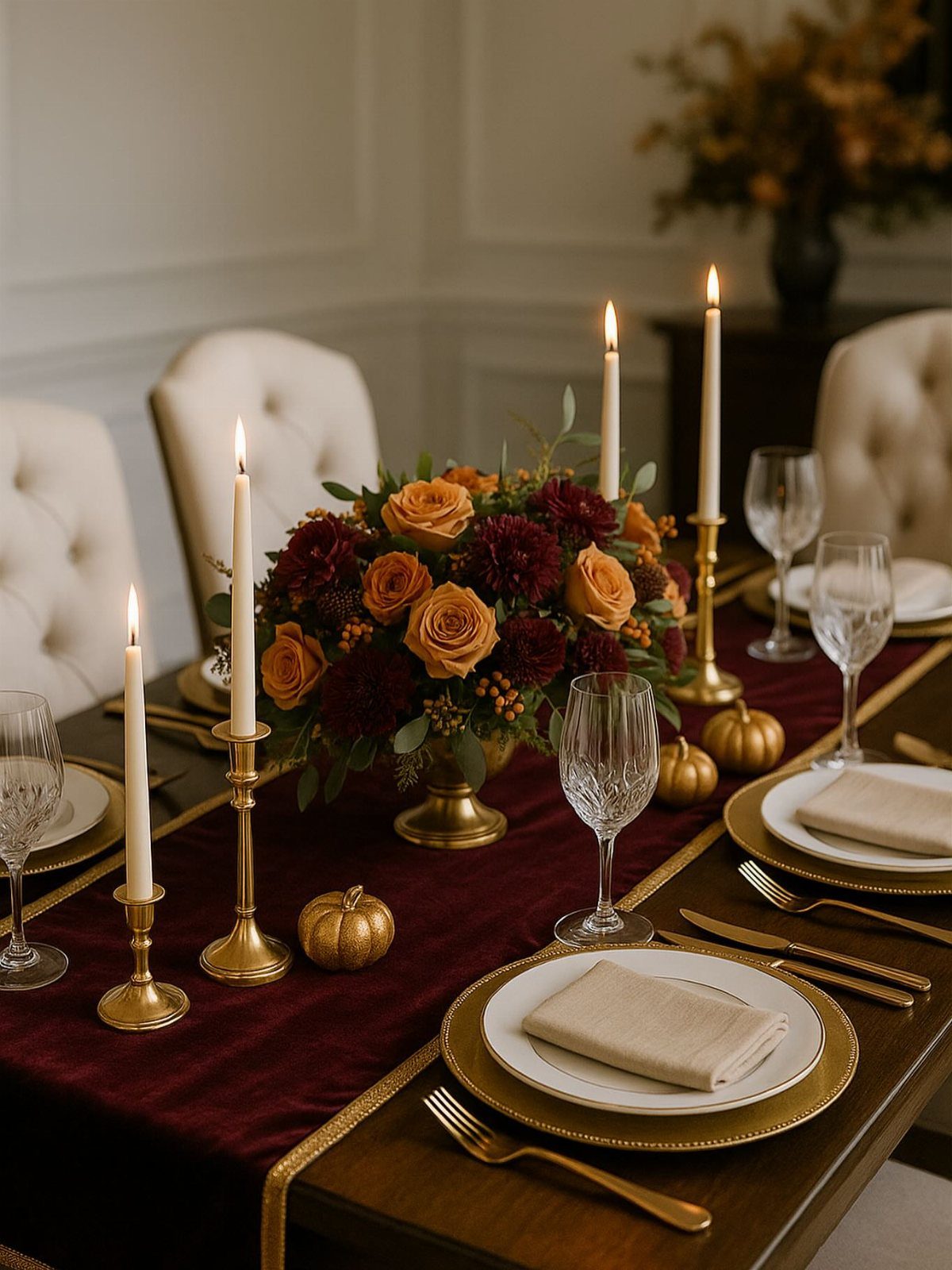
A burgundy velvet runner does the work of a centerpiece before anything is set on it. The nap catches candlelight and makes plain white plates look richer, so the rest of the table can stay simple.
I would let the flowers run orange and red, close to the runner’s own color.
Velvet shows creases, so smooth it out a day ahead rather than at the last minute.
9. DIY Botanical Pots
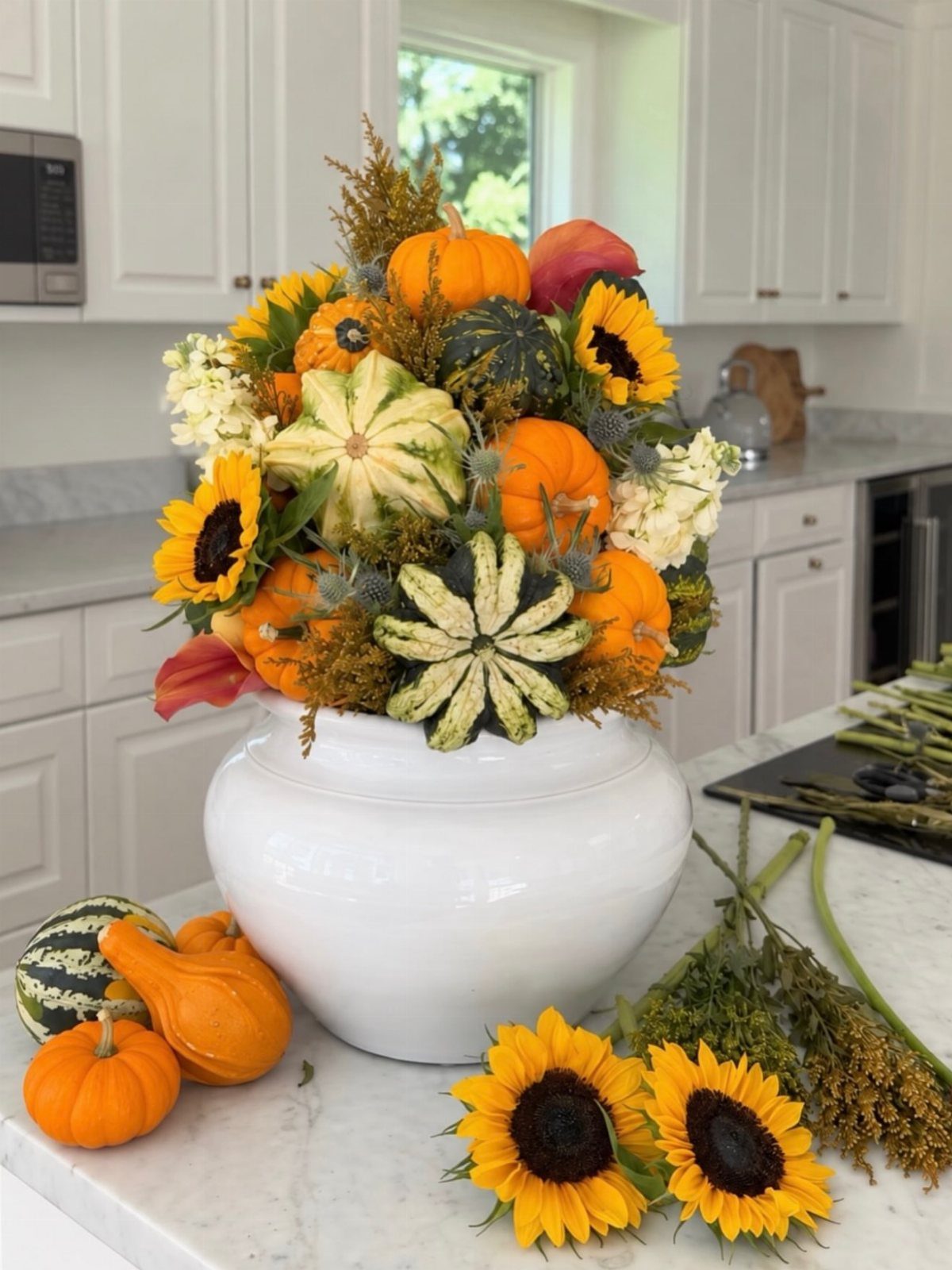
A white ceramic pot packed with mini pumpkins, gourds and sunflowers is a centerpiece you assemble in one sitting.
Because you choose the pot and the fill, it can match your table exactly, and a pot you already own costs nothing.
Start with the largest pumpkins, tuck gourds around them, then push sunflowers in last so they sit highest. Let a few extra blooms and leaves spill around the base to soften the edge.
White keeps the colors in front, which is why I prefer it to a patterned pot.
10. Black and White Tablescape
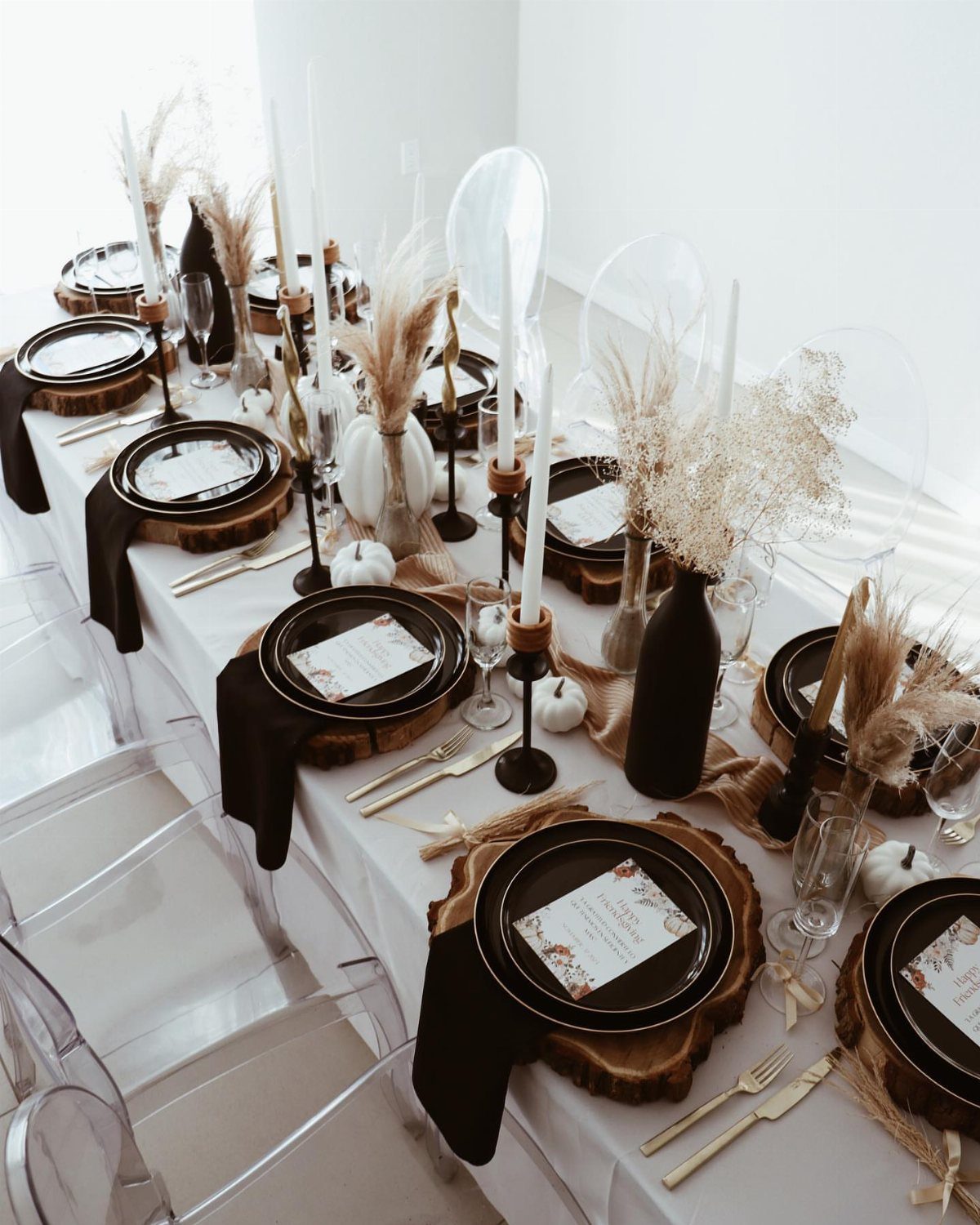
Black plates on wood chargers, white pumpkins and black candles give a table a graphic, gallery-like look. With only 2 colors in play, every object has to earn its place.
Wood is the one warm material here, and it stops the contrast from going cold. Keep the pumpkins white and unpatterned so they read as shapes.
Small "Happy Thanksgiving" cards at each setting add words without adding a third color. Skip orange entirely; one bright napkin breaks the spell.
11. Candles of Different Heights
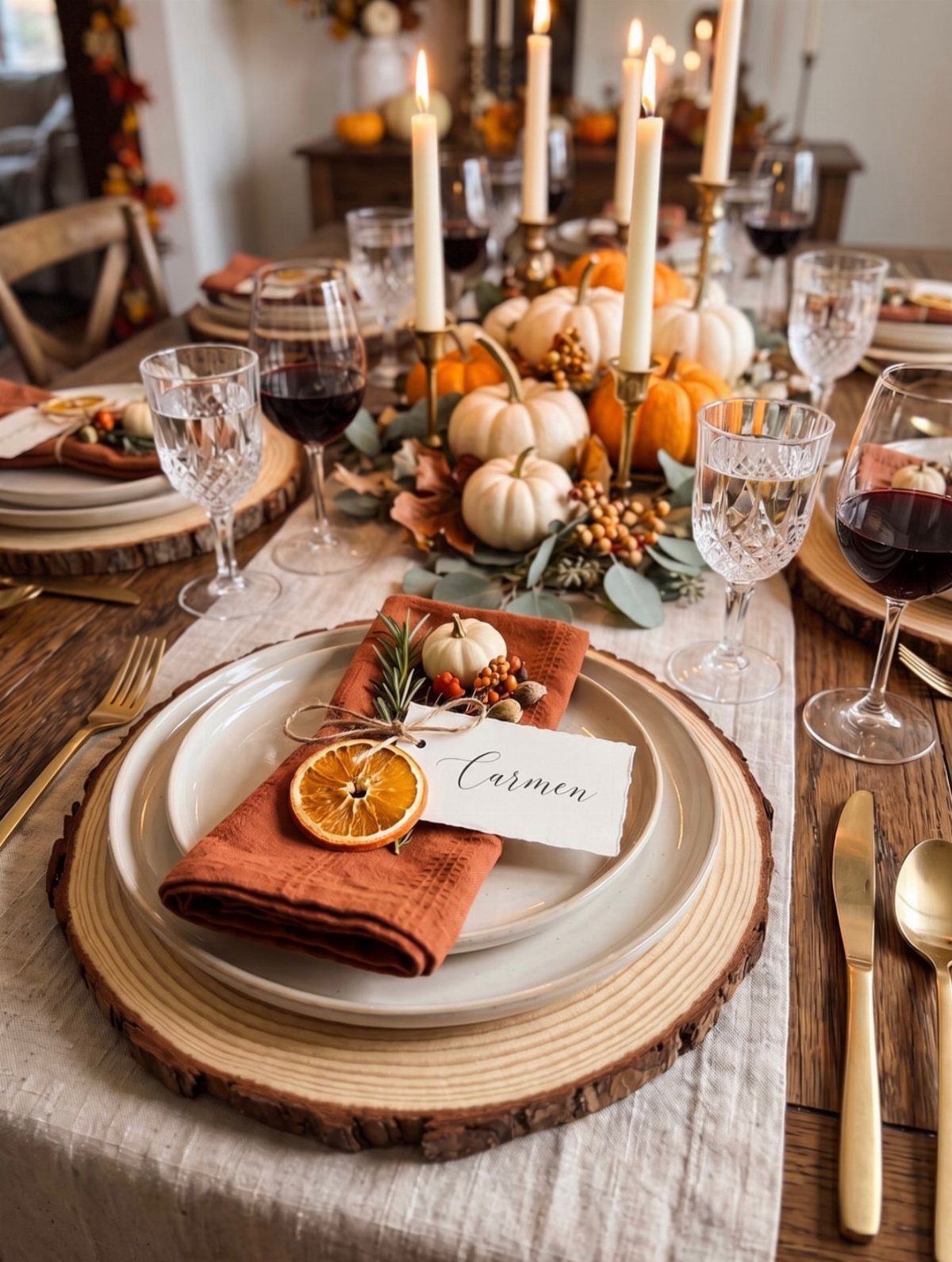
Tapers in two or three different heights make a table glow in layers, and the variety looks planned even when the candles are cheap.
Group the candles low and spread them along the table, not in a single row. Light them just before guests sit down, and keep them out of reach of napkins and sleeves.
12. Clustered Flowers
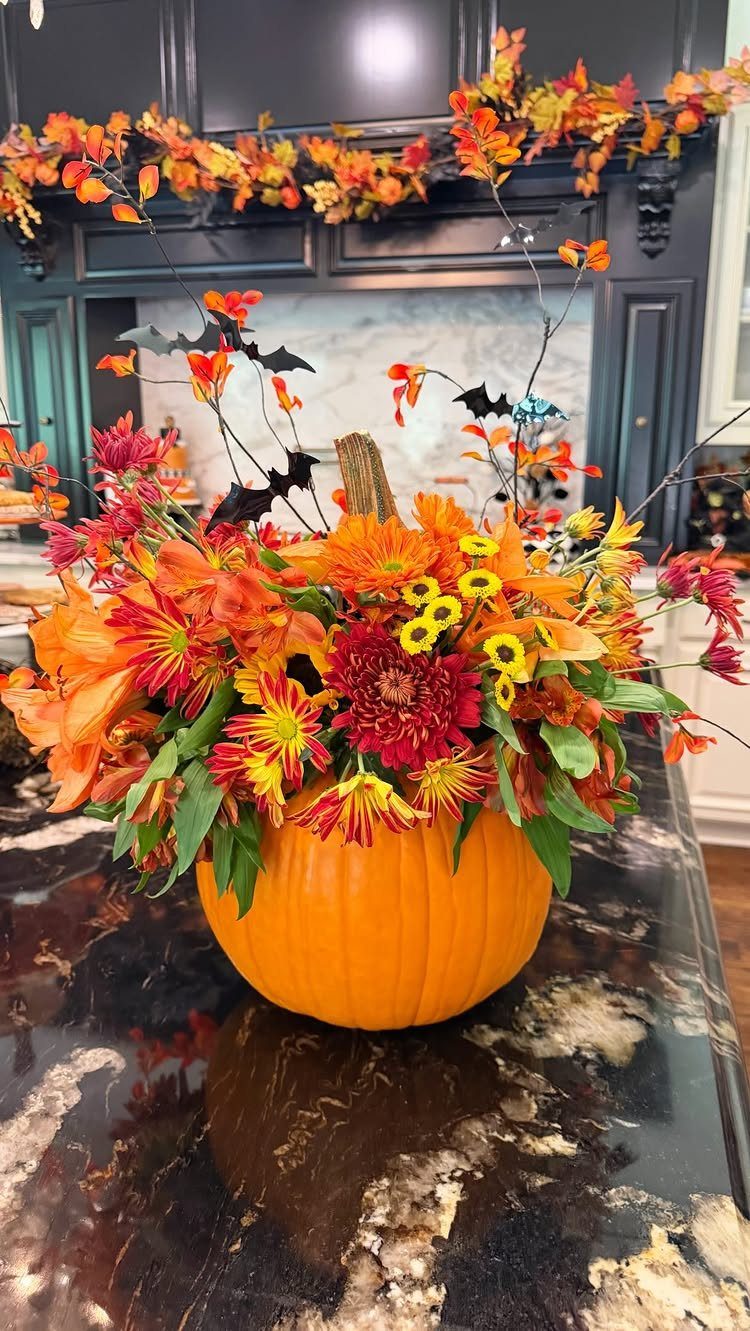
A hollowed-out pumpkin makes a vase with no shopping, and clustering the flowers tightly inside gives a full, rounded look. Keep to warm amber tones: orange and red blooms against an orange pumpkin feel cozy because nothing competes.
Cut the opening wide enough to hold the stems, scoop it clean, and set a small waterproof container inside if you want the flowers fresh. Short stems packed close beat a few tall ones.
13. Elegant Table Settings
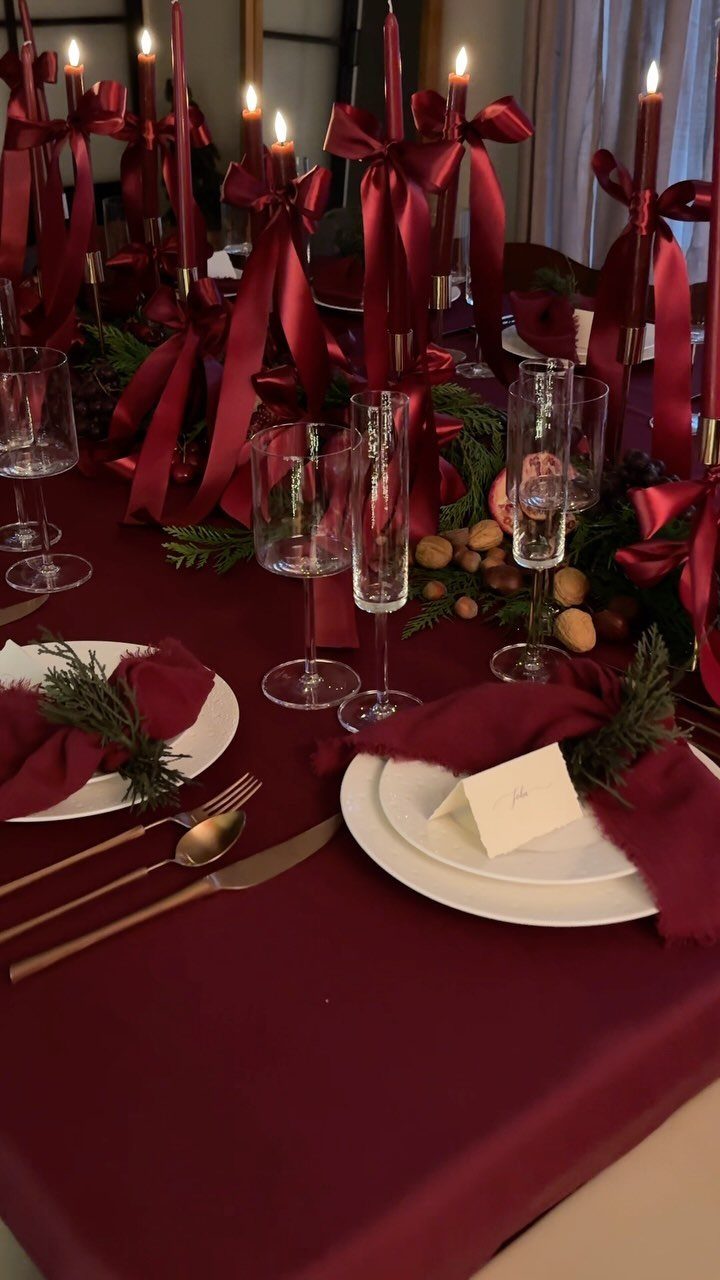
Restraint carries this look: 1 rich tablecloth in a deep color, plain white plates, gold cutlery and just 1 style of candle, so nothing competes for attention. Tall red tapers tied with ribbon give the table height without needing a centerpiece.
I would keep the greenery and nuts scattered low around the candle bases so sightlines stay open. Write each guest’s name on a plain card, and keep every other detail quiet so the burgundy stays in front.
14. Kraft Paper Table Runner
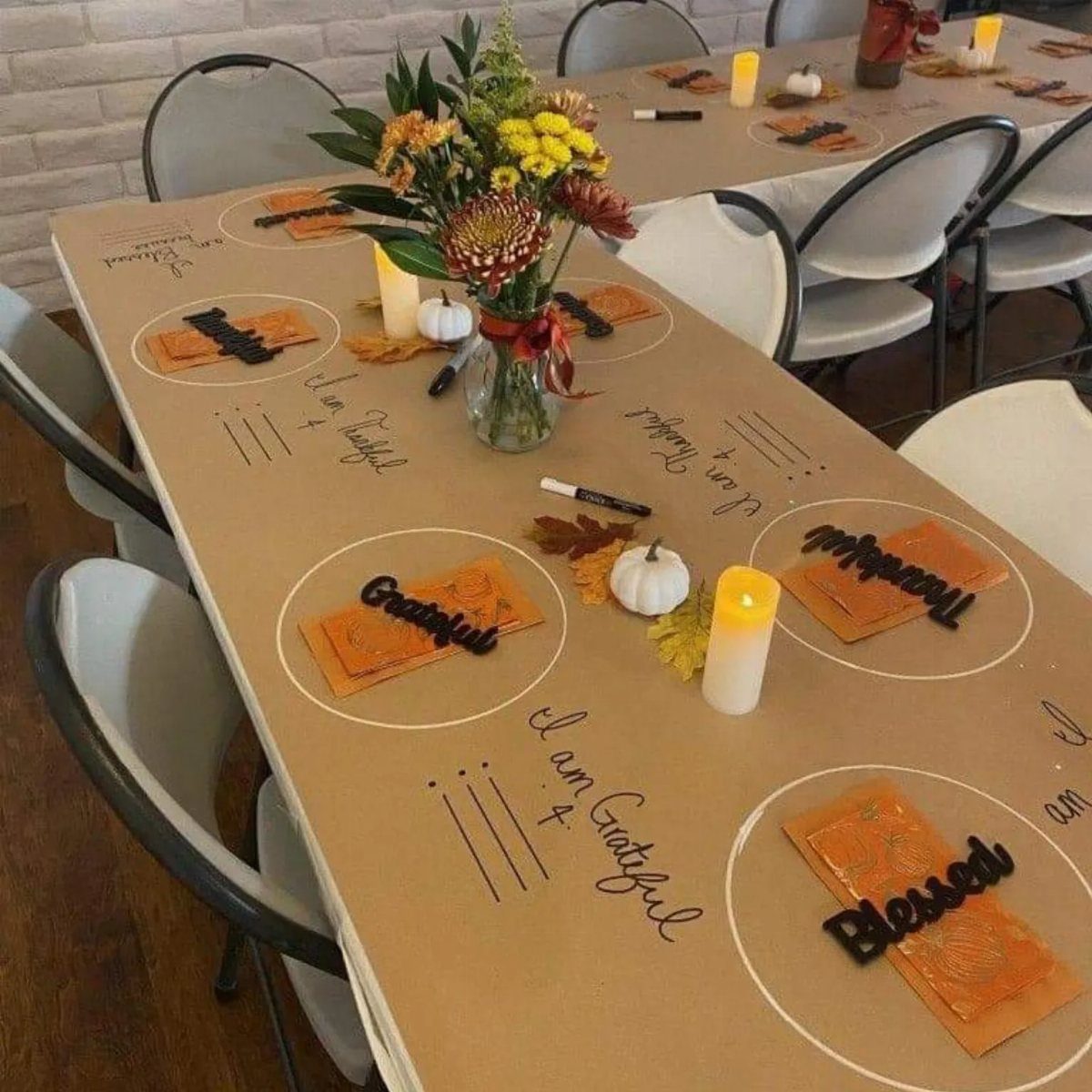
Brown kraft paper is the cheapest tablecloth you can buy, and it doubles as a template. Roll it the length of the table, then trace a plate at each seat so guests know where to sit.
Orange napkins and white pumpkins stand out well against the brown.
Cut words like "Grateful" and "Blessed" from scrap paper and set them between the pumpkins. Tape the paper down underneath so it stays flat, and toss it when dinner ends.
15. Autumn Leaf Garland Centerpiece
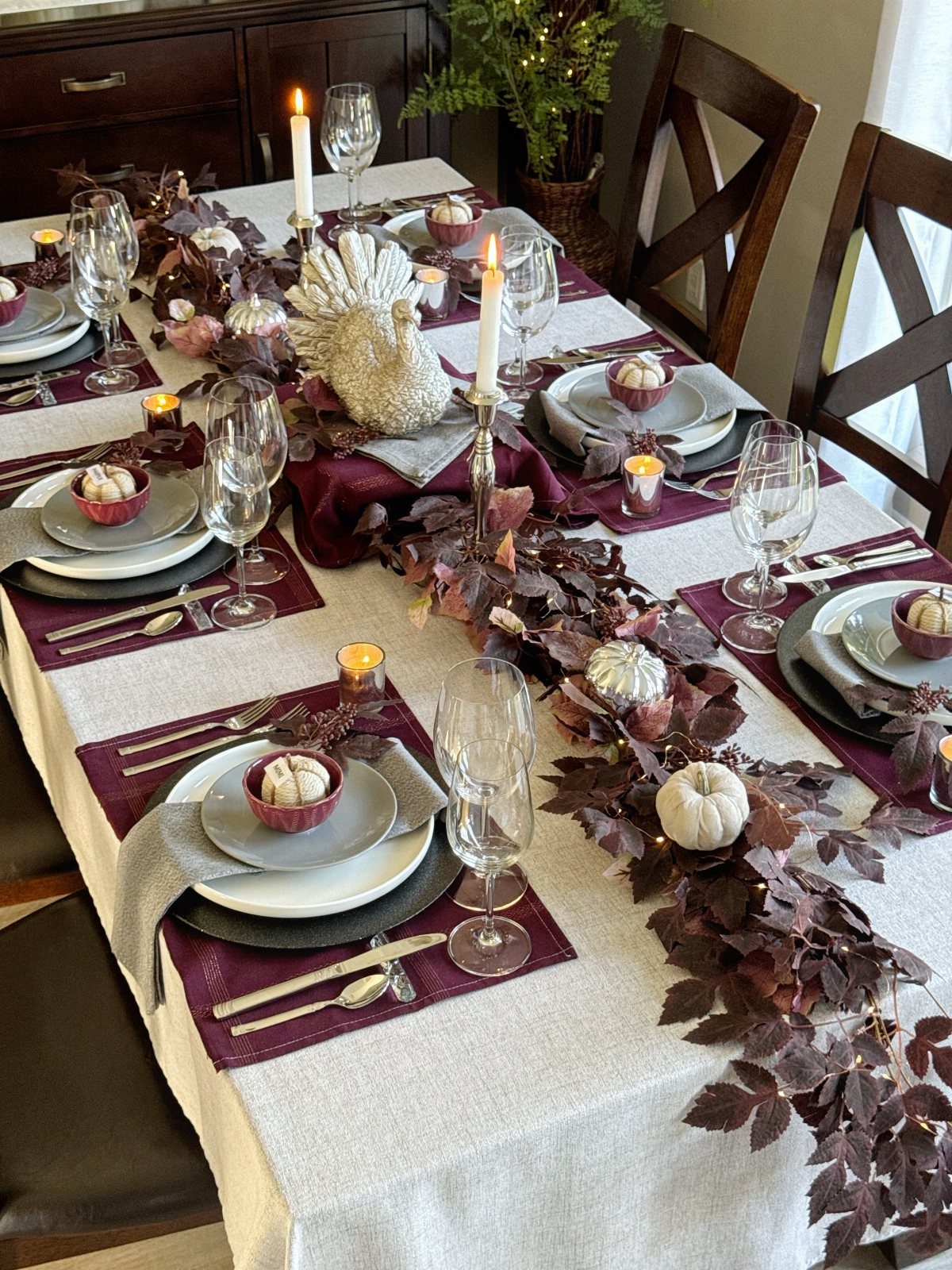
A garland of dark red leaves, laid down the middle of a burgundy runner, reads as one continuous color story. White pumpkins and taper candles break it up so the red does not go heavy.
Matching burgundy placemats tie the runner to each seat.
Place the pumpkins at intervals, tuck the candles between them, and let the garland curve a little rather than run in a straight line. A faux garland can be stored and reused each year.
16. Velvet Ribbon Napkin Ties
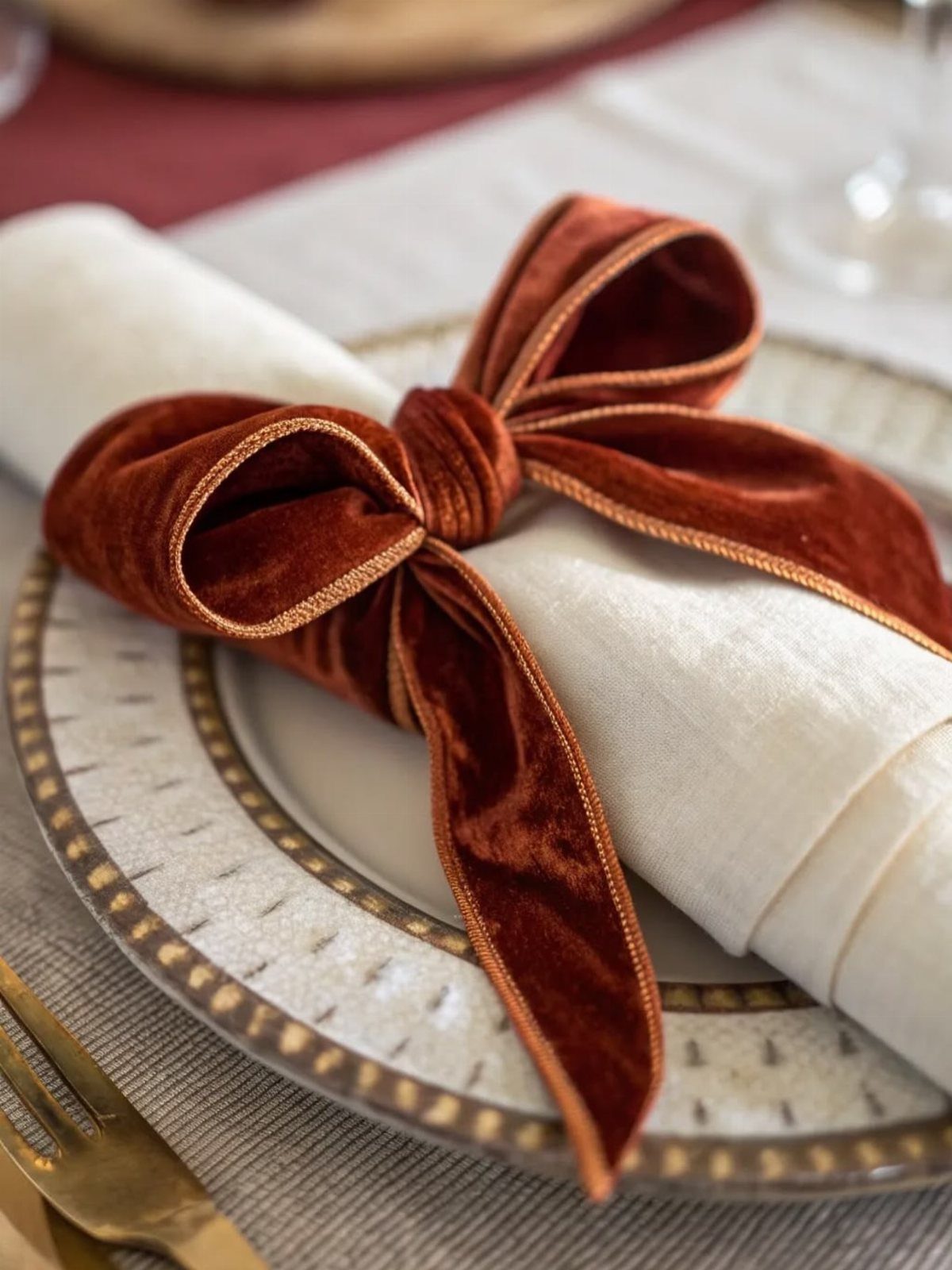
A velvet ribbon bow is the smallest upgrade on this list, and one of my favorites. Rust velvet against crisp white linen adds a rich note to each plate for a few dollars of ribbon.
Cut each length the same, tie the bows the same way, and press the napkins first, since a wrinkled napkin undoes the look. Rust sits well beside gold-rimmed plates and gold cutlery because the tones are warm together.
17. Lettered Calligraphy Pumpkins
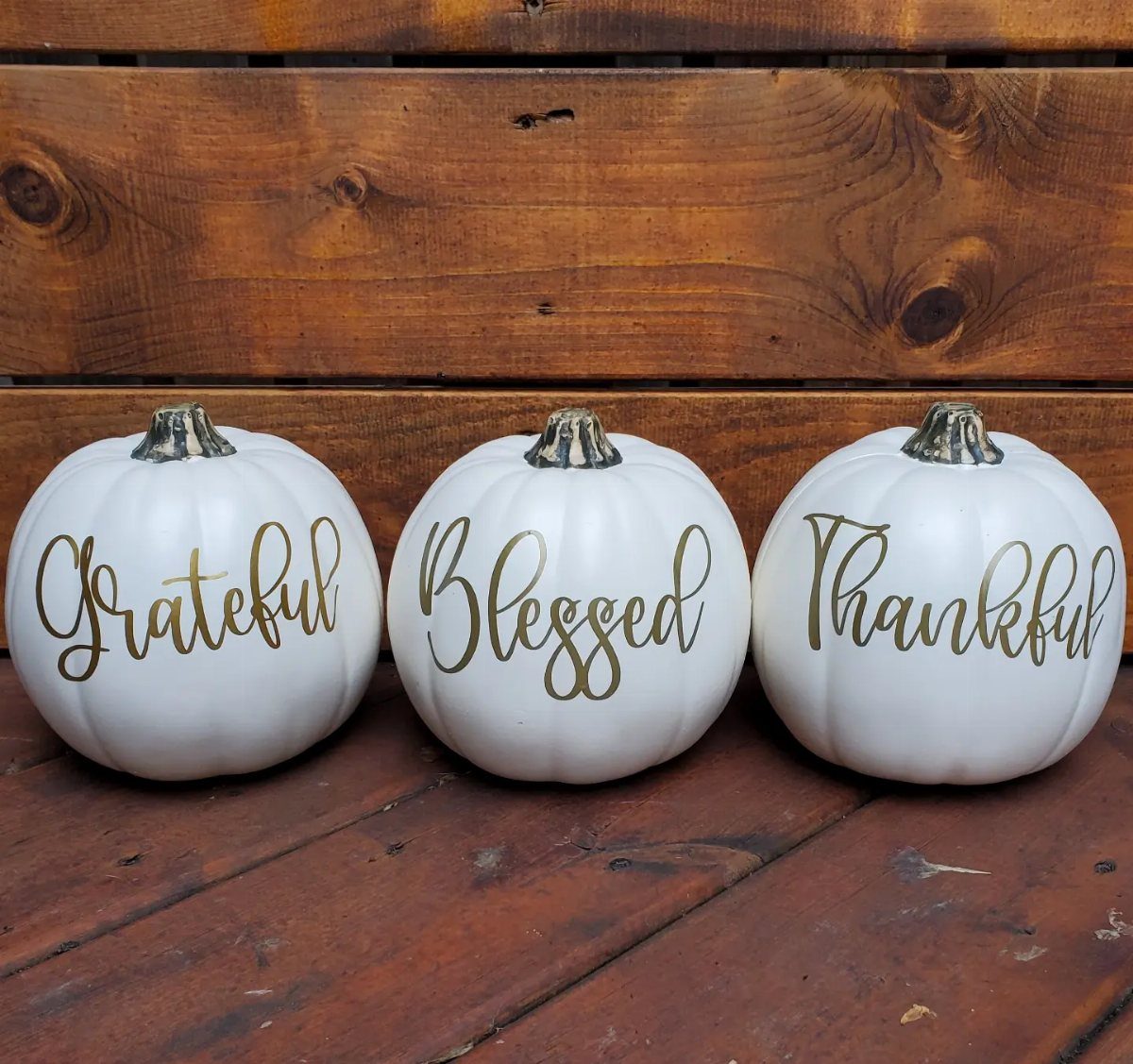
Gold lettering on white pumpkins turns a simple gourd into a quiet statement. "Grateful," "Blessed" and "Thankful" are short enough to write large, which keeps the calligraphy readable from across the table.
A gold paint pen on a smooth white pumpkin is the easiest tool.
Sketch the word lightly in pencil first, then trace over it. Practice on paper before you touch the pumpkin, because mistakes on its surface are hard to fix.
Choosing a Color Palette
Limit the table to 2 or 3 colors, and let each one show up in at least 2 places, say a napkin and a candle, so the eye reads it as a plan instead of an accident.
A burgundy napkin that matches the flowers, or cream dishes that echo the candles, ties the table together better than any single showpiece.
Some pairings to start from: burnt orange with cream, burgundy with forest green, or sage with terracotta for a softer look, with wood and ivory left to play as neutrals rather than extra colors.
Light gray with white also reads contemporary, and gold accents warm it up.
I would treat metallics as a third shade, not an extra. Brass candleholders or bronze pieces give a glow, but they work best when you pick one metal and stay with it.
Creating a Cozy Atmosphere
Candlelight does most of the work after sundown, so mix formats: tapers, small votives and lanterns each give a different kind of glow. Beeswax candles are a good choice if you want a natural look.
Raw linen runners, whole nuts and gourds add warmth without color. Keep the tones neutral and the textures varied, and the table feels both casual and special.
Before you settle on any centerpiece, sit in a chair and look across the table. If you can’t see the person opposite, it’s too tall for dinner conversation.
DIY and Budget-Friendly Options
Start by shopping your own house. Candleholders, bowls, baskets, trays and linens you already own can be regrouped into a table that looks bought for the occasion.
Foraged branches, twigs and dried leaves can replace flowers entirely, and they cost nothing.
I like them for a minimalist table with an organic feel. Shake them out well and check for insects before they come inside.
Napkins that don’t match can still work if they share a color family, and that makes them a cheap way to build the look from what you own.
They look casual and inviting, and you can use whatever is in the linen drawer.