Tree size and floor space decide which of these ideas fits: a full tree swallows dozens of ornaments, while a mini tree on a sideboard needs only a handful of small baubles.
Most of the rest sit between those two: a few oversized pieces, a single ribbon, or one palette like red and gold on a flocked tree.
1. Sports Christmas Tree
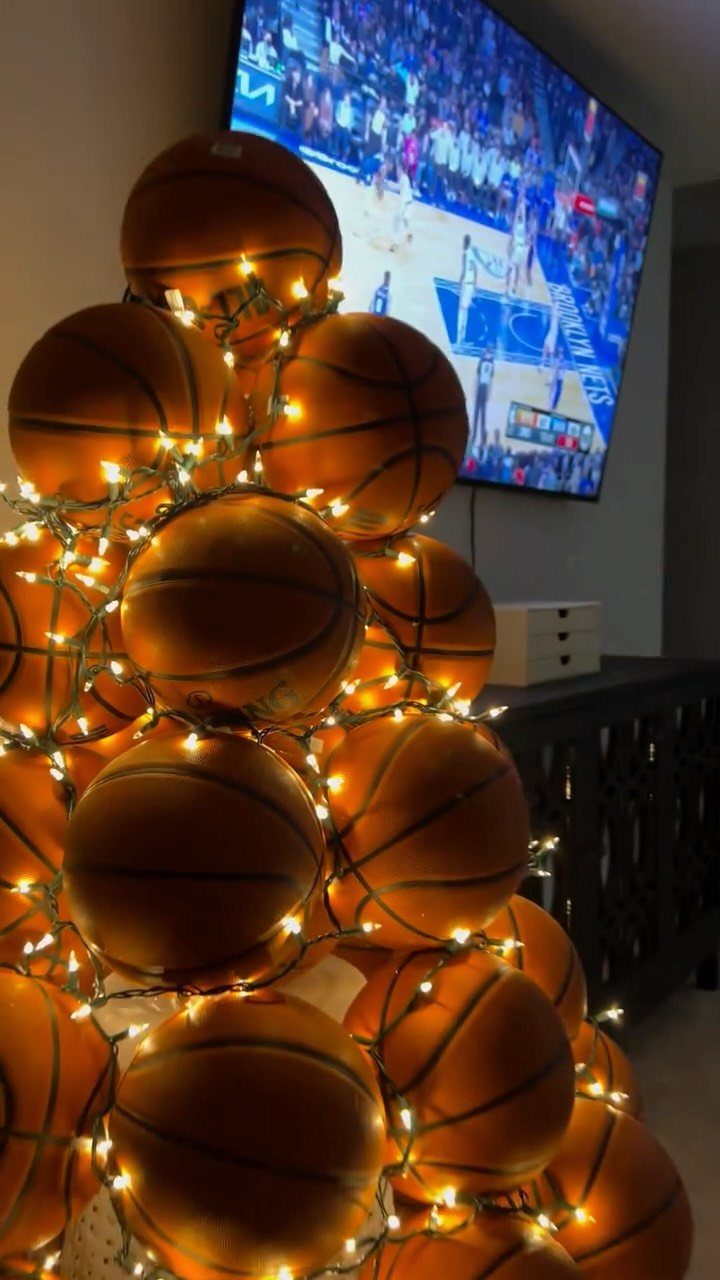
Basketballs stack into a cone more easily than you would guess, since a round ball nests into the gap between the two below it.
Build from a wide base row and shrink upward, and a few dabs of removable adhesive putty at the contact points should keep the pile steady.
Swap in whatever ball your household plays: soccer balls, softballs, or mini footballs.
2. Lights Tree
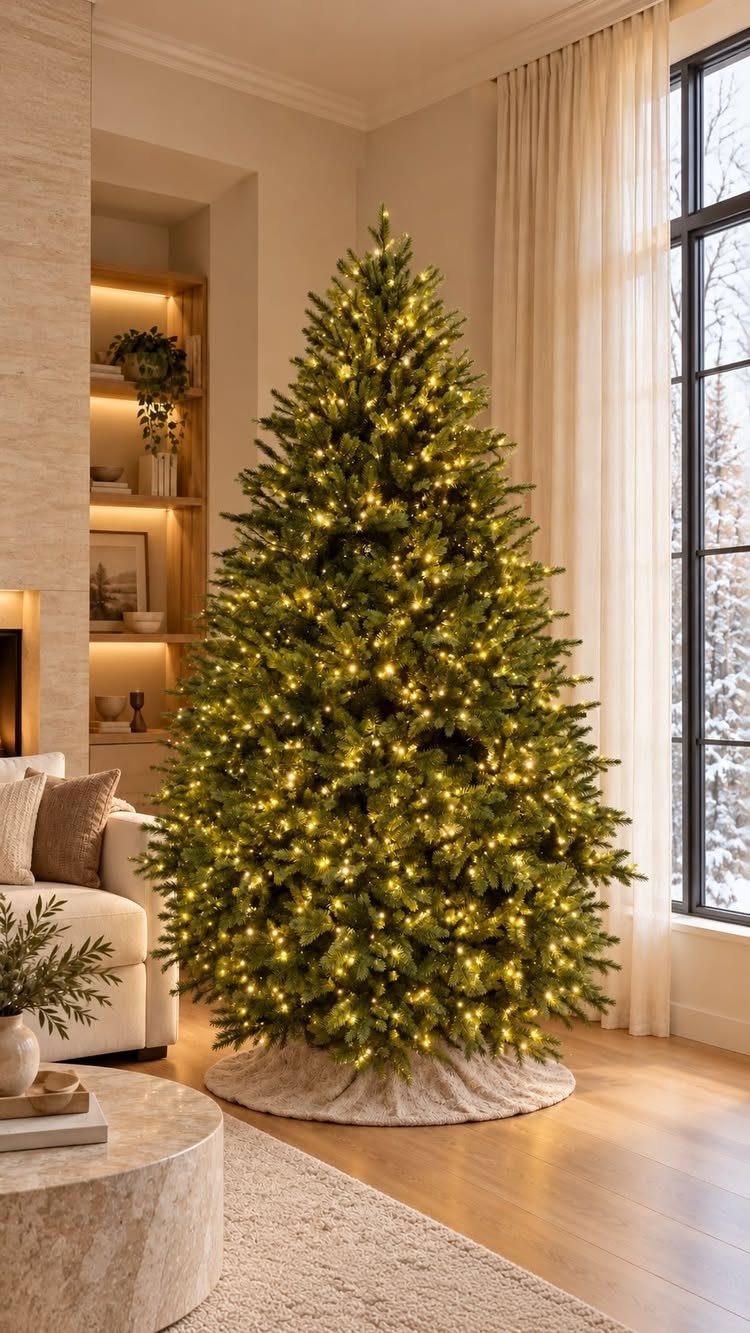
Lights alone can carry a tree, and I think they should more often. Skipping ornaments puts all the attention on the glow, so a plain green tree in a bright room looks calm and finished.
Warm white or warm yellow strands feel cozy, while cool white reads sharper.
Wrap evenly from trunk to tip, and spend the money on more strands rather than on decorations. This is also the cheapest look on the list, and it works in any space, large or small.
3. Use Oversized Ornaments
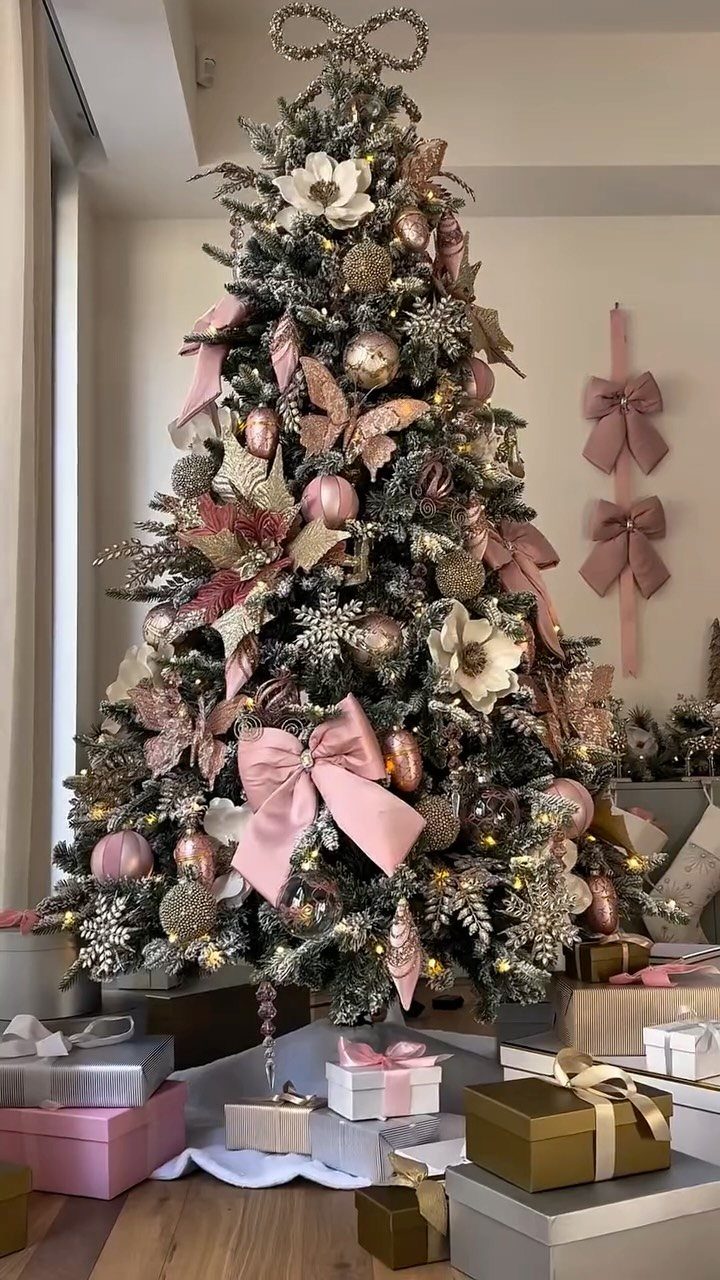
Big ornaments cover more surface area, so you need fewer of them to fill the tree. A handful of oversized bows and gold baubles fills a tree quickly, which saves money and cuts the hanging time.
Place the largest pieces first, spaced across the tree and set deep near the trunk for depth.
Then tuck in a few white flowers to soften the gaps. Keep to two or three colors; pink and gold looks deliberate, while too many colors starts to look crowded.
4. Festive Blooms
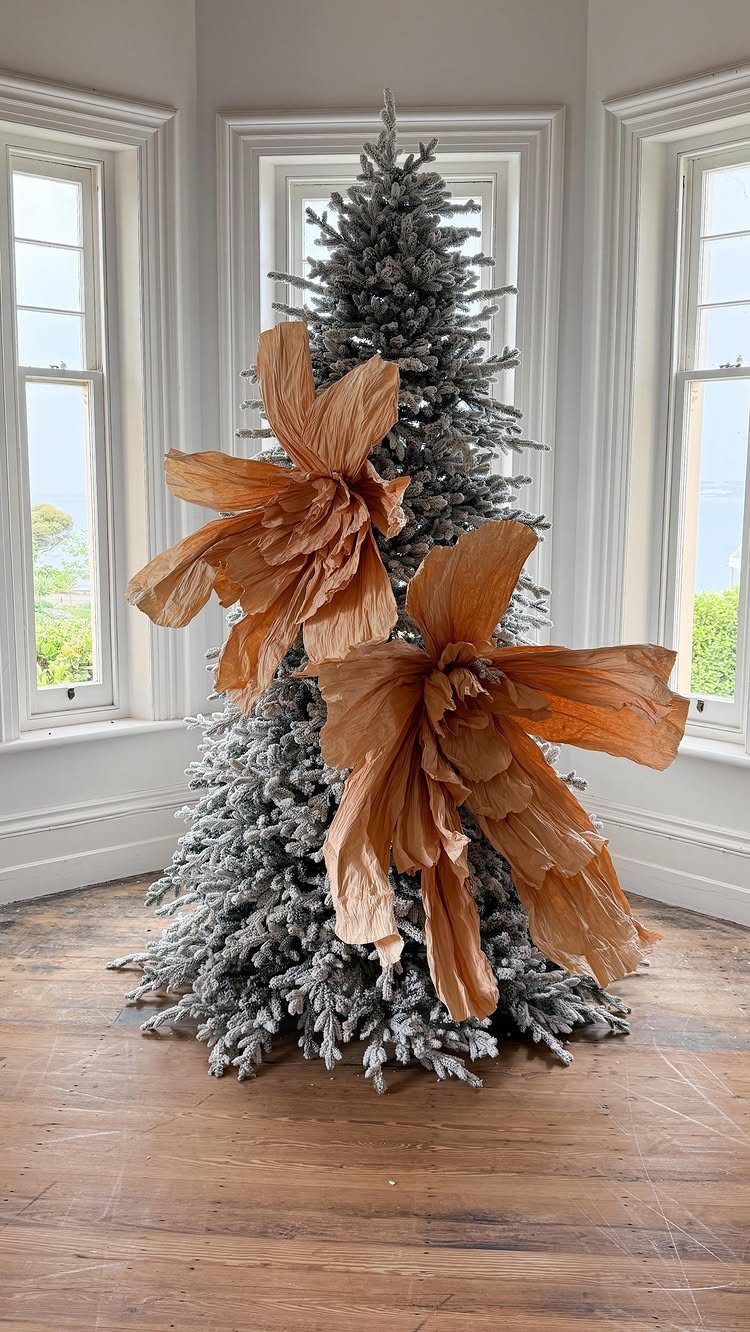
Two giant fabric flowers can replace a whole box of baubles. Orange-brown blooms against a flocked white tree give a warm, romantic look, and the contrast does the styling for you.
Buy the largest stems you can find and wire them directly onto sturdy branches.
Pick one color family so the flowers read as a pair, not clutter. Smaller trees may only have room for one bloom.
5. Oversized Bows
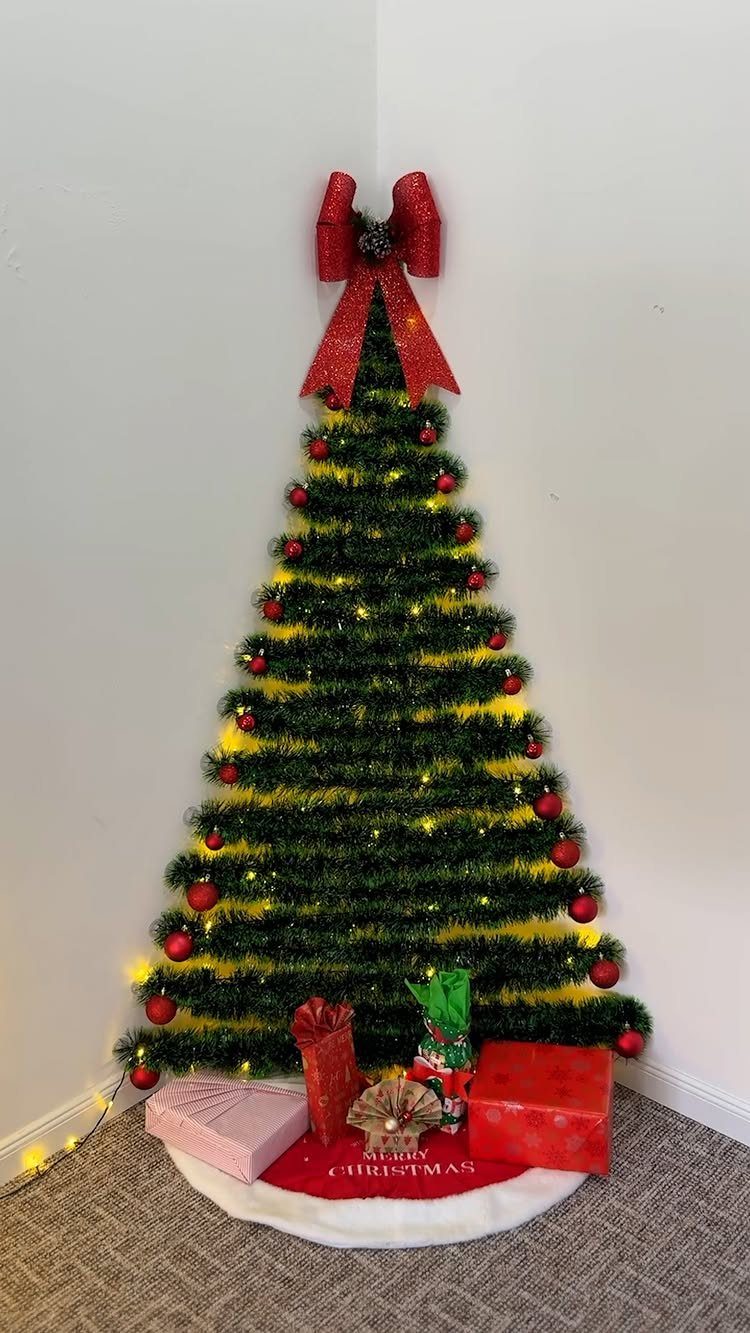
A big red bow on top is the quickest upgrade a plain tree can get. Make it from wired ribbon, which holds loops open, and use a wide width so the bow looks generous from across the room.
Red ornaments and yellow lights pick up the bow’s color, so everything feels connected. Fasten it with floral wire around the top branch, and leave long tails to trail down the sides.
6. Pinecones and Wooden Ornaments
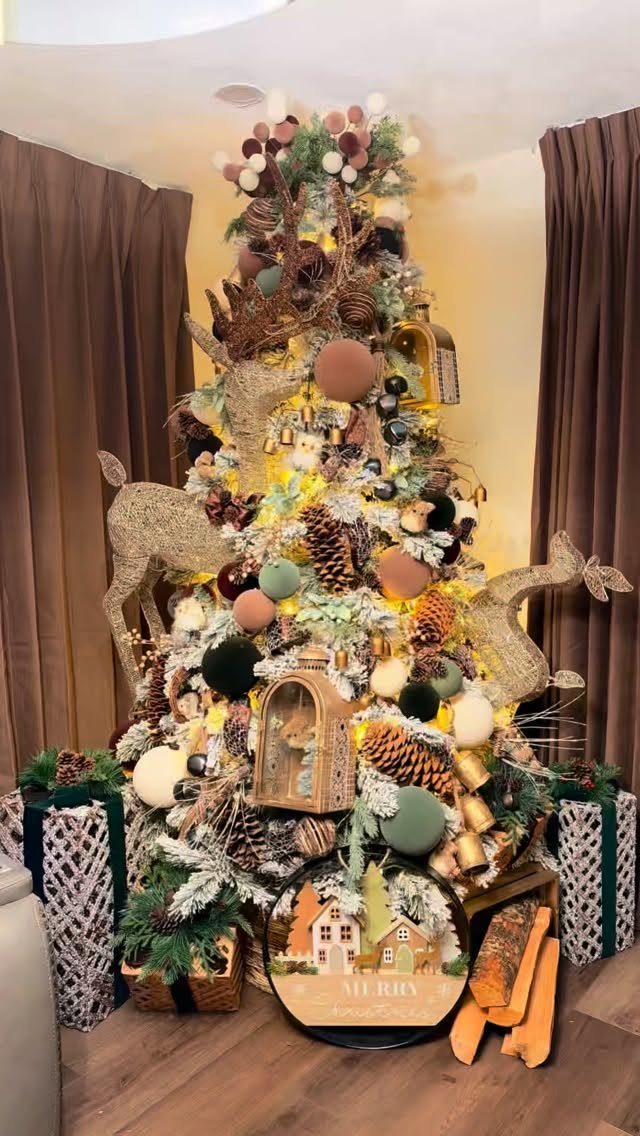
Pinecones and wood ornaments give a tree a cabin feel without spending much. Pinecones can be gathered free outdoors, so bake them first at a low temperature to dry them out and drive off any hitchhiking bugs.
Wood slices, stars and shapes add variety in texture.
A few glittery deer figures add sparkle, and I like that mix because the rustic pieces would look flat alone. Hang pinecones on wire loops or tuck them onto branch tips.
There’s so much that can be done to give new life and personality to a Christmas tree and a lot of it is pretty easy to do with some holiday crafts and DIY projects.
7. Create a Nostalgic Feel
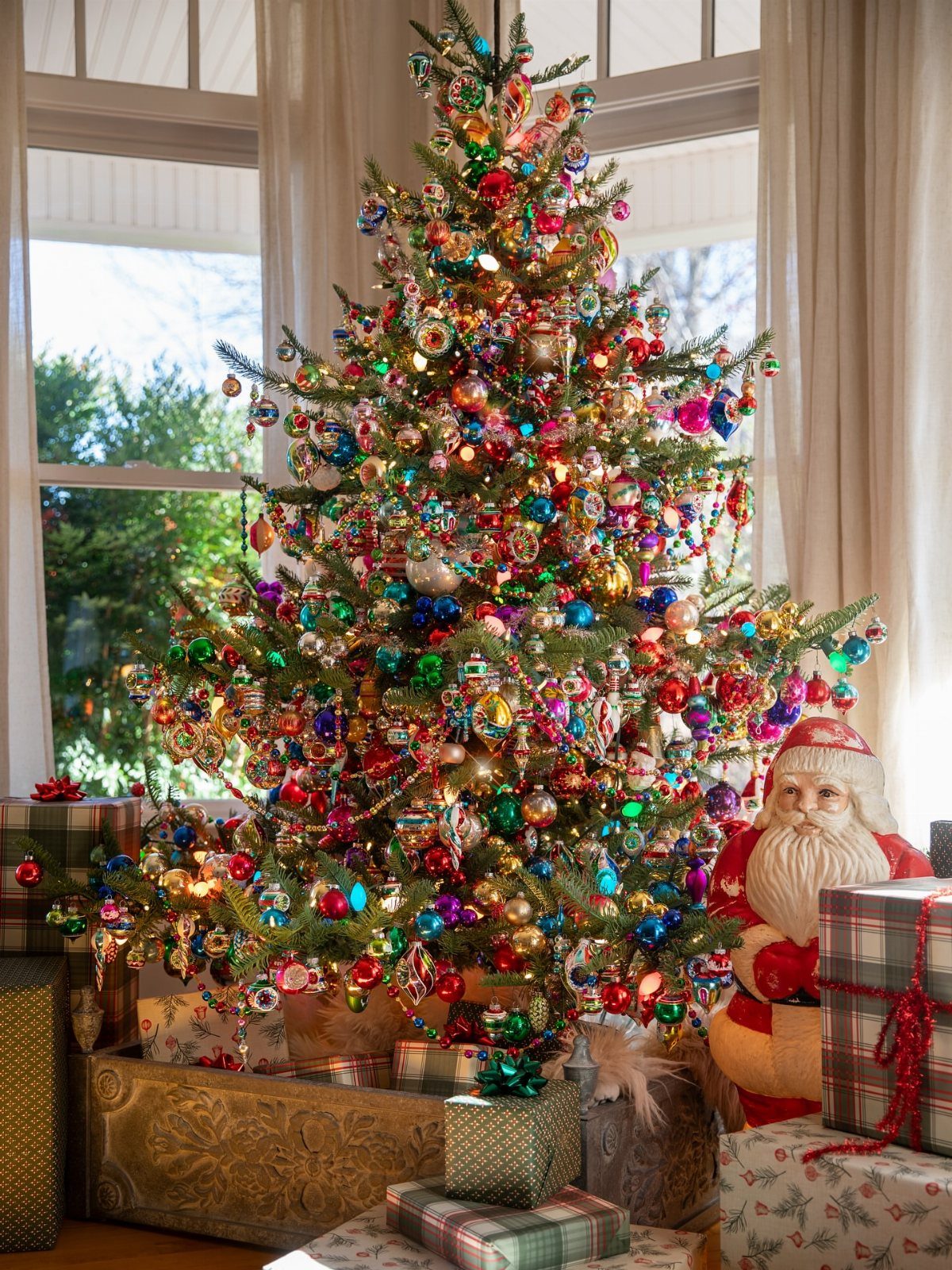
Mismatched is the point of a nostalgic tree. Vintage glass balls, handmade paper pieces and a few kid-made ornaments look best packed in close, so fill the branches densely rather than spacing everything evenly.
Start with the pieces you already own, then add secondhand finds to fill gaps. Finish the base with what you already own: wrapped boxes, a Santa figure or ornaments that didn’t make it onto branches.
8. White Tree with Soft Pastels
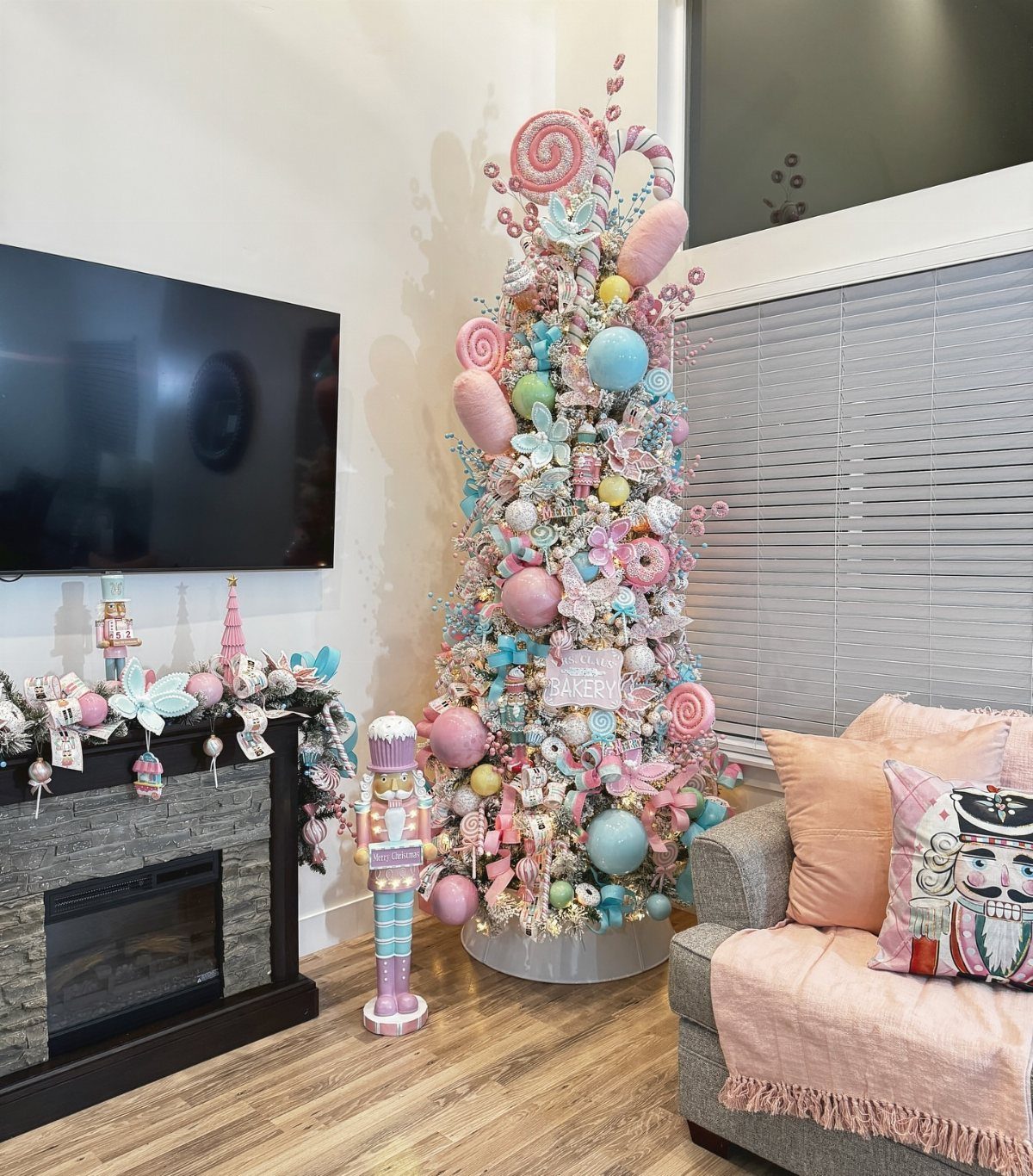
Pastel pink and blue on a white tree reads like a candy shop, and I think that softness is the whole appeal. Stick to those 2 colors so the look stays calm and sweet.
Candy swirls and sugar-style ornaments fit the theme, and a small sign, such as a "BAKERY" tag, adds a playful touch for very little money. Hang the swirls where they catch light, and keep any extra colors out.
9. Flocked Tree
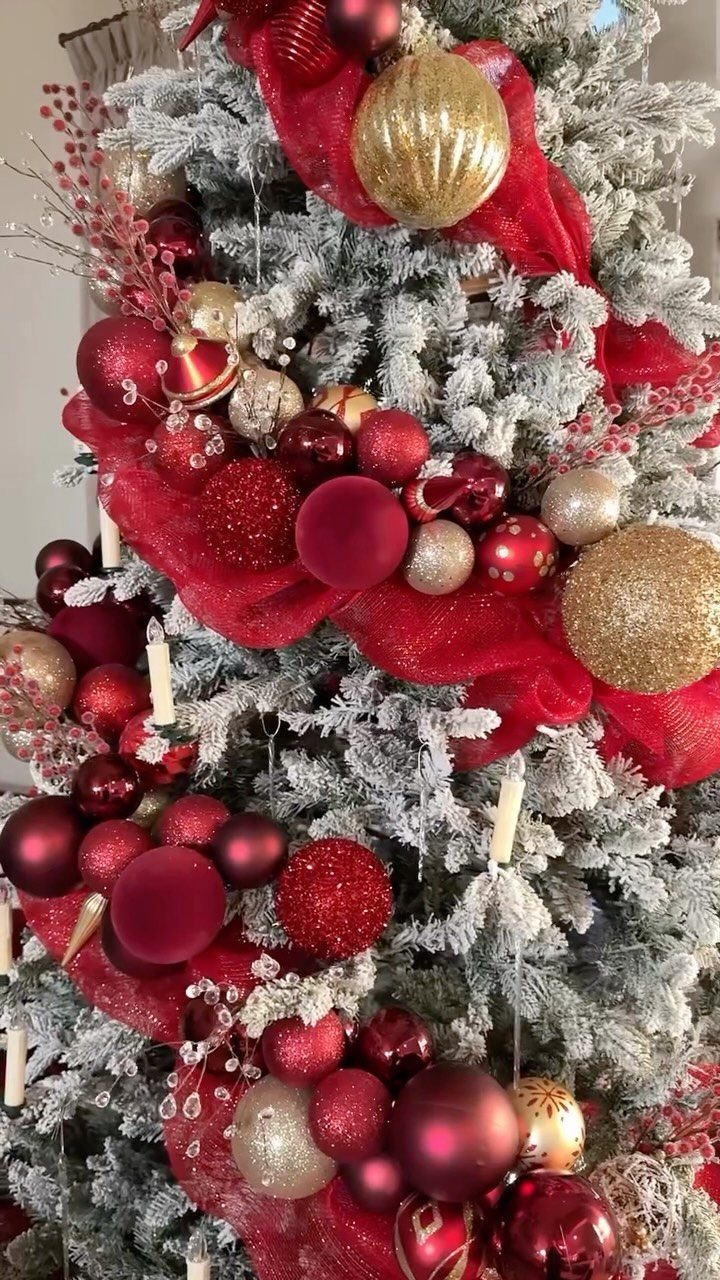
Flocking does half the styling before a single ornament goes on, because the snowy white makes red and gold look richer. I would keep the palette to those 2 colors and let the tree’s finish do the rest.
Red mesh ribbon works well here since it adds texture without covering the flocking.
Tuck it in loose loops between baubles. Handle the branches gently when decorating, as flocked tips can shed.
10. Add Ribbon or Garland
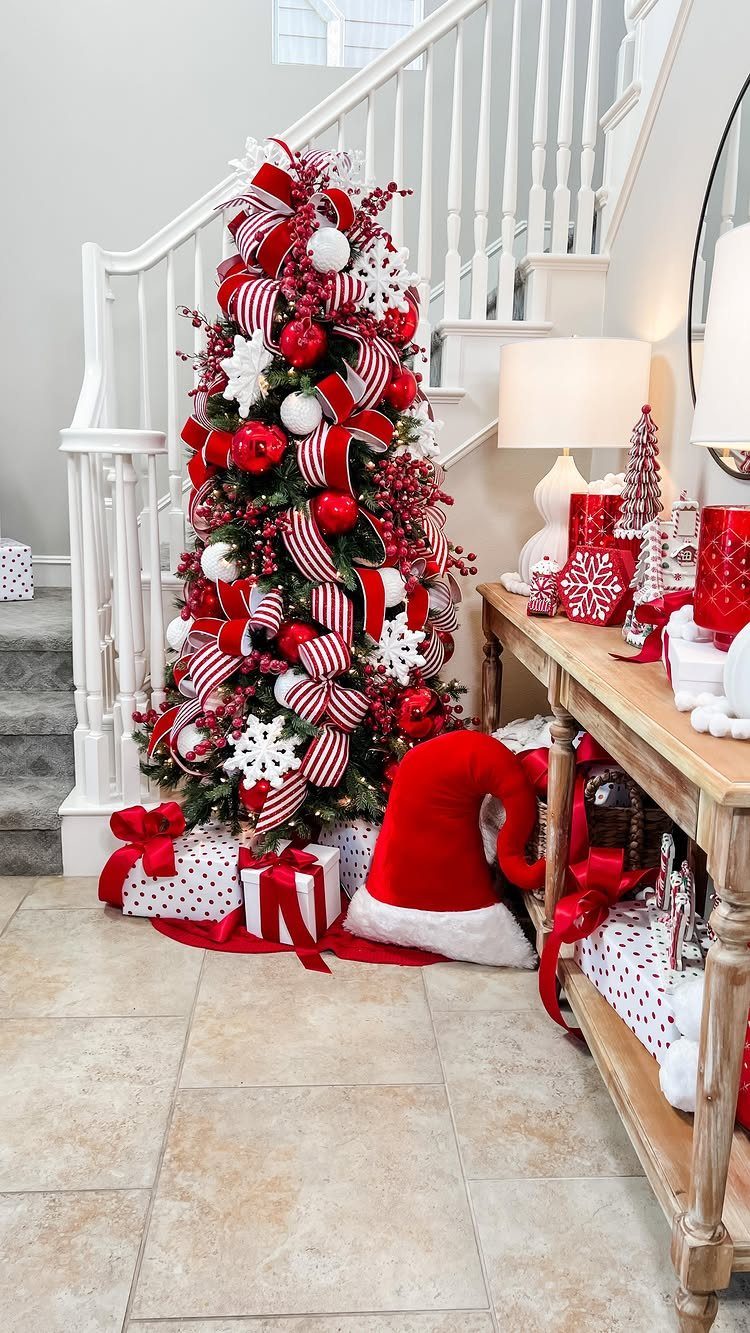
Ribbon is the cheapest way to add texture to a tree, and red and white stripes feel crisp and classic. Cut long lengths and drape them in loose swags from top to bottom, tucking the ends into the branches.
Wired ribbon holds a shape better than soft ribbon, which matters if you want gentle loops. A bead or fabric garland works the same way and suits a tree with plain red ornaments.
11. Statement Tree Topper
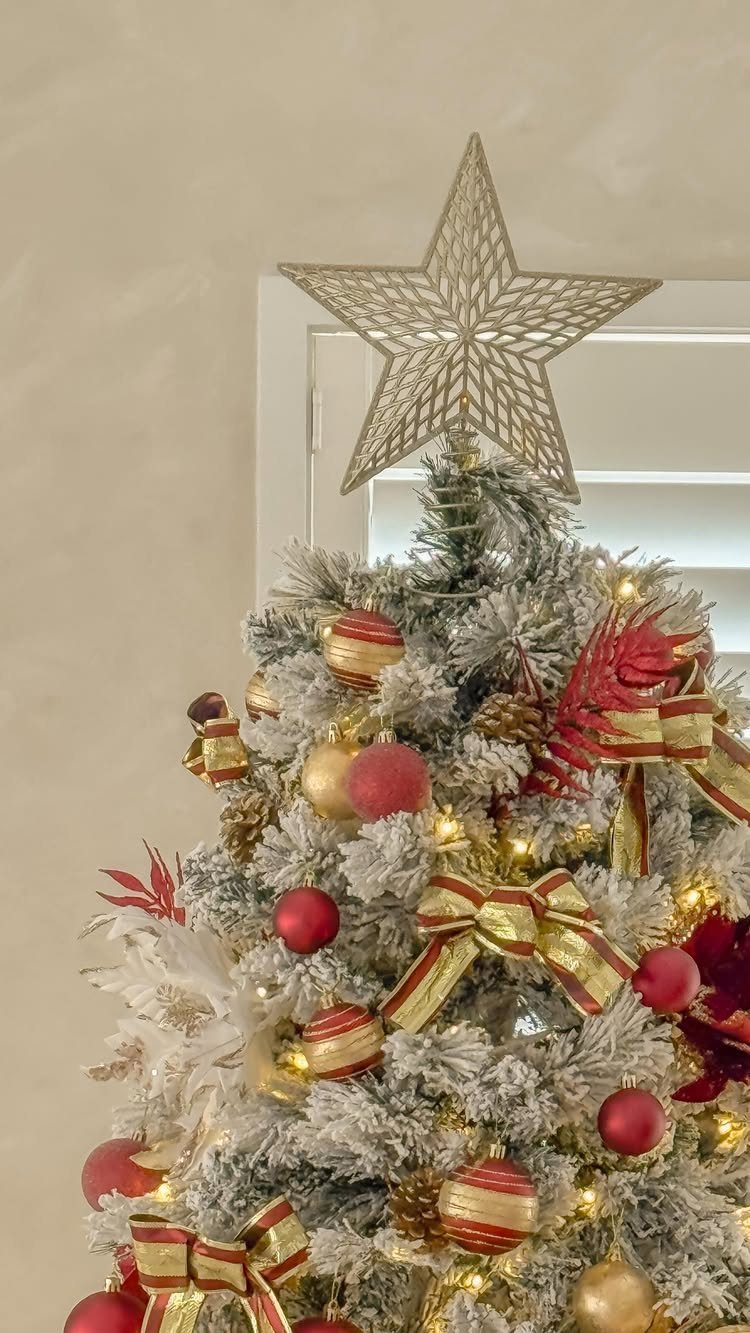
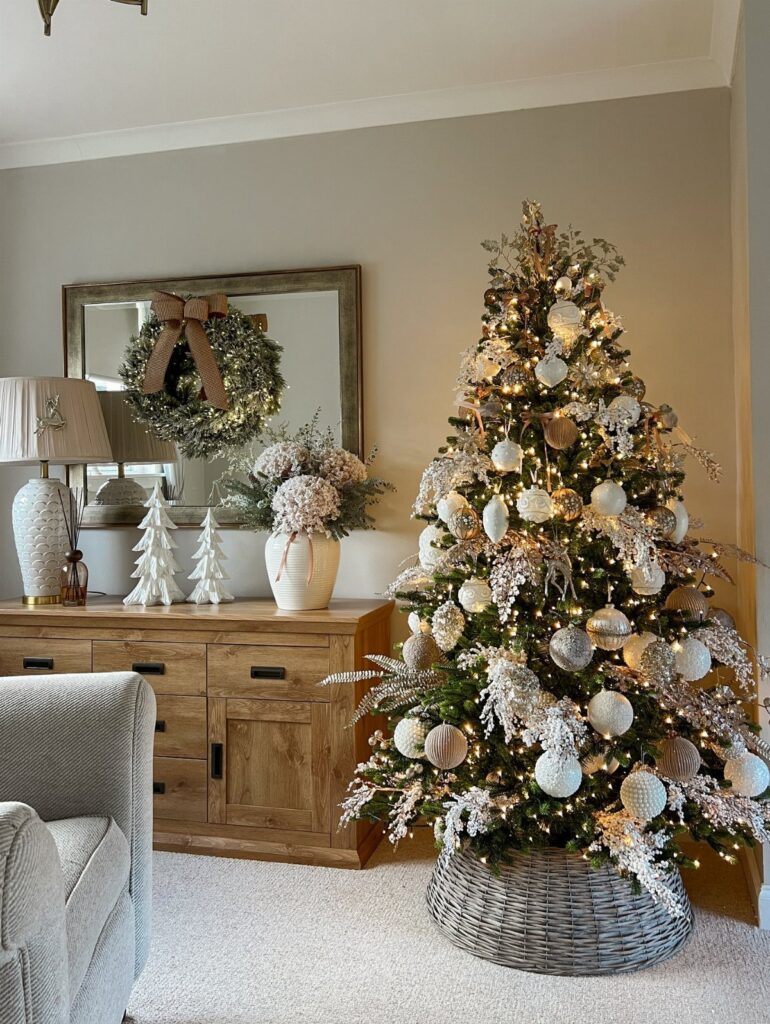
A large gold wire star gives a flocked tree a focal point that no ornament can match. Choose a geometric shape with open lines, since the white tree behind it shows through and keeps it light.
Size it generously; a topper that is too small gets lost against the tree. Secure it to the top branch with floral wire so it stays upright, and repeat the gold in a few ornaments below.
12. Tree Skirt
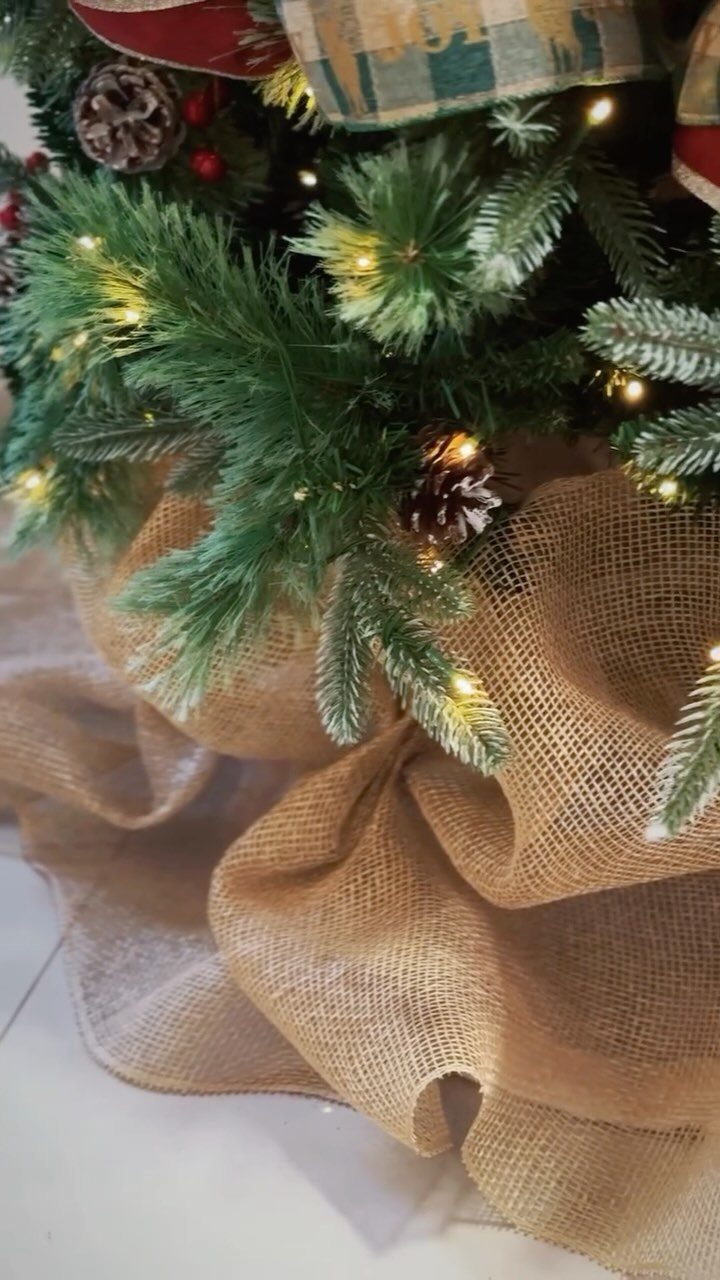
Burlap makes a tree skirt that looks earthy and relaxed, and it pairs naturally with pinecones and warm lights. Tan shows up against white floors and defines the tree’s edge, so the whole setup looks complete rather than unfinished.
Spread it wide and fluff the edges so it drapes loosely instead of lying flat.
If you would rather skip buying one, a yard or two of plain burlap fabric cut into a circle does the job for a few dollars.
13. Decorate with Food Items
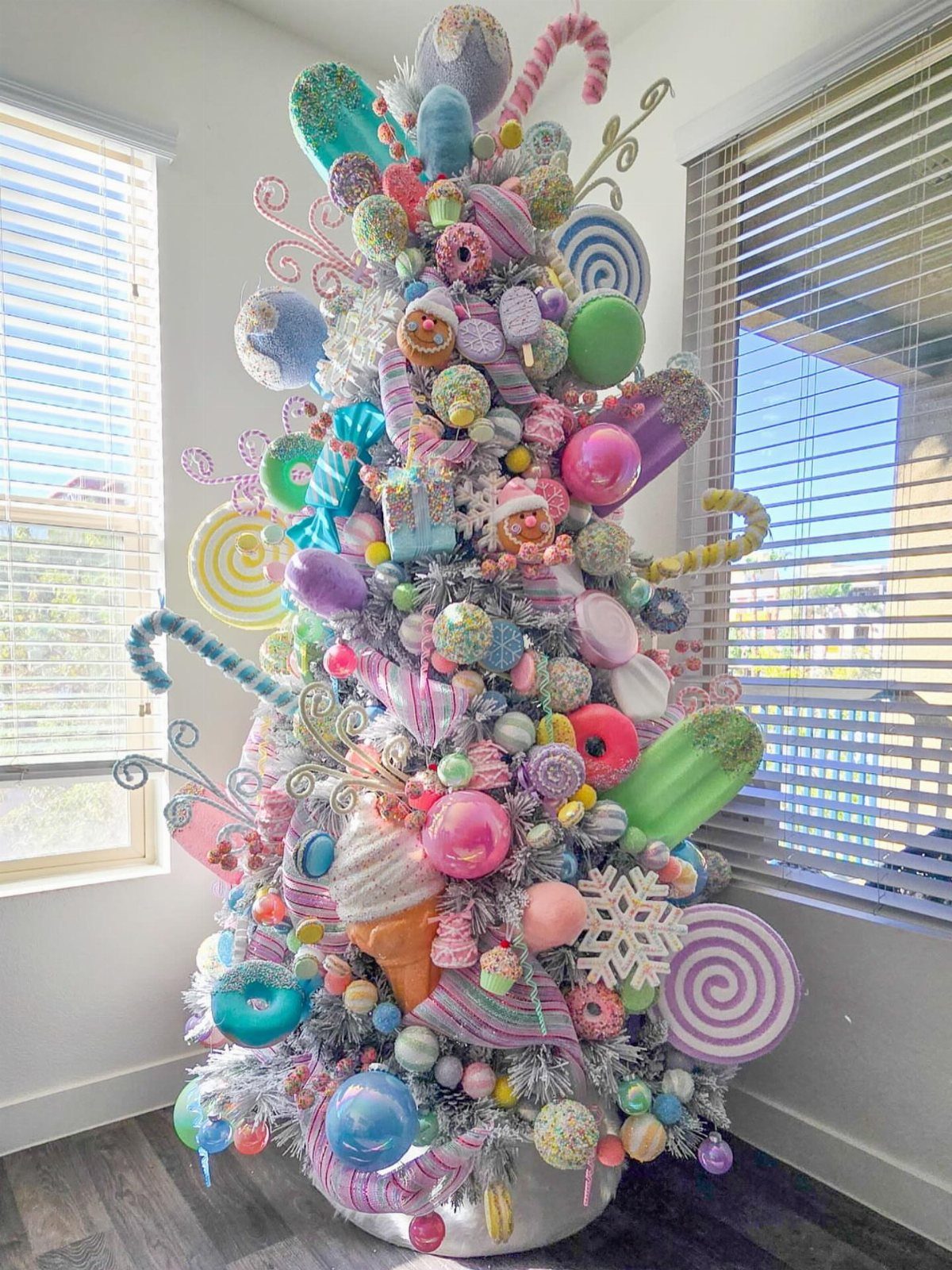
Oversized candy and dessert ornaments do the work of a whole box of baubles, and a white tree lets their colors read clearly.
Choose pieces that differ in shape, such as swirls, cupcakes and wrapped sweets, so the tree has rhythm and not one repeated note.
Hang the biggest pieces first, spread across the tree, then fill gaps with smaller ones. These are decorations, not snacks, so keep real food off the branches.
14. Incorporate Whimsical Elements
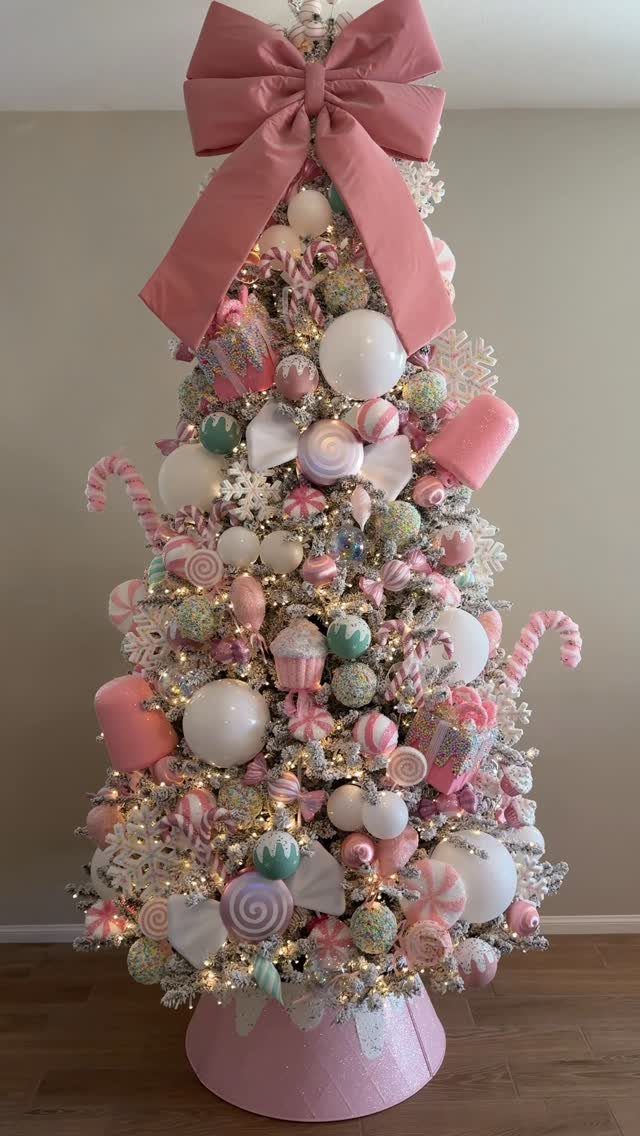
Charm comes from repeating the palette, so match the bow and skirt to the candy colors rather than adding a third shade.
Put the bow where it can be seen from across the room, and place the large candies a hand’s width apart so each one gets noticed. Fewer, bigger pieces beat a crowd of small ones here.
15. Mini Tree
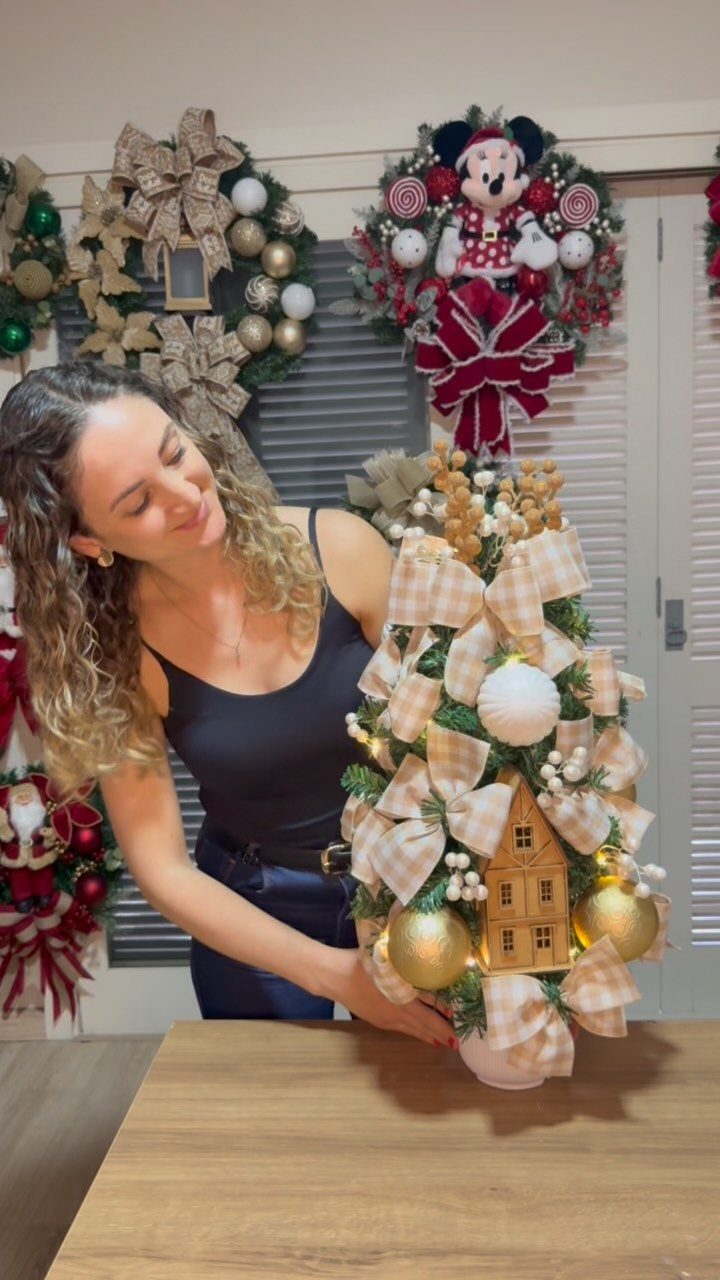
A small tree on a table suits anyone short on floor space, and it takes only a handful of ornaments to finish. Scale matters most: choose small baubles, since full-size ones swallow the branches.
Set it on a sturdy table or sideboard, and place a wreath or two on the wall behind it so the corner feels planned. I like this for apartments, entryways and kitchens, where a full tree would never fit.
16. Sustainable Tree
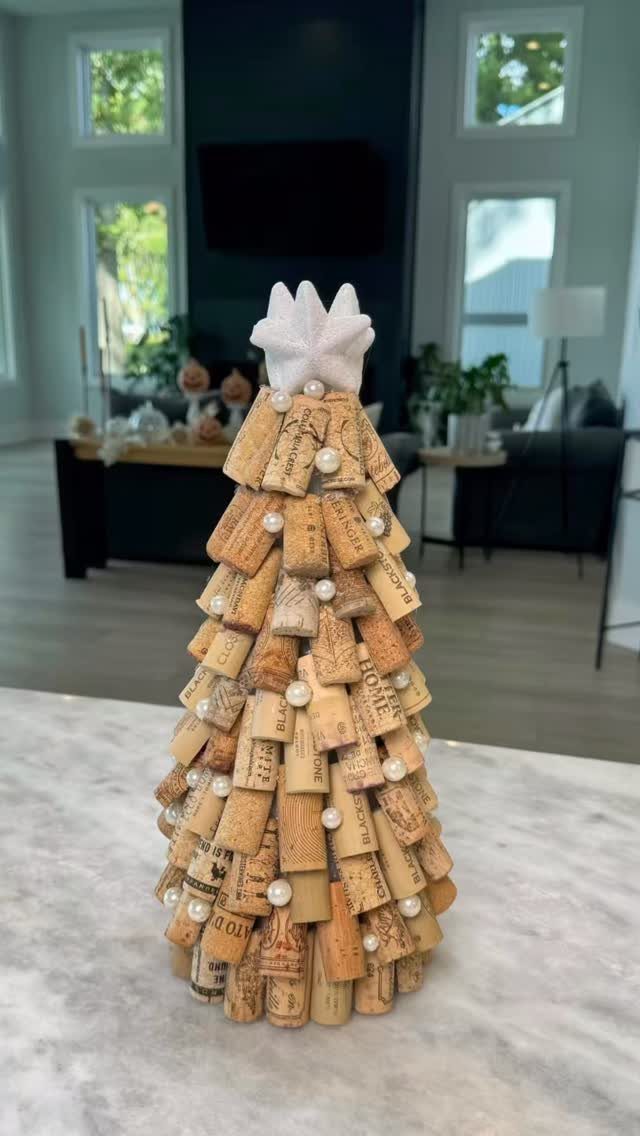
Wine corks glued into a cone make a tree you can keep and reuse every year.
Start from a cone form, such as foam or heavy paper, and glue corks in tight rows from the bottom up.
It costs little if you save corks over time, but a good cone takes patience. A marble counter or mantel shows it off well.
17. Gingerbread-inspired Tree
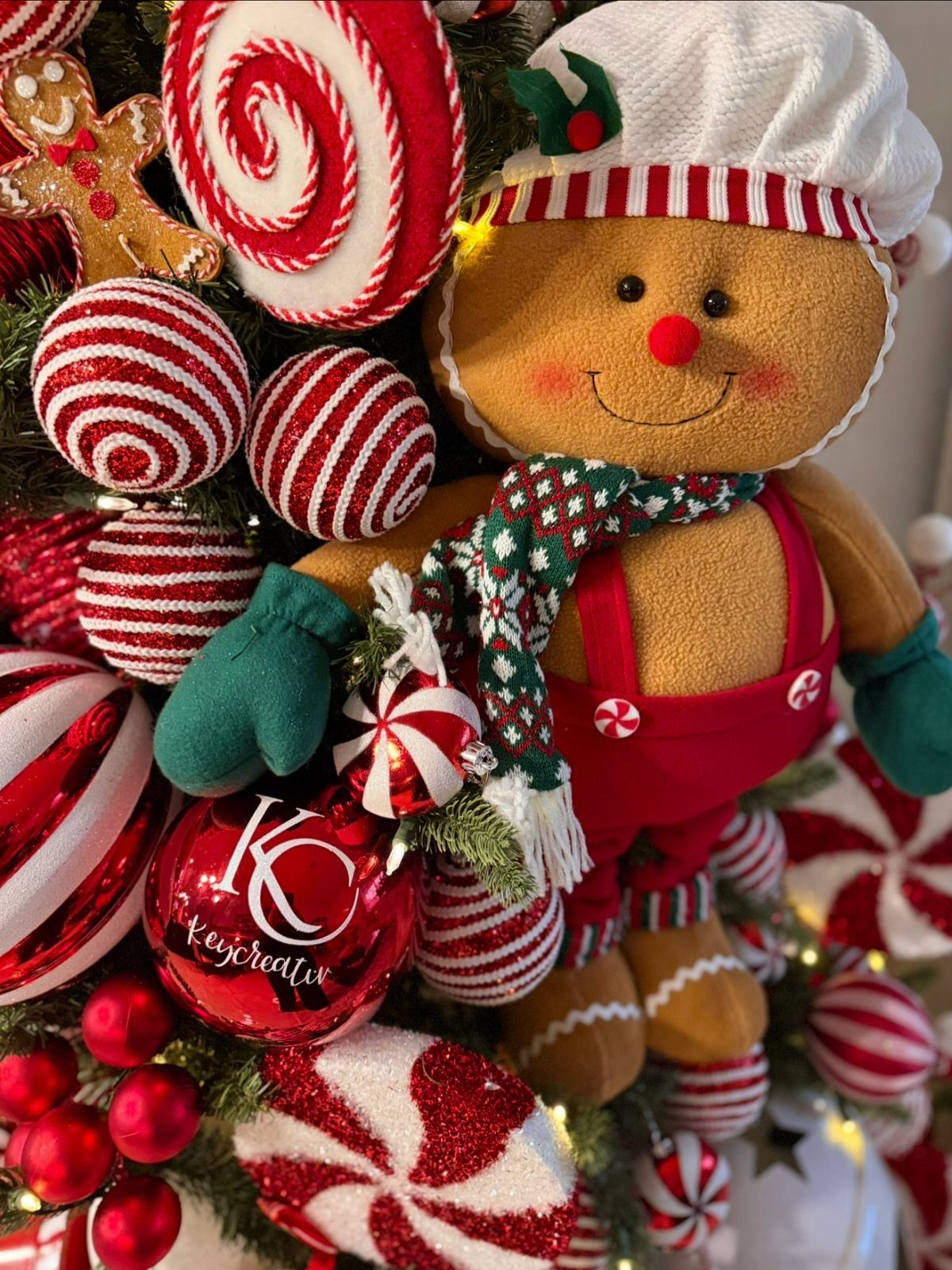
A stuffed gingerbread figure and red-and-white peppermint ornaments get the theme across without baking a thing. Choose plush or felt figures over baked ones; they last from year to year and don’t crumble.
Hang the peppermints on loops of ribbon, and mix in a few red ornaments so the palette stays tight. Place the gingerbread figure at eye level on a branch where it can sit, not dangle.
Plan Your Decorating Process
Pick the theme before you buy anything, then gather every supply in one spot. A tree decorated in a single sitting goes faster when nobody is hunting for the box of hooks.
Test the lights before they go on the branches. Plug each strand in on the floor, since a dead section is far easier to swap out before it is wrapped around a tree.
Ornaments you can reuse year after year are worth paying more for. A smaller set of well-made pieces beats a large bag of flimsy ones, and you can add to it each season.
Choosing the Right Tree
Choose the tree for your room first and your theme second. Measure the corner or spot where it will stand, and remember that a tree looks wider once it is filled with ornaments.
Real pine gives you natural charm. An artificial tree gives you convenience, and a pre-lit one saves the wrapping step, which is the job I find most tedious.
Short on space?
2 other options are worth a look this year. Renting a living tree gets you the real thing with no disposal, while fiber optic trees offer built-in light shows that shift color on their own.
Popular Decoration Materials
Ribbon and garland add texture, and the material should match your theme. Velvet feels rich, burlap feels rustic, and metallics catch the light.
For a modern look, run ribbon straight down the tree in vertical cascades instead of wrapping it around.
Garlands scaled up to twice the usual width or swapped out for balloons both fill space fast and read from across the room.
Banners are an easy idea to borrow from the mantel.
A small "Ho Ho Ho" or "Merry and Bright" banner strung across the branches works as an ornament that also says something. Keep it light so it doesn’t pull the branches down.
Frequently Asked Questions
What are some classic Christmas tree decorations?
Red and gold ornaments, tinsel and a traditional topper are the classics.
What is the correct order to decorate a Christmas tree?
Start with the lights, then hang the largest ornaments, then fill in with smaller ones, and finish with ribbon, bows or tinsel. Setting big ornaments deep near the trunk adds depth.
What is the Christmas tree theme this year?
Oversized ornaments, rustic pinecones with wood pieces, minimalist trees with only bows or lights, and sustainable trees are all in favor.
Big baubles fill a tree fast, so they save both money and hanging time. Whatever you pick, stay with two or three colors so it looks deliberate.
What are the decorations on a Christmas tree called?
Most are called ornaments or baubles, and the strands of beads or fabric are garland. Ribbon, bows, a tree topper and a tree skirt round out the set.