The 6 options range from a folded tube kids can manage to a garland of patterned lanterns hung overhead, and which one fits depends on the crafter’s age and whether the lantern needs to hold light.
1. Kids Crafting Paper Lanterns
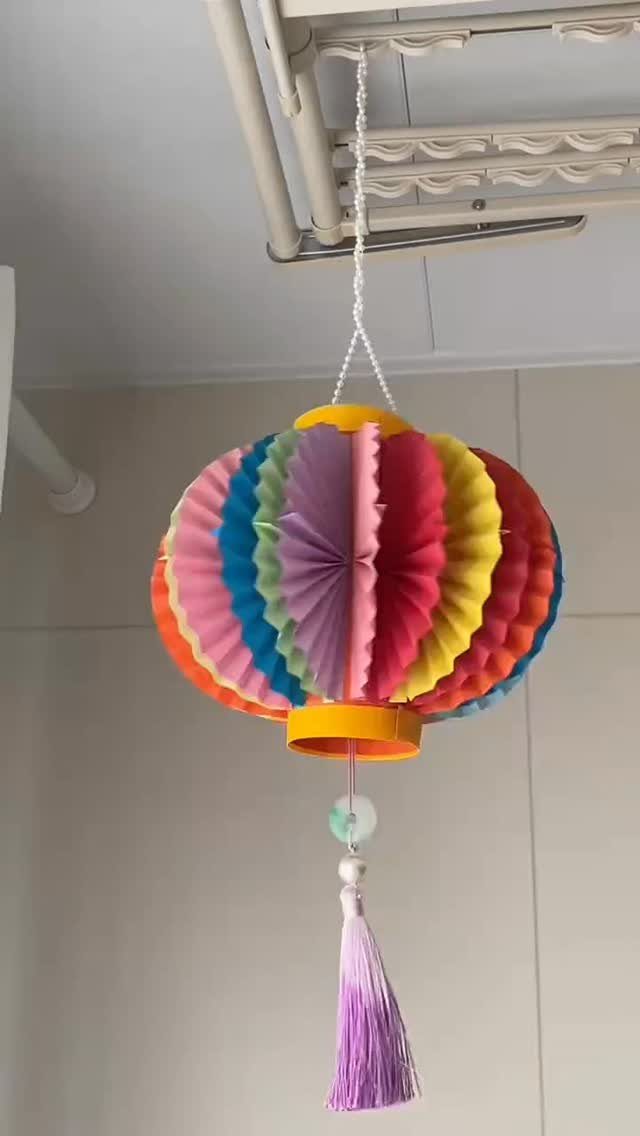
Pleated paper is the easiest lantern to hand a child. Folding an accordion pattern is repetitive and forgiving, and the result still looks finished.
Pick bright, solid sheets so the pleats show up, and finish with a tassel at the bottom, as this one has. Let kids choose the tassel color; it takes the least effort and gets the most pride.
A string loop at the top turns it into a decoration right away.
2. Paper Lanterns with LED Tealights
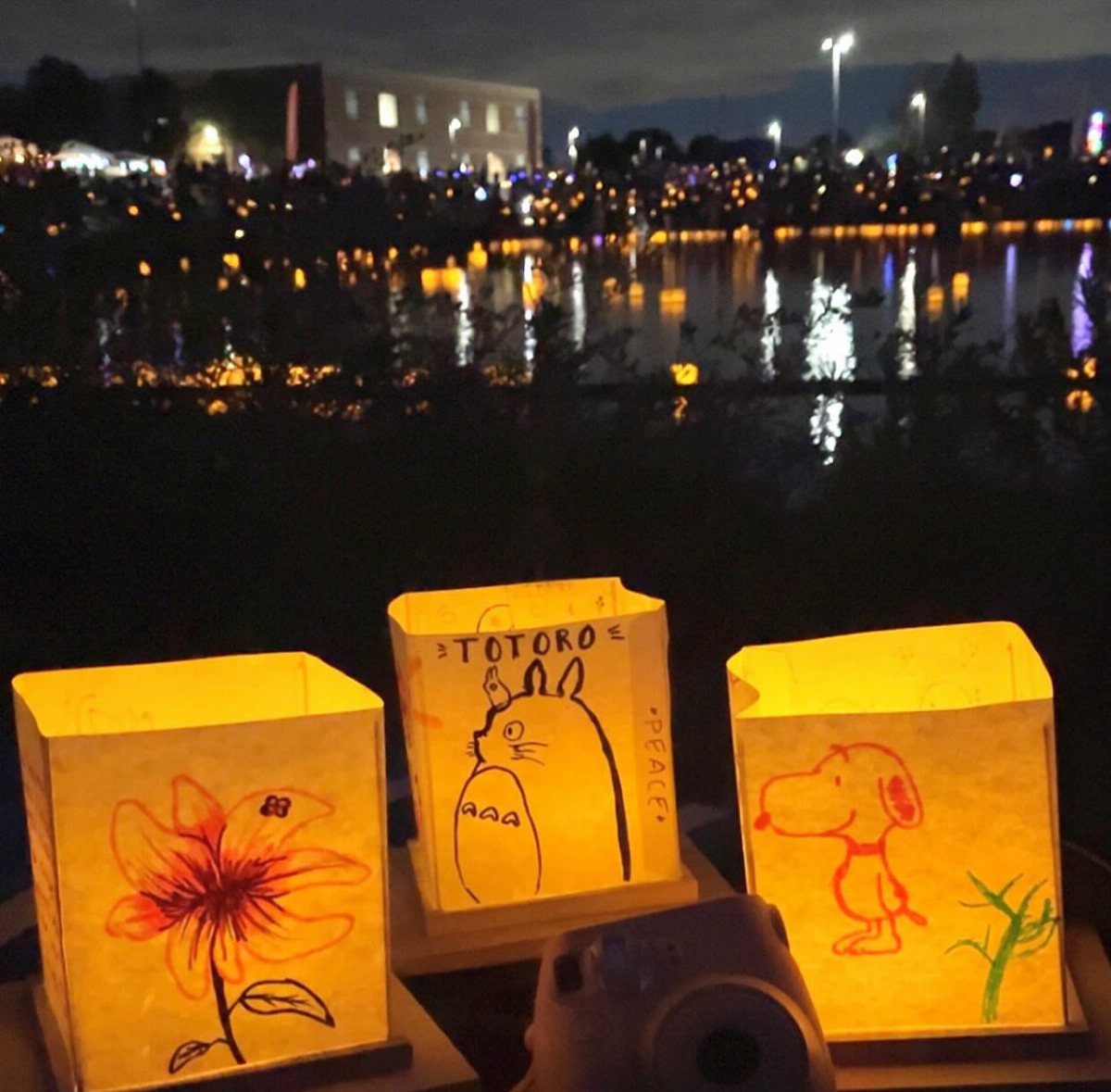
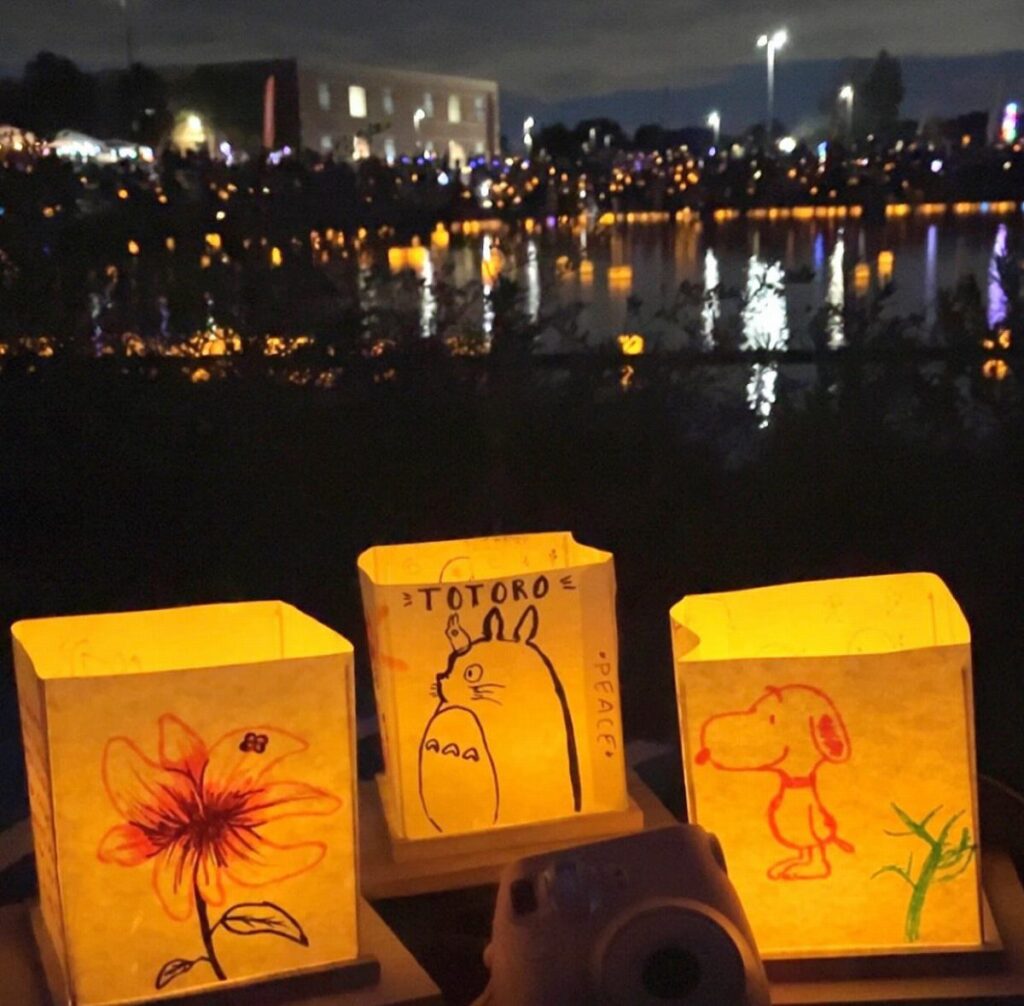
Battery tealights make a paper lantern safe to leave glowing, which matters when kids carry them. A flame never touches the paper.
Square sides give you flat panels to draw on, so let each person draw a favorite character or flower in dark marker. Dark lines show best when light comes through from inside.
Pale yellow or white paper glows warmest. Sturdier paper also holds a square shape better.
3. Recycled Book Pages Paper Lantern
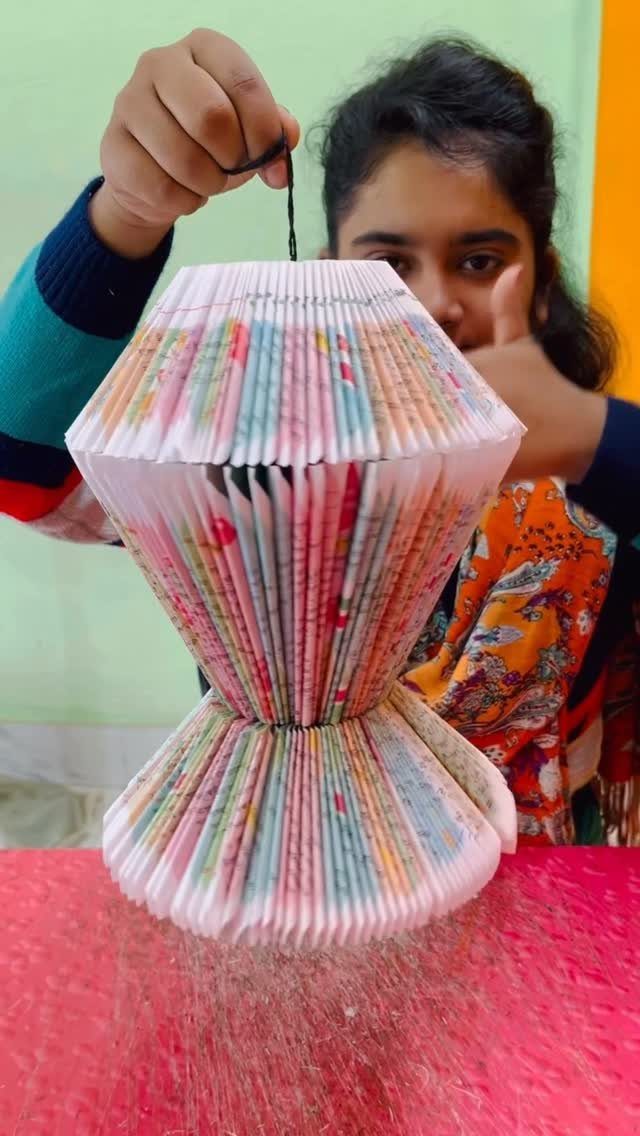
Old book pages give you free paper with built-in print, and the folded, hourglass shape shows it off. Thrift-store paperbacks or damaged books are the cheapest source, so you can cut them up without guilt.
Choose pages with colorful illustrations if you can find them. Plain text pages look quieter, and both work.
Kids can hold the finished piece easily, since it’s light and has no sharp parts.
4. Paper Lantern with a Handle
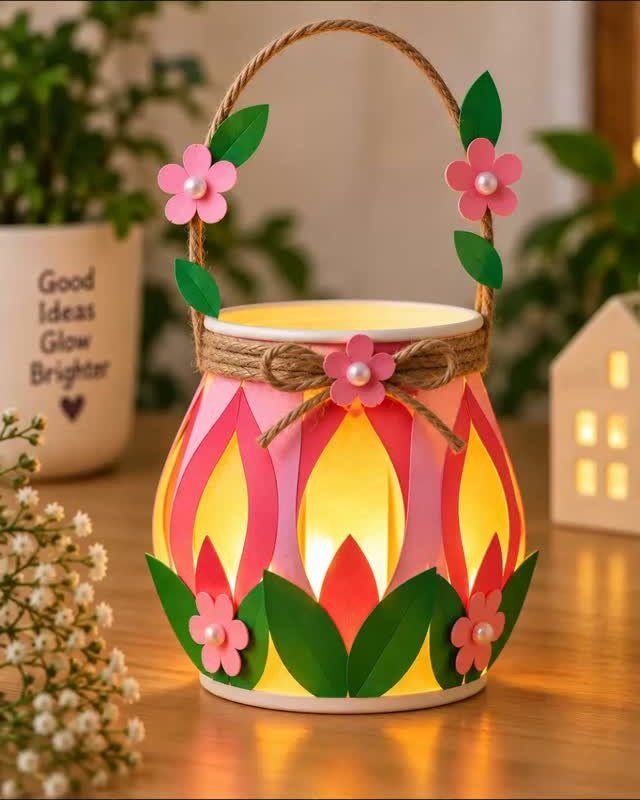
A handle is what makes a paper lantern usable: without one you can only set it down, and with one you can hang it or carry it.
Twine is my pick, since it looks right with a flower-shaped lantern and costs almost nothing.
Poke 2 holes on opposite sides of the top and knot each end of the twine from inside. Knots keep it from pulling through.
Pair it with an LED tealight for a glow.
5. Hanging Patterned Lantern Garland
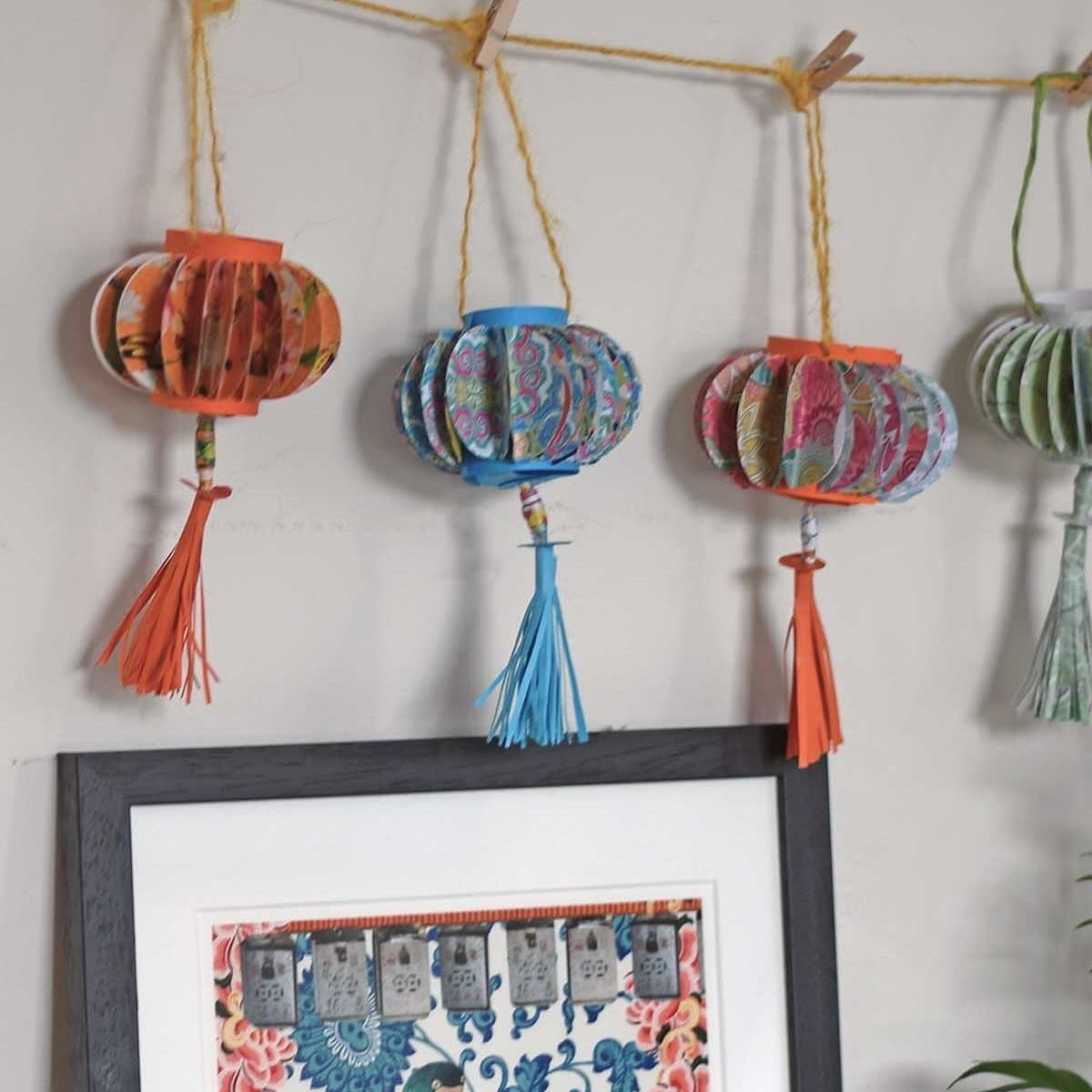
Small lanterns strung along one line cover a wall far better than a single large one. Wooden clothespins do the hanging, so you can add, remove or rearrange lanterns without tying anything.
Keep the lanterns small and use matching tassels so mixed patterns still look planned. Hang the string above a frame or shelf, where it reads as a deliberate display.
Make more lanterns than you think you need; gaps show.
6. Rainbow Paper Strip Lantern
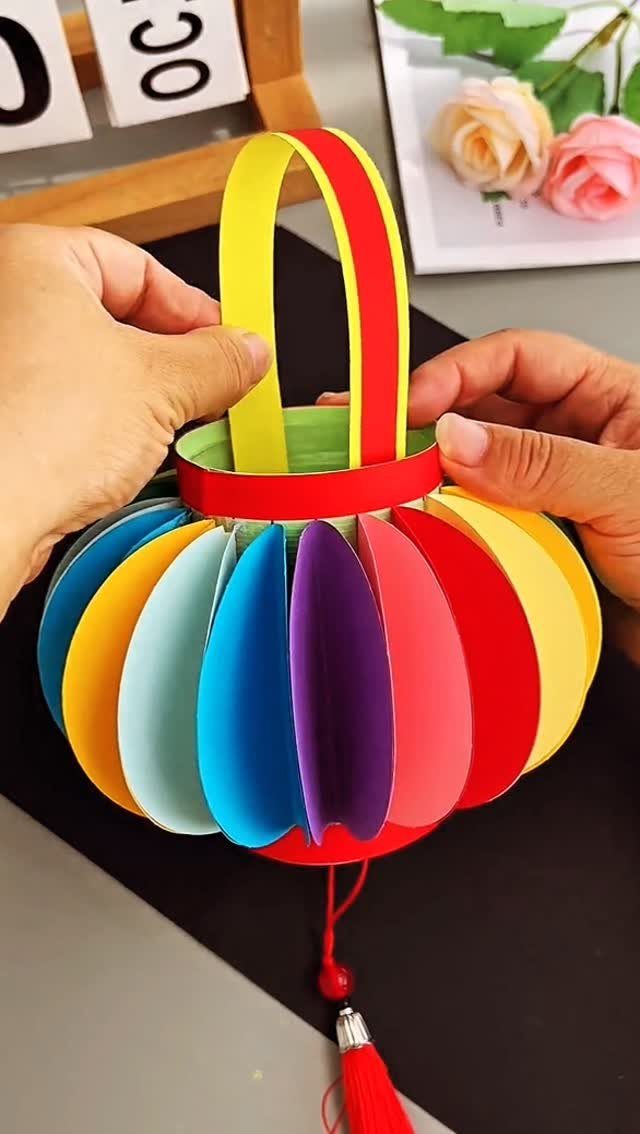
Curved strips of rainbow paper make a bright lantern with minimal cutting. Every strip is the same, so cut them all at once and swap colors as you go.
Anchor the strips at the top and bottom, then let the middle bow outward. A handle across the top and a tassel at the bottom finish it.
Use a contrasting tassel, like red against the rainbow, so it stands out.
Cultural Education
Talk about the lantern while hands are busy. Lanterns are tied to Chinese festivals, and a craft table is a relaxed place to ask what the festival is and why people light the dark with paper.
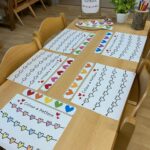
A template with dotted and solid lines helps anyone who struggles to follow steps. The craft works for ages from preschool through elementary school, and for adults and seniors too.
For older groups, let the lantern prompt stories.
Making lanterns also builds fine motor skills, so a culture lesson and hand practice happen together.
Safety Tips for Crafting
Give young children blunt-tipped, child-size scissors, and keep adult scissors out of reach until you need them.
Stay at the table whenever glue or other tools come out. Hand out small amounts of glue at a time, so a spill stays small.
Do any cutting that needs a sharp blade yourself, ahead of the party.
Paper and open flame do not mix. Keep real candles, hot bulbs and other hot surfaces away from every lantern, and use battery lights if you want a glow.
Variations on Lantern Designs
Treat shape, size and color as three separate dials, and change one at a time so you can see what each does.
Color is the easiest to change. Red and yellow are the familiar pair, but any color works, so match the paper to your party’s theme.
For size, start with letter-size copier paper (8½" by 11") or 9" by 12" construction paper.
With the paper folded in half, cut through both layers from the fold toward the open edge, stopping ½" short so the strip stays joined and the lantern tube holds together.
Bring the edges into a cylinder with the fold on the outside, and tape it at the top, middle and bottom. Staples work too.
Try a wider or narrower strip, a taller sheet or a two-color layering once the basic version feels easy.
Frequently Asked Questions
How do you build a Chinese lantern?
Letter paper (8½ by 11 inches) folds cleanly and holds its shape when you roll it; construction paper at 9 by 12 inches gives you a taller lantern with a bit more color.
Add a handle across the top, such as a paper strip or a length of twine, so it can hang or be carried.
What can you craft when you’re bored with paper?
Paper lanterns are a good answer, because the paper becomes something you can hang, carry or light.
Pleated, square-sided, recycled book page and rainbow strip versions all start from simple folds and cuts. Kids can choose the colors and tassels, and adults enjoy them just as much.
How do you make a paper lantern glow safely?
Use a battery-powered LED tealight inside the lantern.
No flame touches the paper, so kids can carry it safely. Battery-powered tea lights and LED strings stay cool enough for paper; anything with a flame or a hot bulb will scorch it.
Light shines through pale yellow and white the brightest, and if you draw on the paper first, black ink shows through better than colored marker.