The list runs from a single red hexagonal lantern with a tassel to a wall of red balloons and streamers, and the cheapest options lean on paper, cord and craft pom-poms.
How much wall, table or doorway you have free decides which idea is yours: a bare wall suits the red envelope grid or fai chun banners, a ledge suits a potted mandarin orange tree, and a door frame suits hanging coin strings or lanterns.
1. Lanterns
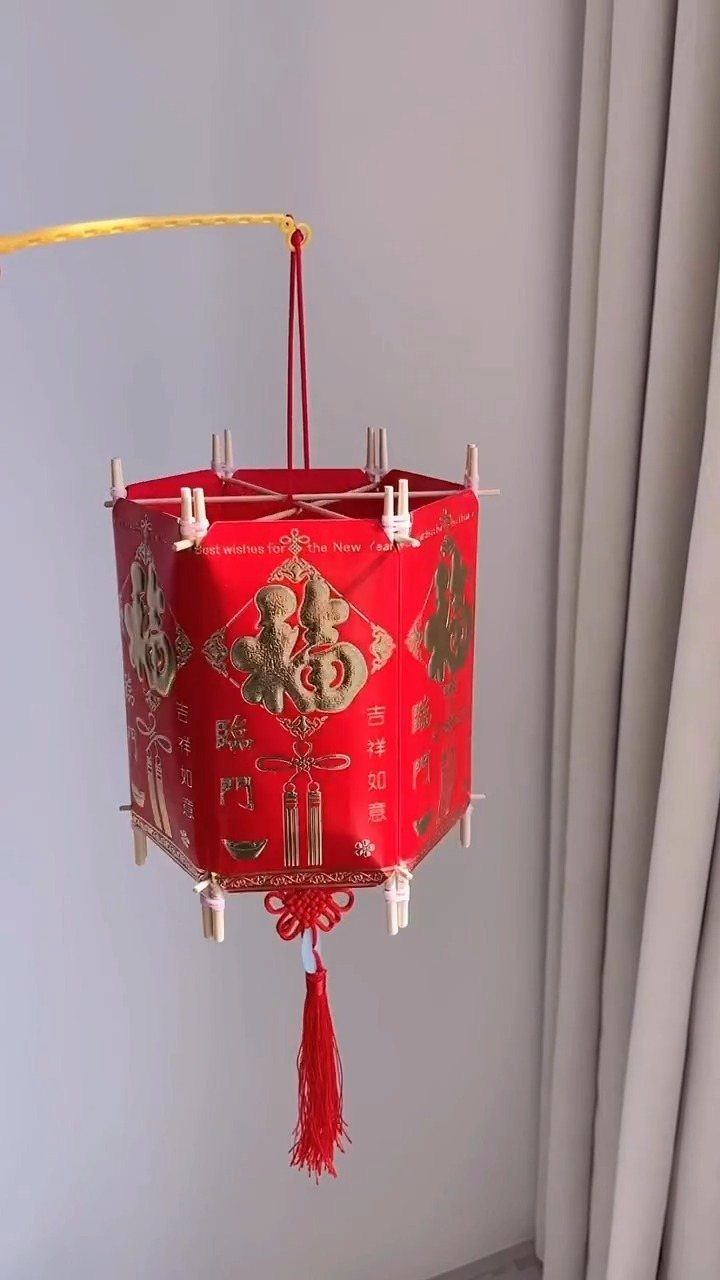
Hanging lanterns are the decoration people expect to see at Chinese New Year, and one red hexagonal lantern with a tassel does most of the work on its own.
I would hang a single lantern at a doorway or beside a window rather than scatter small ones everywhere. Clothespins or a simple loop of cord are enough to hold it up, so there is no hardware to buy.
2. Mandarin Orange Trees
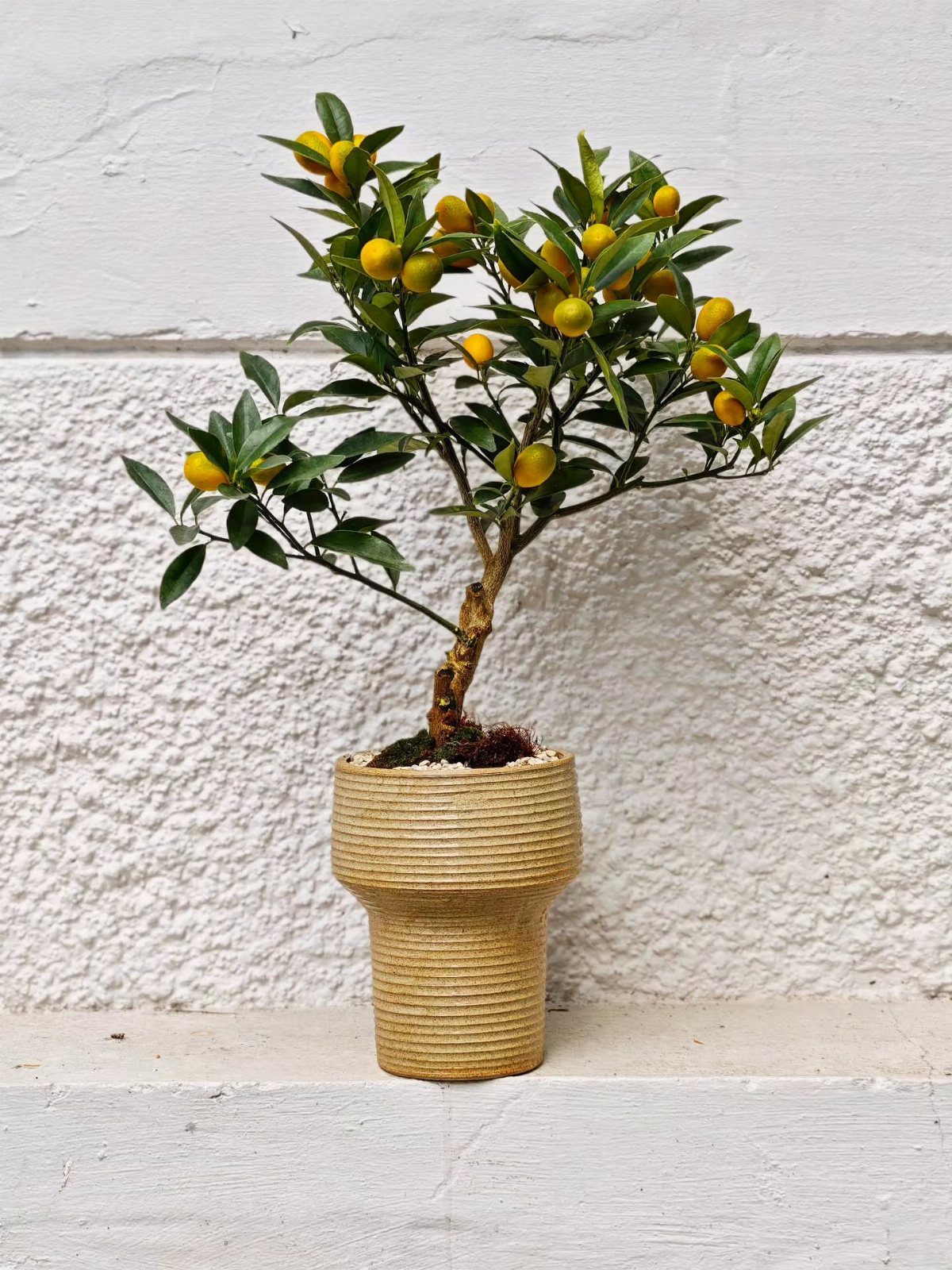
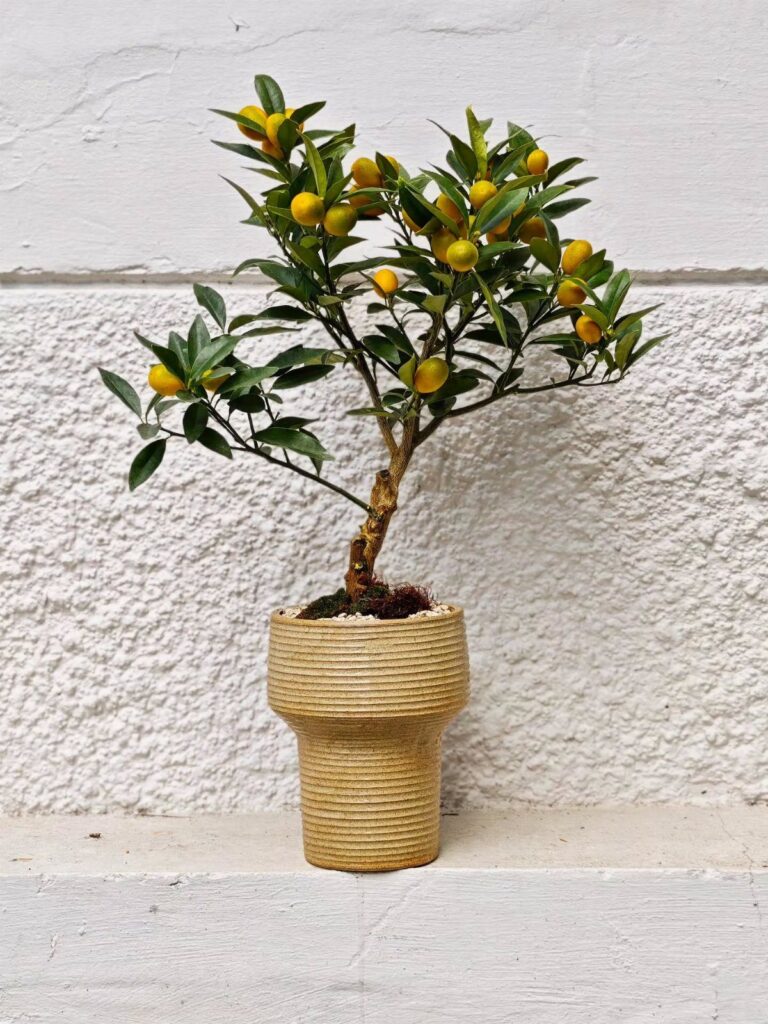
A small mandarin orange tree in a pot brings real fruit color to a ledge, and I like it more than cut flowers because it stays put. Pick one already carrying plenty of fruit, since the fruit is the decoration.
Cost varies by nursery, so compare a couple before buying.
3. Fai Chun Banners
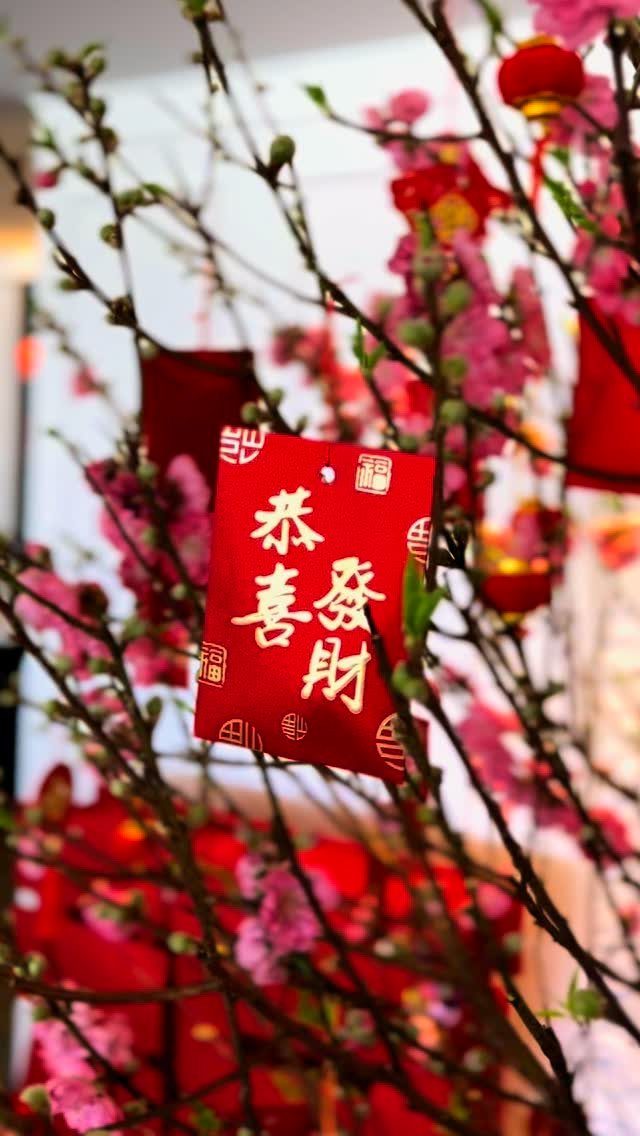
Red banners lettered in gold calligraphy carry wishes for prosperity, which makes them the most direct way to put a blessing on display. Fai Chun banners are the version to look for.
Store-bought banners are the easy shortcut. Gold marker on red paper is the cheap DIY route, though steady hands help.
4. Chinese Floral Arrangements with Fans
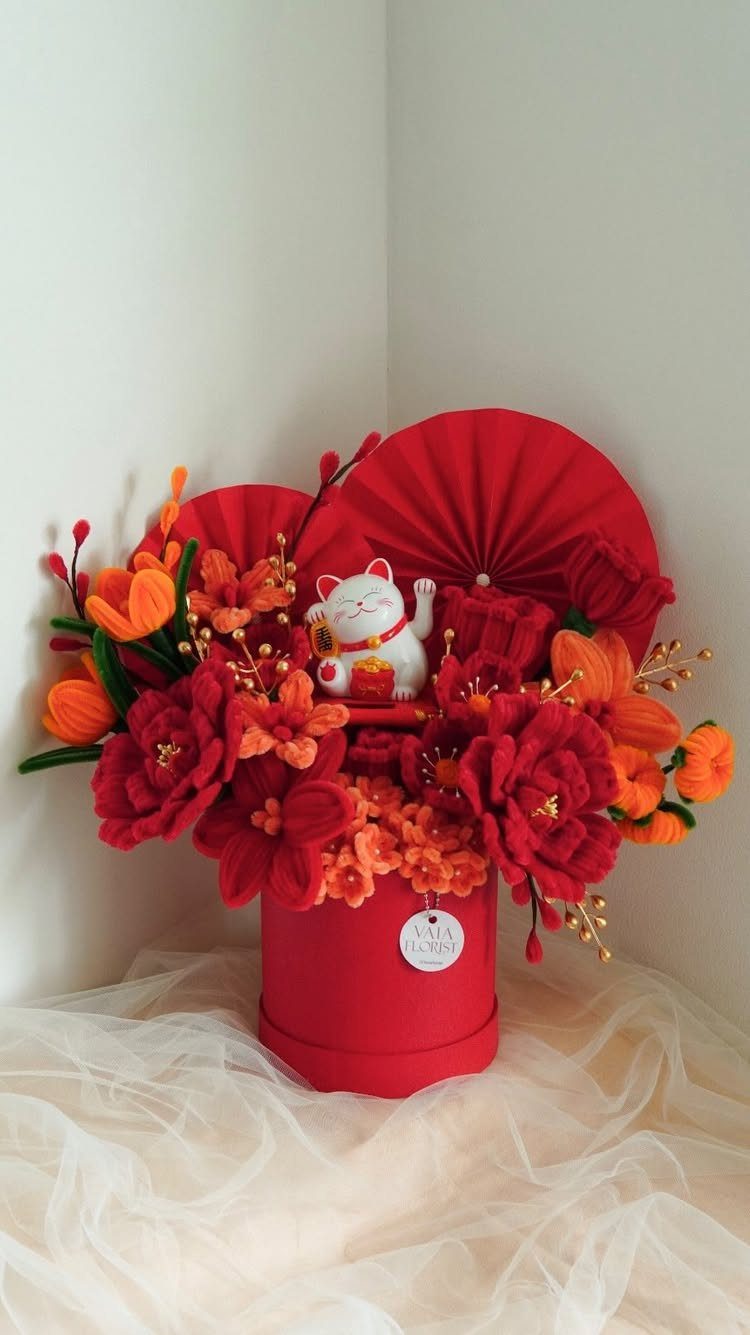
Red and orange flowers packed into a gift box, with folding fans tucked in and a lucky cat figurine on top, make a centerpiece that doubles as a gift.
The box keeps everything in one piece, so you can move it from table to sideboard.
For a home version, buy a red box and a bunch of red and orange blooms.
Add 2 red fans and a small figurine. Set it on white tulle if you want it to stand out.
5. Festive Ornamental Bonsai Tree
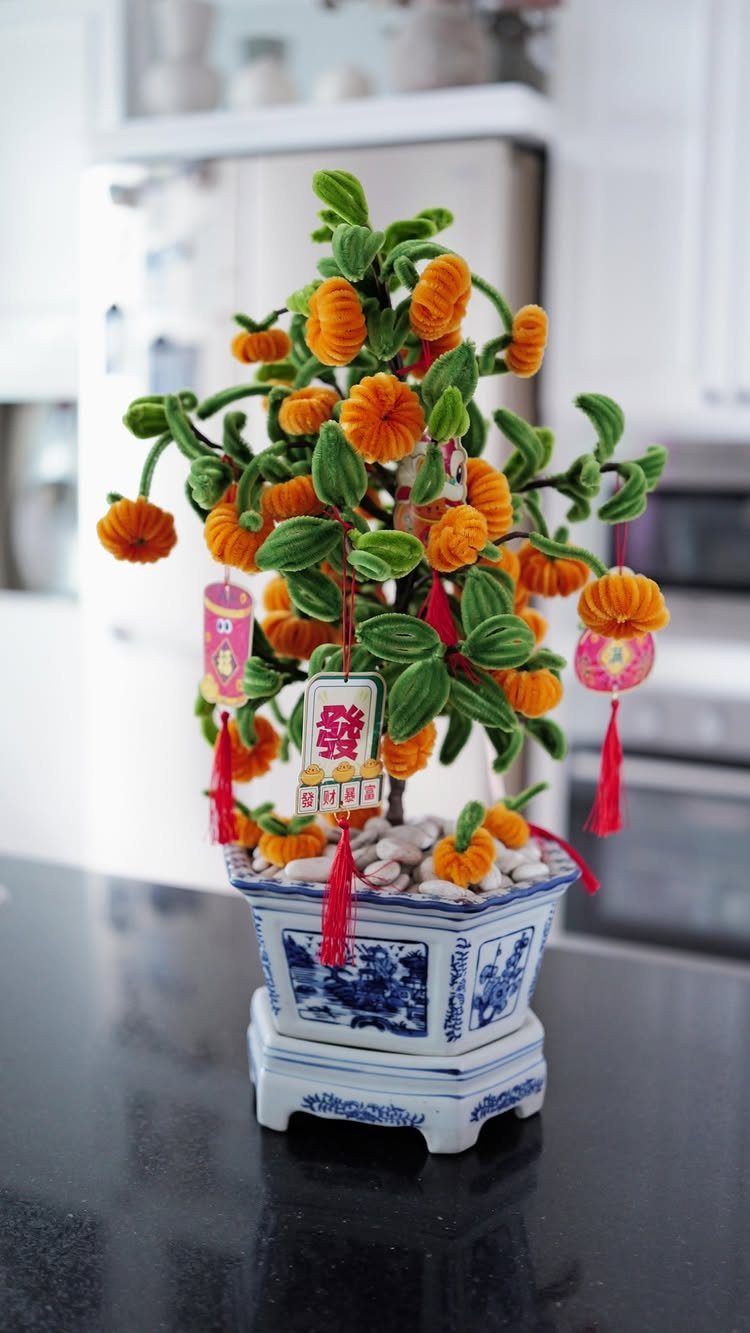
A miniature bonsai hung with orange pom-poms, red tassels, and character ornaments is a decoration you can build at home.
Bare branches work best, because ornaments show without crowding.
Craft pom-poms and tassels are cheap, and you can finish one in an evening. I prefer fewer ornaments, evenly spaced, over a heavily loaded tree.
6. Hanging Chinese Coin Strings
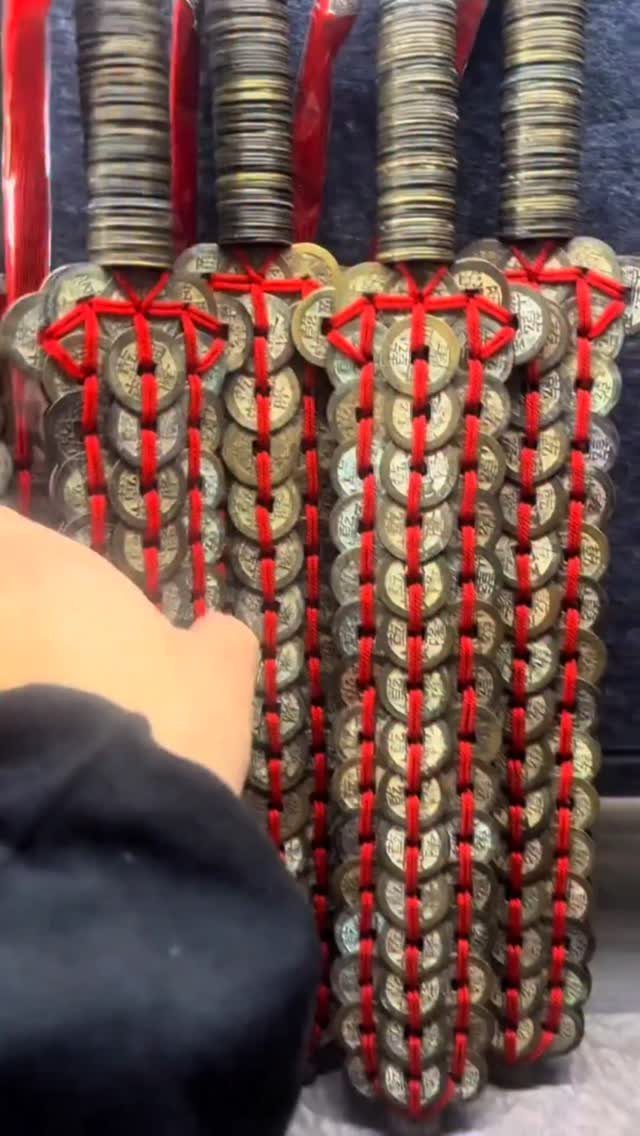
Vertical strings of gold-colored Chinese coins tied with red cords are about the simplest lucky decoration I know. Gold against red catches light and reads as wealth at a glance.
Hang several strings at different lengths from a door frame, a hook, or a curtain rod. A group of strings looks fuller than one, and the cost stays low.
Ancient Chinese coins were round with a square hole in the middle. This shape came to symbolize wealth, so it’s a popular visual motif for New Year’s decorations.
7. Red Envelope Wall Display
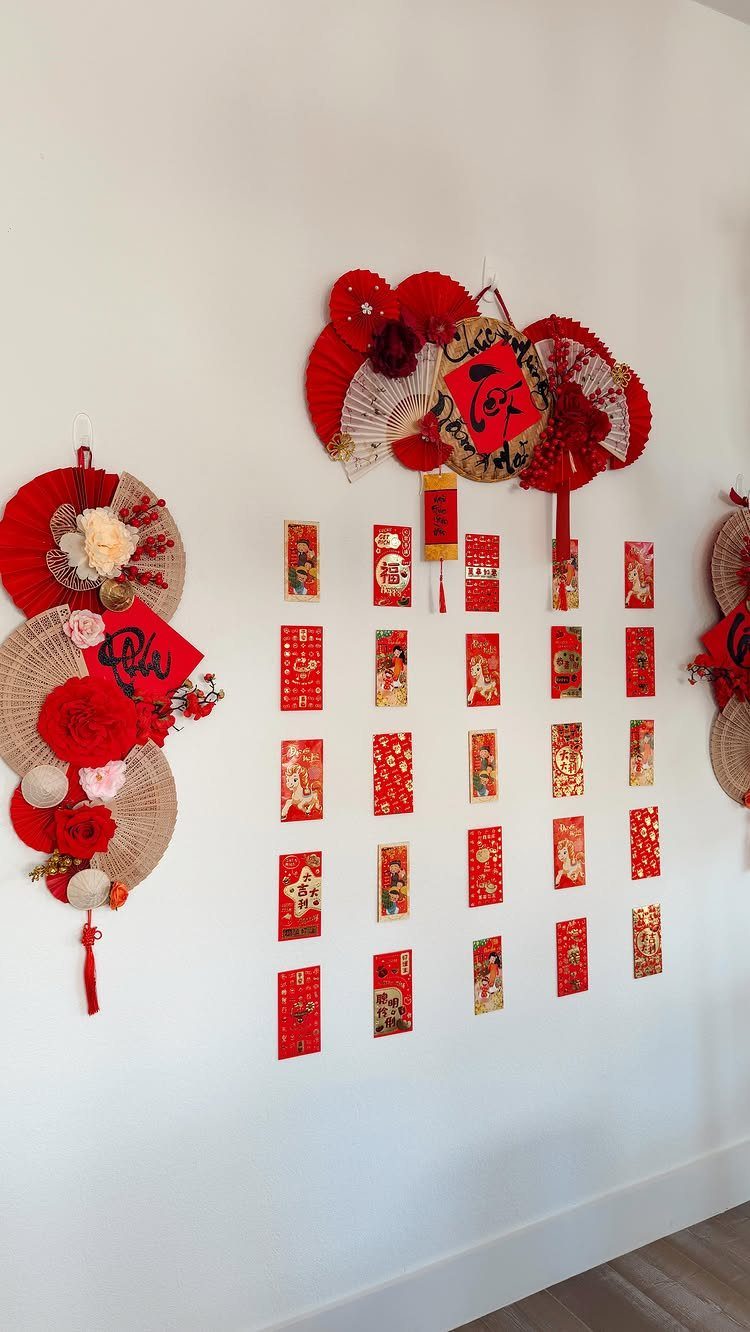
A grid of red envelopes taped flat to a white wall reads as a gallery piece, and the white keeps the red and gold sharp. Paper fans in the same colors, fixed above or beside the grid, add shape.
Lay the envelopes on the floor first and space them evenly before you tape anything.
Rolled painter’s tape on the back keeps the wall clean, and the whole display costs little. Envelopes with gold characters stand out best, so I would put those at eye level.
8. Festive Fruit Display Basket
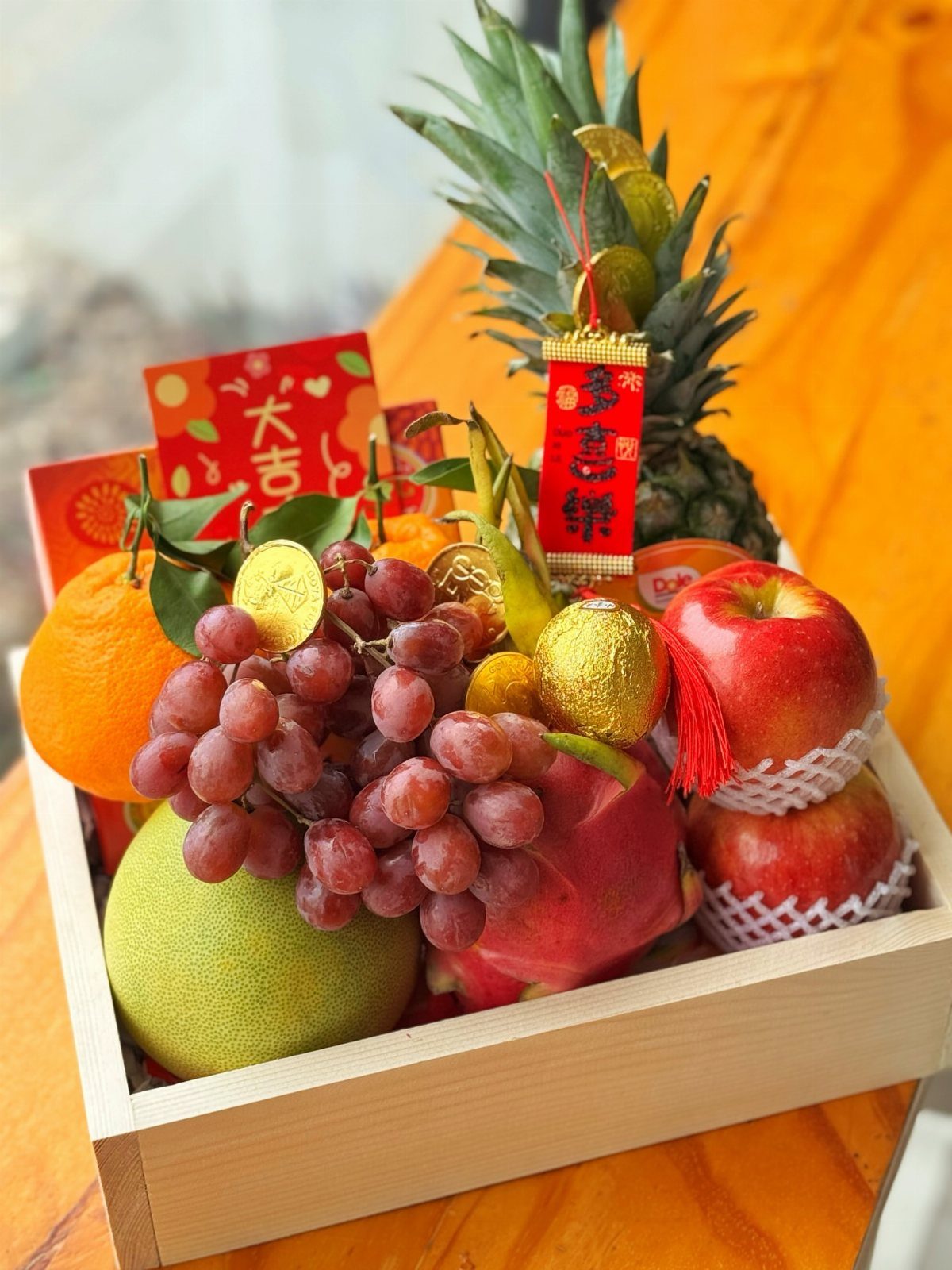
Pineapple, pomelo, red apples, oranges and grapes packed into a wooden crate make a table piece you can eat after the holiday. The rustic wood softens all that red and gold.
Set the biggest fruit, the pineapple, toward the back, and fill the gaps with smaller ones so nothing rolls.
Tuck in a few red calligraphy cards and gold ornaments. Choose fruit that looks good, since it is the centerpiece, and buy it close to the day so it stays fresh.
9. Festive Living Room Balloon Setup
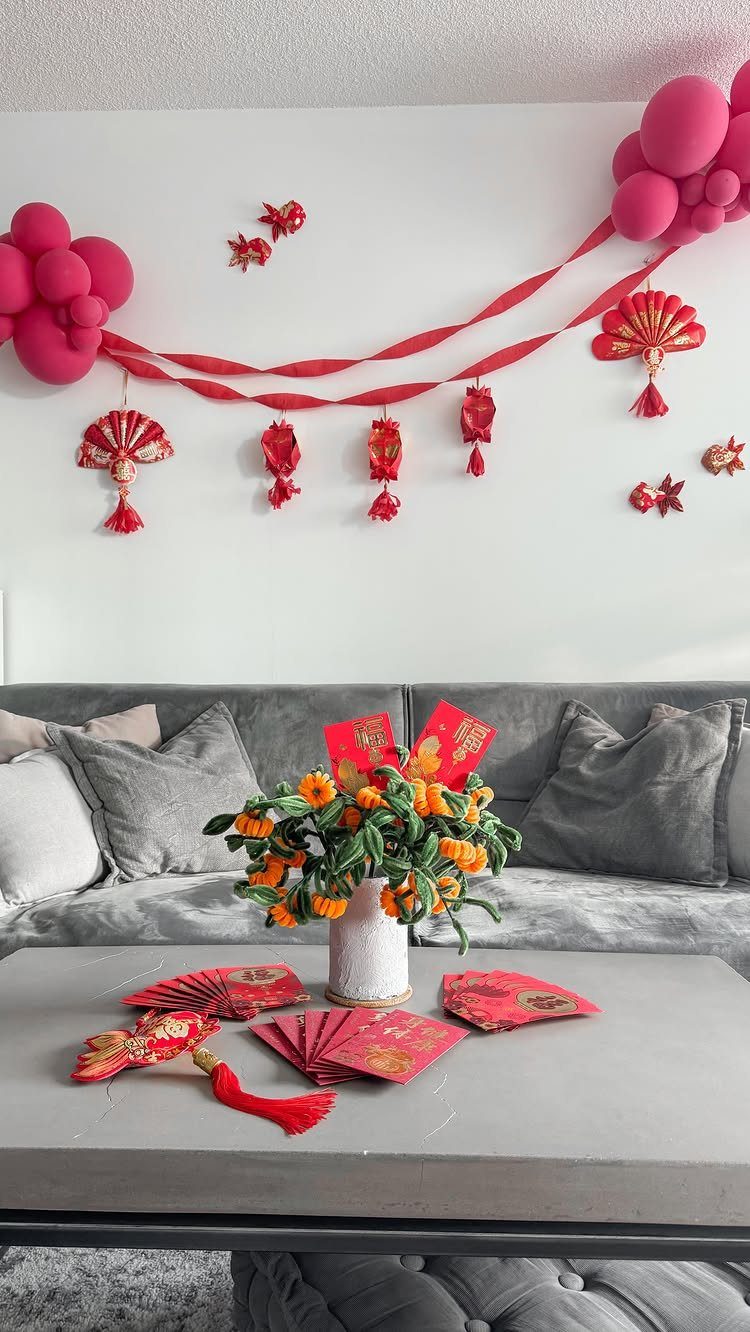
Clusters of red balloons, trailing streamers and paper fans on one wall can give a plain living room a party feel in an afternoon. It is the cheapest way I know to cover a lot of wall.
Keep the decoration on one wall, above the sofa, so the room stays calm. Bunch balloons in groups instead of spacing them out, and hang streamers at uneven lengths.
When to Take Down Decorations
Plan to take everything down after the Lantern Festival, the 15th day of the New Year. Once the decorations come down, the festivities are over and everyday routines pick back up.
Some households leave them up a little longer to hold on to the good fortune, so a few extra days is fine if you’d rather not rush.
Friday, February 19 is the 14th lunar day, set aside for hanging lanterns, so the Lantern Festival follows right behind it.
If any of your lighting is a lantern with a candle inside, skip the flame.
Old lanterns used candles, and a candle can start a fire. Electric lights do the same job, and I would test them at night before the party so you can see how they glow.
Symbolism of Colors
Red stands for happiness and good luck, and gold stands for wealth and prosperity. Knowing that, I pick one as the main color and use the other as the accent, so the room doesn’t feel busy.
Color doesn’t have to come from hanging pieces. Cushions, a tablecloth, or a wall hanging carry it just as well, and they are easy to store and reuse next year.
Some people pick shades based on Feng Shui for 2027, the Year of the Snake. If that appeals to you, check the lucky tones for the year first, then shop for fabric, and keep red and gold as the base.
Importance of Family Gatherings
Decorations set the scene, but the people at the table are the point of the day.
A common belief holds that how you spend the first days of the year sets the tone for your luck over the rest of it.
Staying up past midnight and greeting family and friends with good words is said to bring luck.
Once the family has gathered for the Chinese New Year table, set out lucky foods: rice dumplings for togetherness, fried flour-coated peanuts for vitality, and walnut cookies for happiness. Wearing red or yellow, your lucky colors, ties the day together.
Frequently Asked Questions
What are traditional Chinese New Year decorations?
Red lanterns, red banners lettered in gold, and red envelopes are the classics, along with strings of gold-colored coins tied in red cord. Potted mandarin orange trees and fruit baskets add real color.
What color is taboo on Chinese New Year?
White is the color to avoid as a main shade. Red and gold are the ones to build around, and a white wall works only as a plain backdrop that makes red envelopes and gold details stand out.
What are the lucky foods for Chinese New Year?
Rice dumplings stand for family togetherness, fried flour-coated peanuts for vitality, and walnut cookies for happiness.
Set them out once the family has gathered at the table. Red or yellow clothing matches the festive colors and brings luck to the table.
When should Chinese New Year decorations come down?
Take them down after the Lantern Festival, the 15th day of the New Year, since that ends the festivities.
Some households leave decorations up for several more days to stretch out the good fortune. If your lanterns have candles inside, switch to electric lights, because an open flame can start a fire.