Effort ranges widely: Pink Haunted Caution Tape takes a few minutes on a plain door, while the Hocus Pocus Classroom Door and the Haunted Skeleton and Ghost Scene are layered builds that need a full afternoon.
Your pick depends on who is building it and how much time you have: a group project suits something like the Pumpkin Patch Door or the Monsters Inc.
Classroom Door, where kids and students can color paper pieces, while a short deadline points to the Giant Candy Corn Cutout or the Pink Haunted Caution Tape.
Material matters too, since hanging strips and low-tack tape keep the paint clean when the contest ends.
1. Spider Infestation
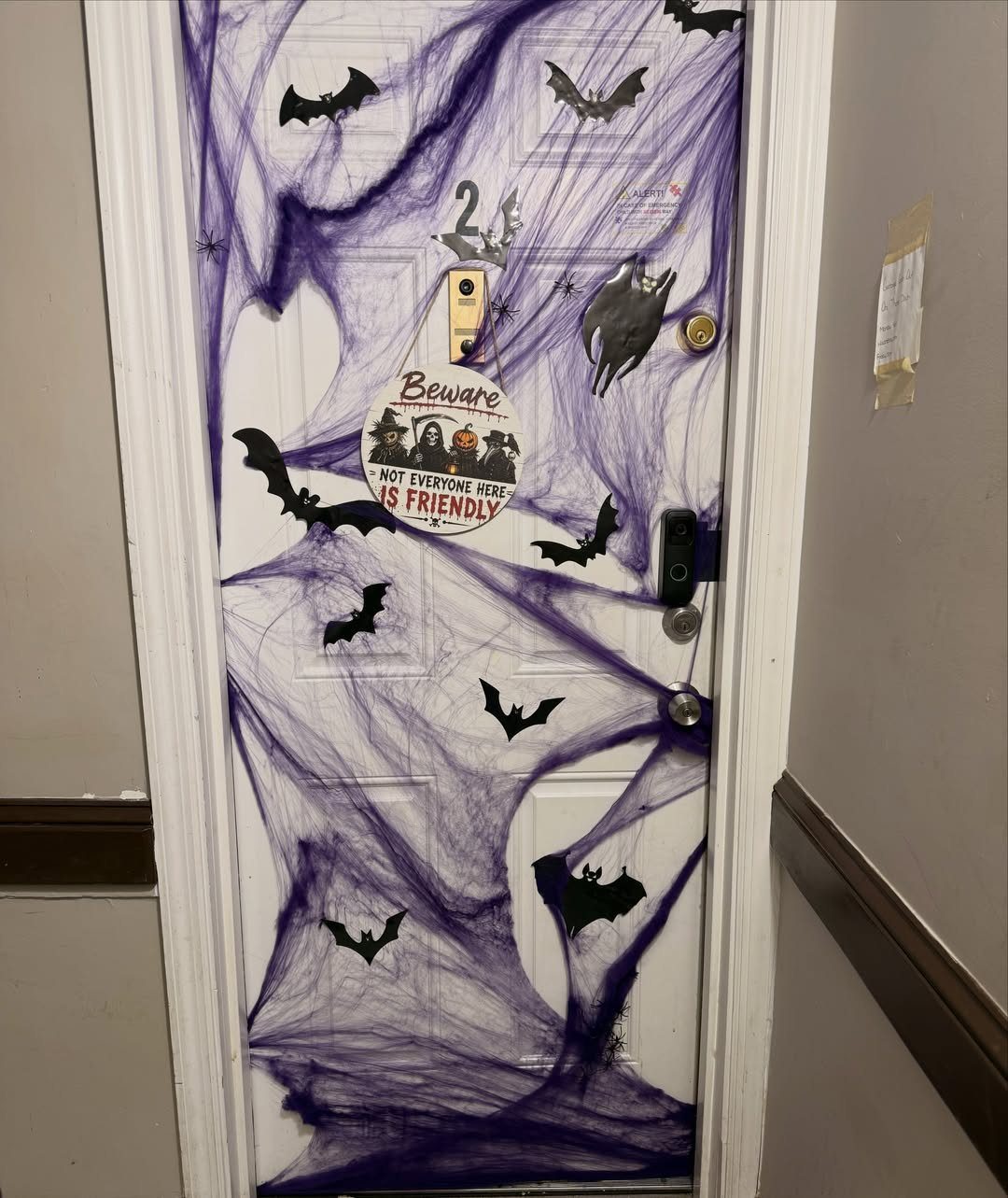
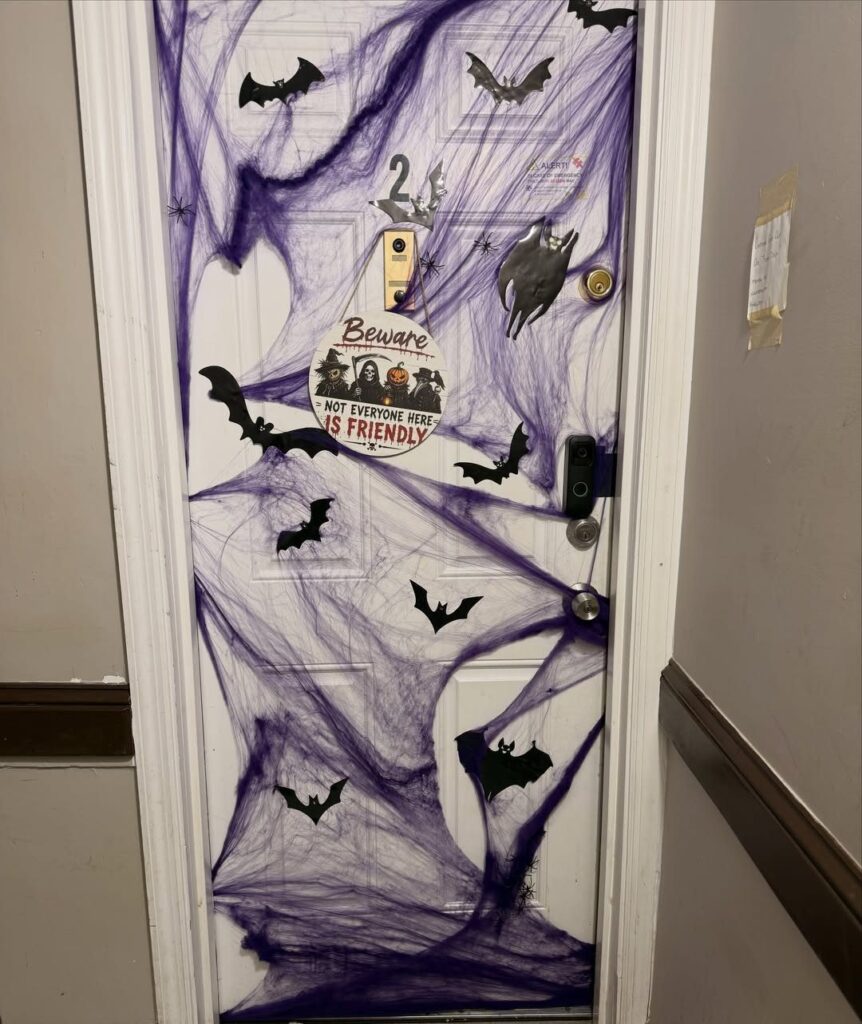
Purple webbing on a white door reads clearly from down a hallway, and black bat cutouts cost almost nothing, so this one suits a tight budget.
Stretch the webbing from the corners and the frame toward the center, then scatter the bats over it at different heights.
A short sign with a wink, like the "Beware" line here, gives judges something to read up close. Keep the lettering large and dark so it holds against the purple.
2. Pumpkin Patch Door
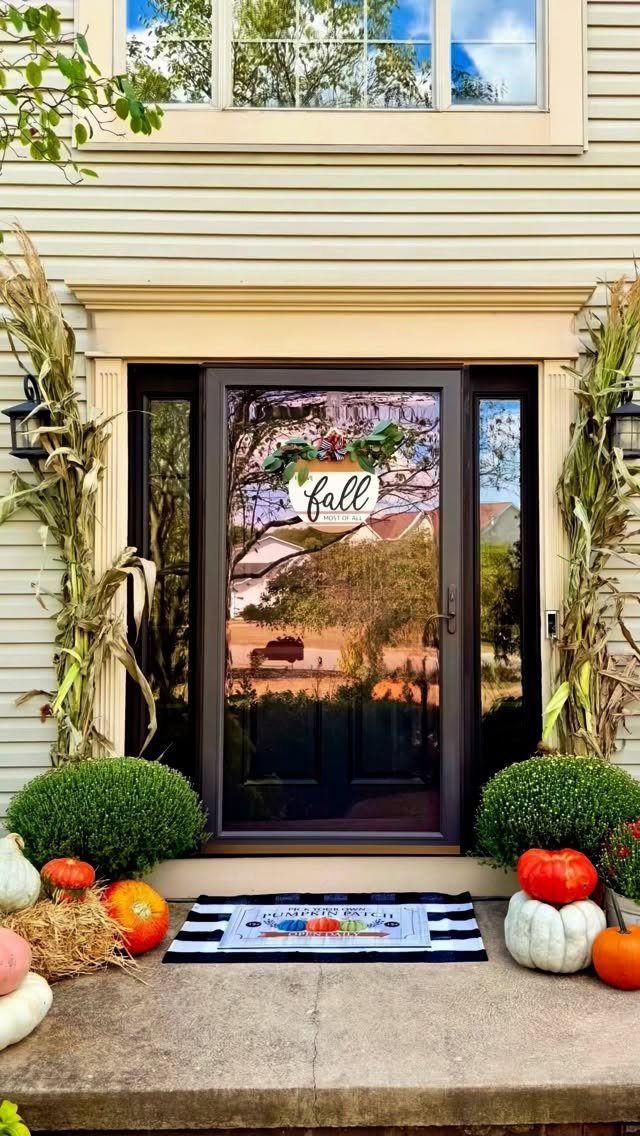
Faux pumpkins do the heavy lifting here, and they come back out every autumn, which makes them the smart buy if you share a budget with a team.
Stack them in different sizes on both sides of the door, tuck corn stalks behind them, and fill the gaps with green shrubs.
A "Fall" sign and a striped "Pumpkin Patch" mat finish it. This version is more harvest than haunt, so it wins over a crowd that wants cozy, not creepy.
3. Hocus Pocus Classroom Door
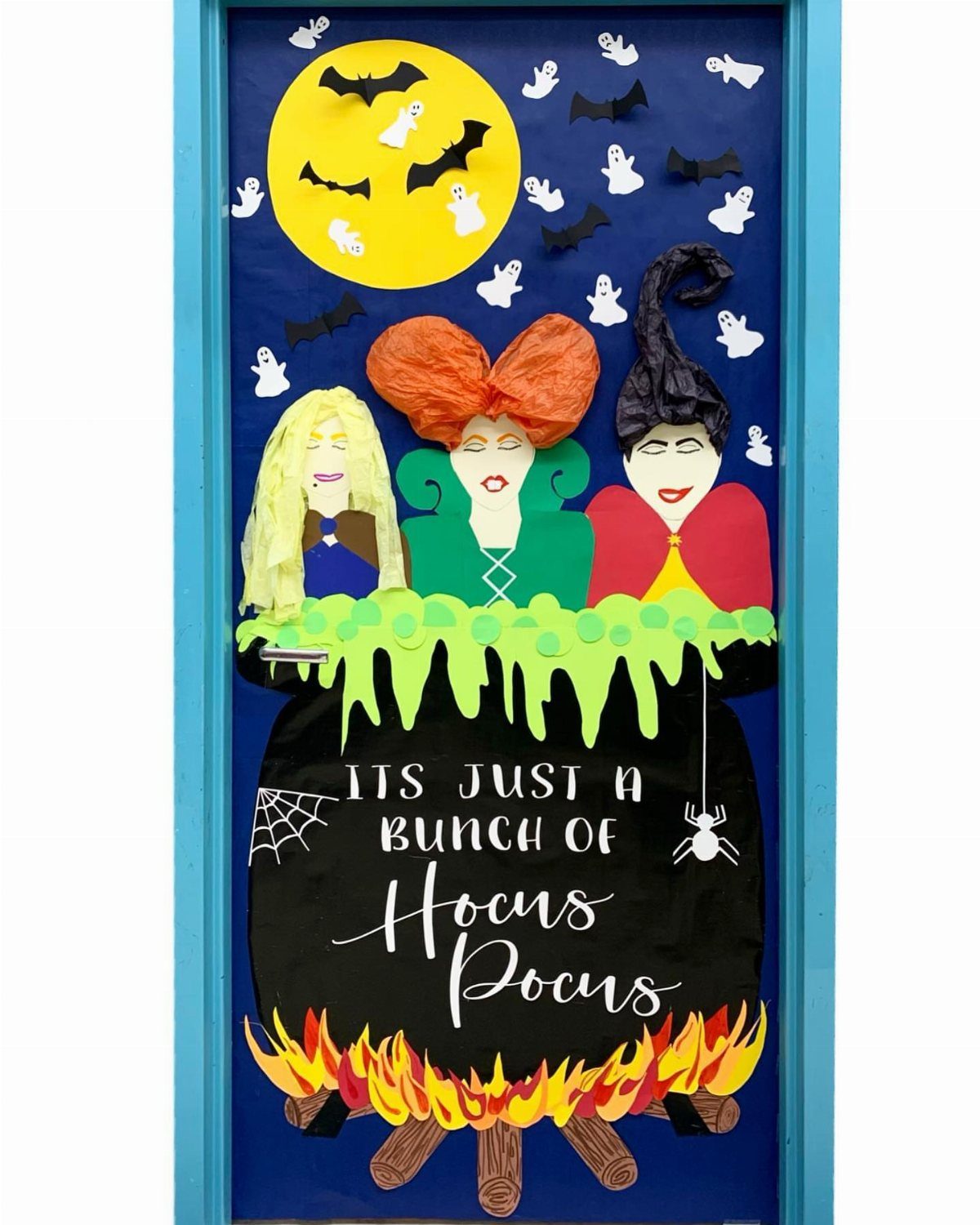
Butcher paper is the cheapest way to cover a whole classroom door, and it takes marker and paint well.
Cover the door first, then build the scene in layers: a yellow moon, bats, ghosts, 3 witches, and a cauldron over a paper fire.
Pick one quotable line, like the "Hocus Pocus" one here, and put it where hallway traffic reads it first. Students can cut and color the pieces, so the work splits easily.
4. Mummy Door
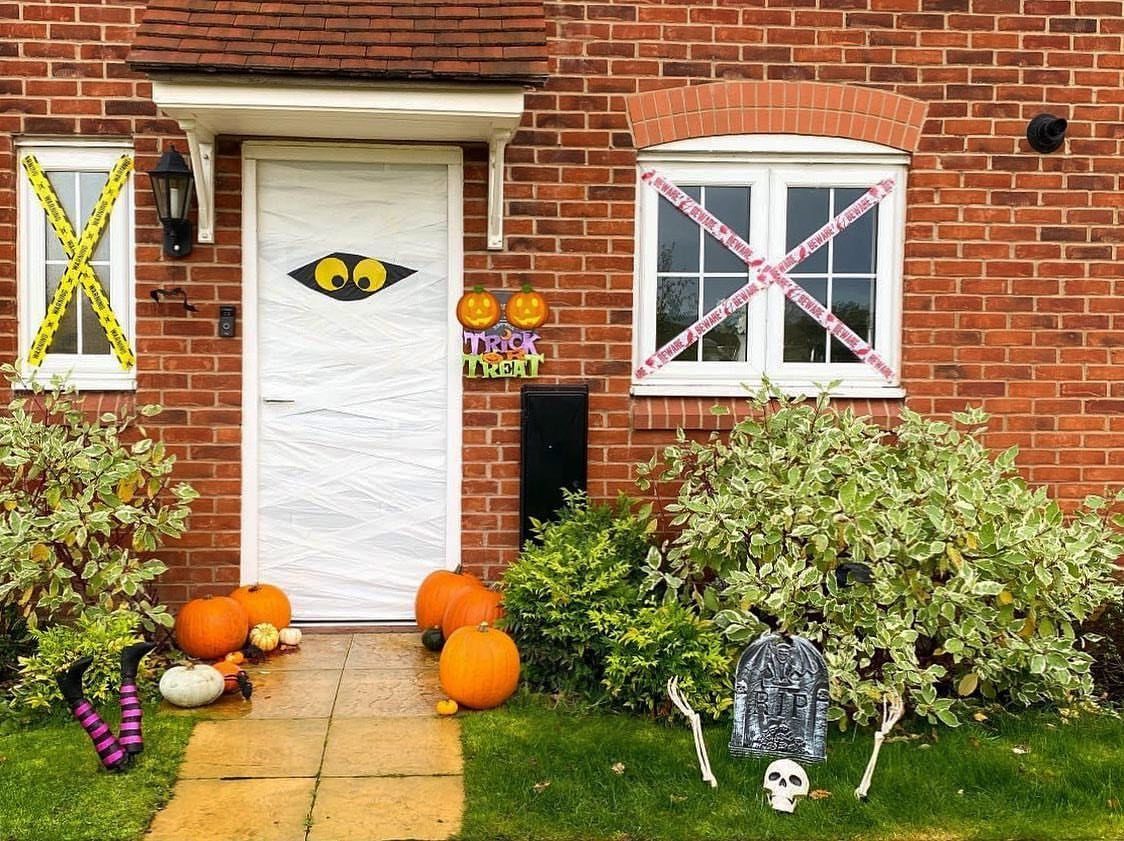
White crepe paper wraps a door into a mummy with very little money. Run the strips across the door in overlapping, slightly messy layers, leaving a gap near the top for a pair of glowing eyes.
I like the eyes in yellow, since they pop against the white. Add pumpkins at the base and caution tape across nearby windows to carry the theme past the door itself.
5. Monster Door
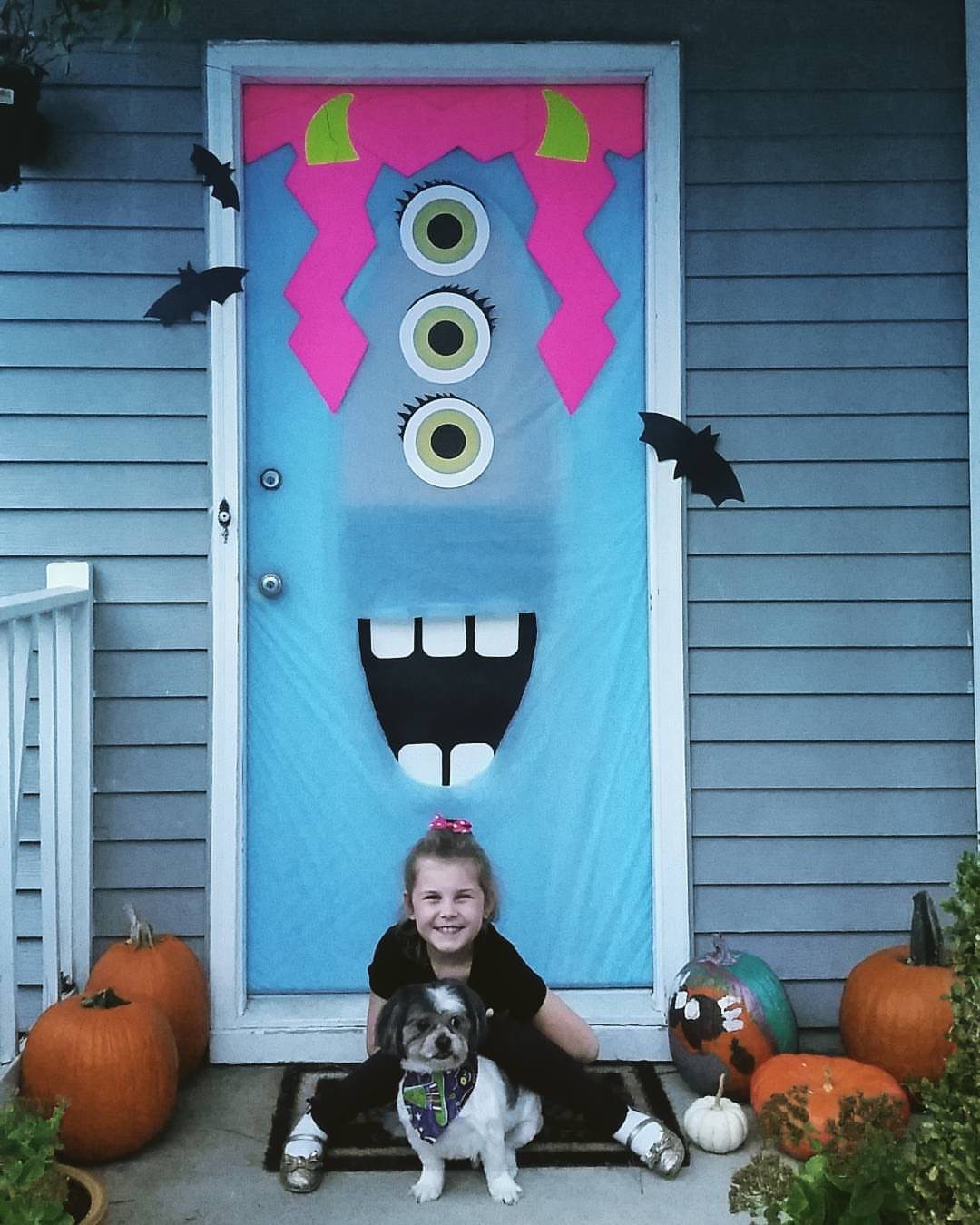
One oversized face turns an ordinary door into a character, and it works best when you commit to a single bold color. Start with the eyes, since odd numbers, like 3, look more monstrous than a tidy pair.
Cut shapes from paper or cardboard, then add accents in a contrasting shade and a few black bats. Kids can build it with you, which helps if the contest is a group project.
6. Witch’s Cottage
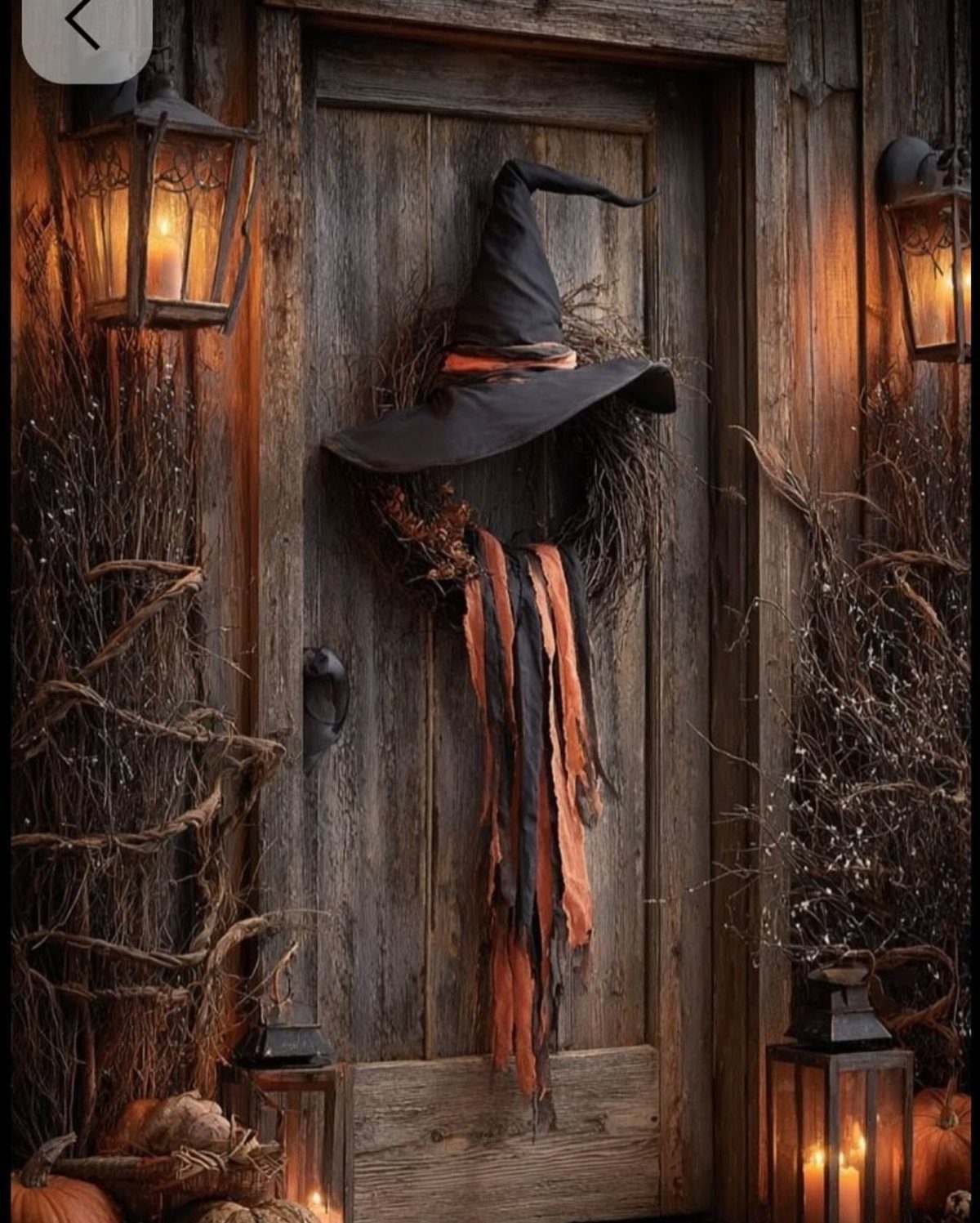
A witch’s cottage rewards a door that already has character, like rustic wood. A large black witch’s hat above a twig wreath sets the scene, and orange and black ribbons tie the colors to Halloween.
Lanterns on both sides are what sell it after dark, so give them glowing light. Battery candles inside save you from open flame and from running a cord to the door.
7. Boo Crew Door
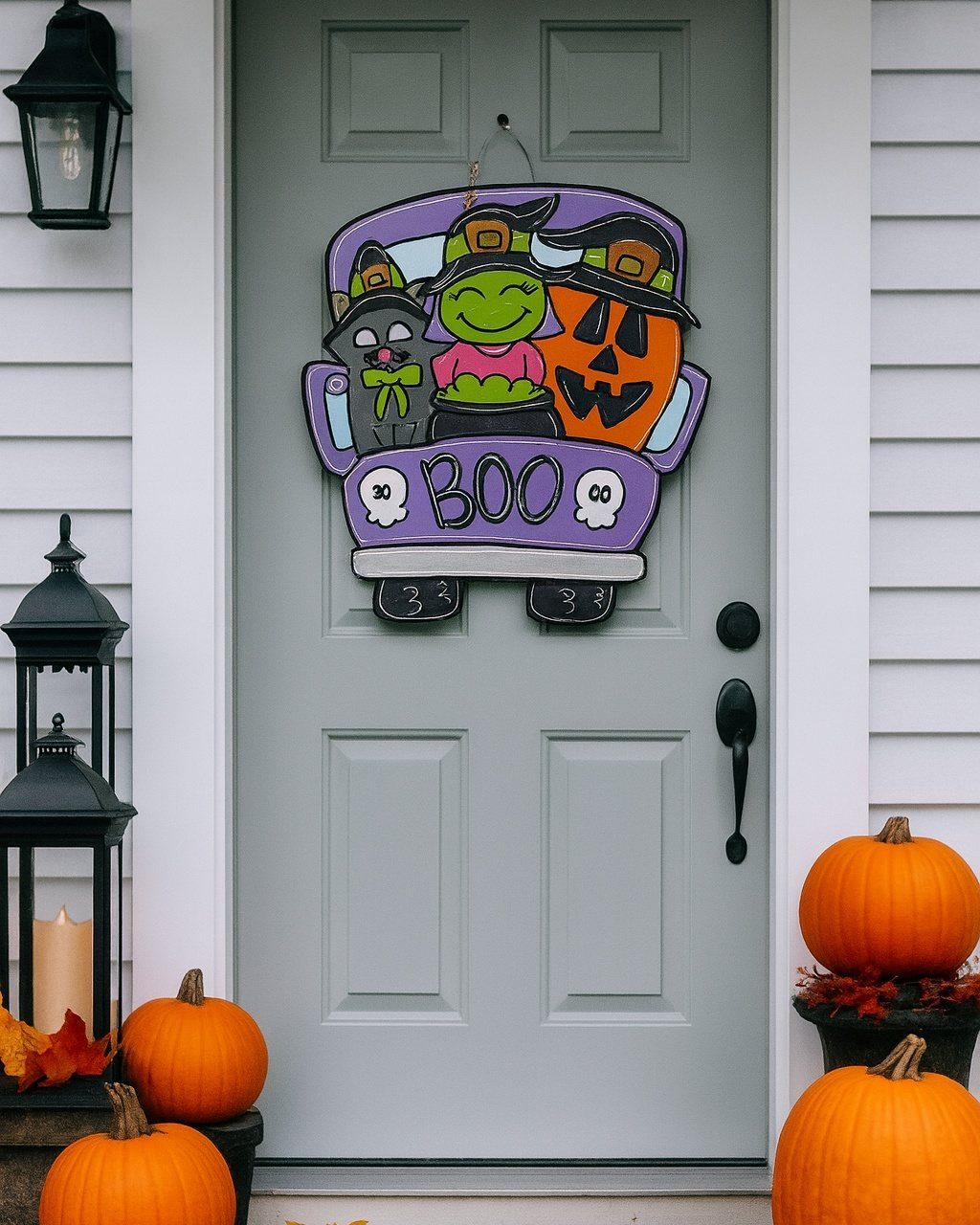
A small crew of 3 characters spelling out "BOO" is the cutest way to dress a grey door, since the neutral color lets orange and black stand out.
Cut each figure from craft foam or cardboard, one ghost, one witch, one pumpkin, and mount them as a single sign.
Battery candles in the lanterns keep it safe and cord-free.
8. Coraline Other World Door
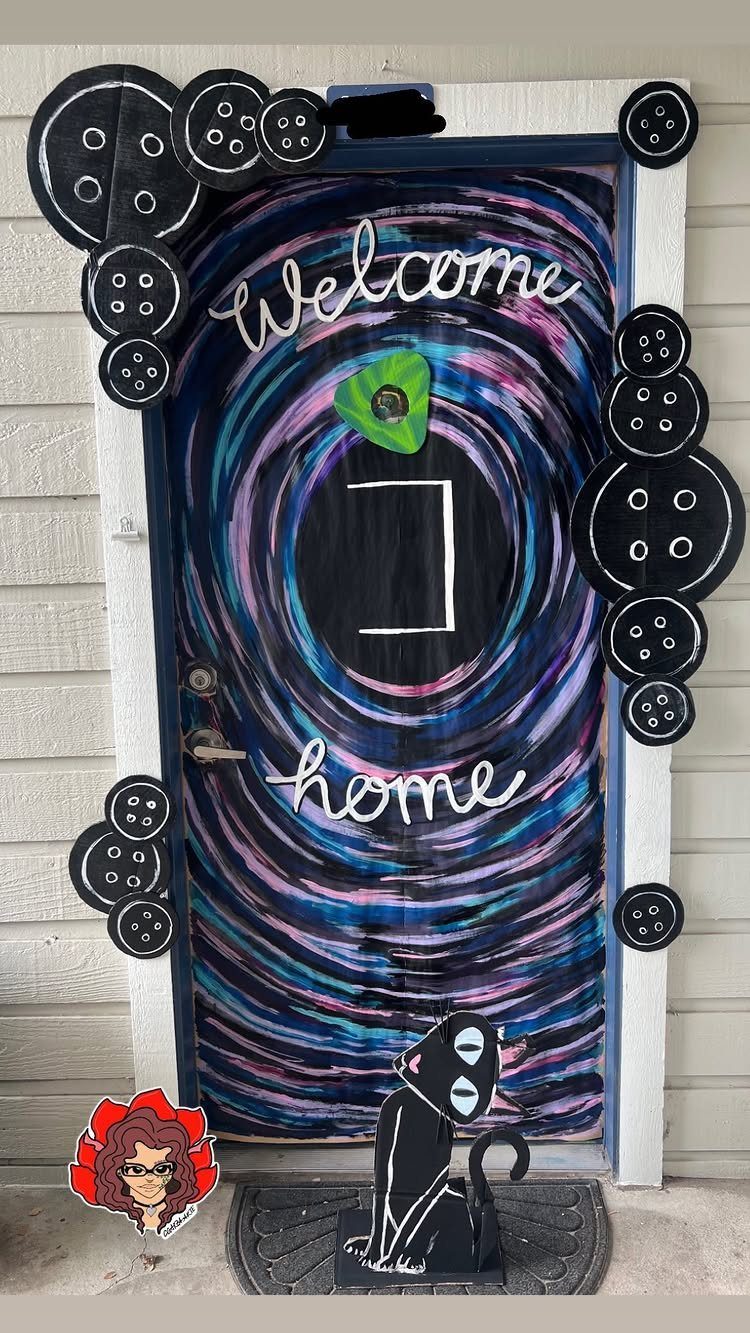
Swirled purple and blue paint makes a galaxy backdrop that needs no special skill, just a wet blend on a primed surface. Butcher paper works if you can’t paint the door itself.
Cut the buttons from black poster board, and make them oversized, since size is what reads as Coraline.
A black cat cutout at the bottom and a "Welcome home" line finish it, and I would keep the lettering light so it holds against the dark paint.
9. Haunted Skeleton and Ghost Scene
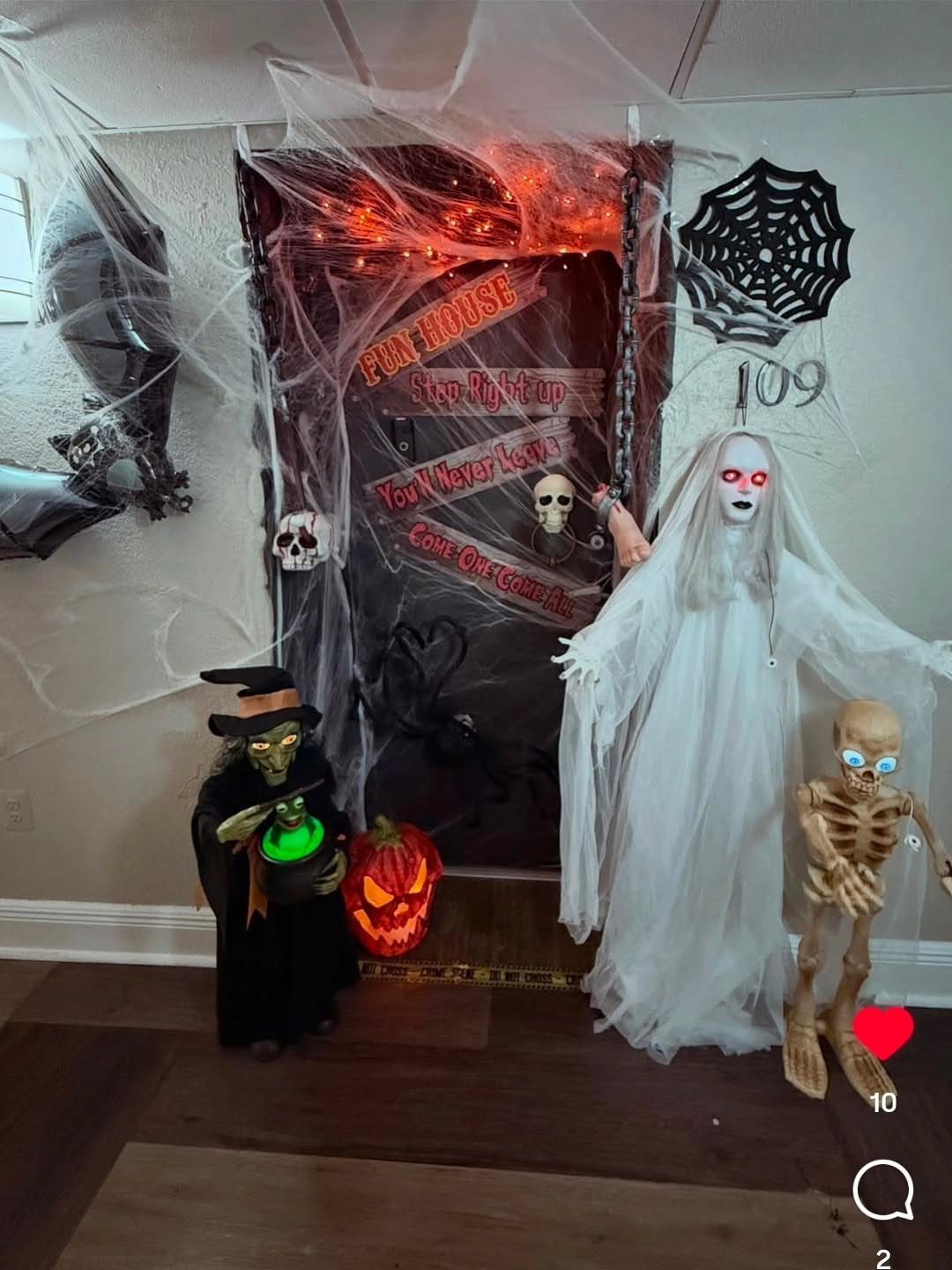
Black paper over the whole door sets a stage, and red lights are what make it feel like a fun house. Tape the paper edge to edge, then pull cobwebs thin across it.
Place the skeleton, ghost and witch facing forward so a crowd in the hallway reads them at once. Short, teasing signs like "Step Right Up" work best in white or red lettering, since dark ink vanishes on black.
10. Giant Candy Corn Cutout
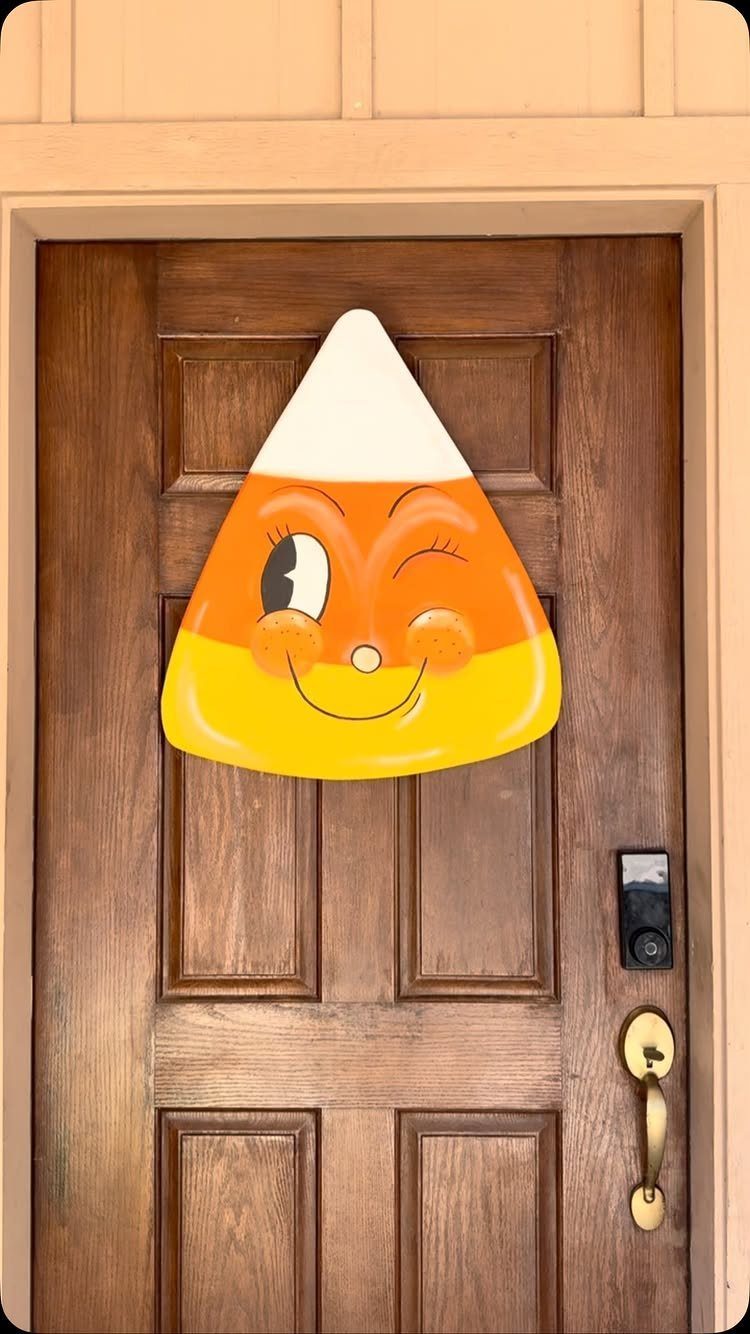
One oversized candy corn with a face does the job of an entire scene, which makes it ideal when time is short.
Cut it from poster board in 3 stacked bands of yellow, orange and white, then add a smile and a wink.
Against brown wood, the bright bands pop without any extra trim. Mount it with removable tape or hanging strips so the door finish stays clean.
11. Light-Up Tulle Ghost Hanger
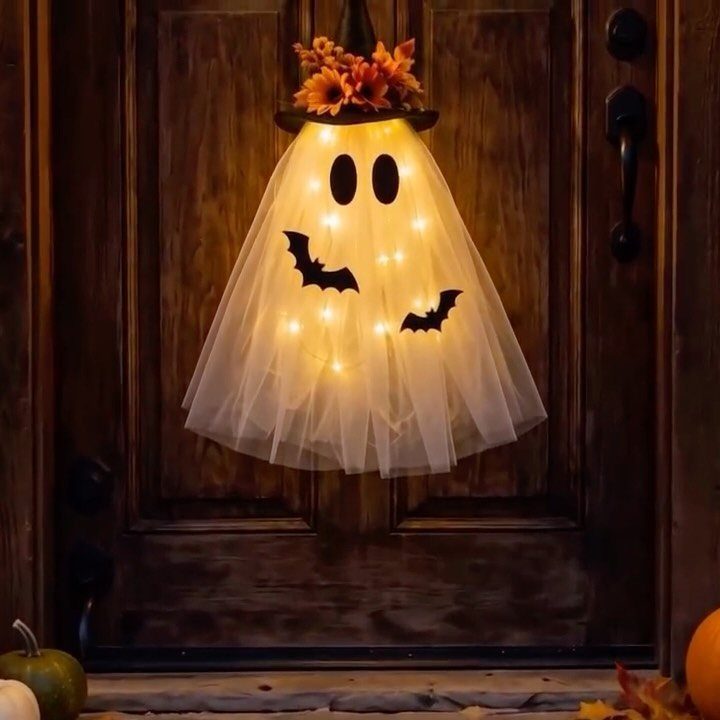
Drape white tulle over a balloon or a crumpled-paper head, and tuck in a string of fairy lights, and you have a ghost that glows after dark. Layers of tulle give a soft, floating look.
A small floral witch hat on top adds personality, and I would cut a few bat silhouettes from black paper to hang beside it. Battery lights mean no cord has to reach the door, which suits a hallway or porch.
12. Witch Hat Floral Wreath
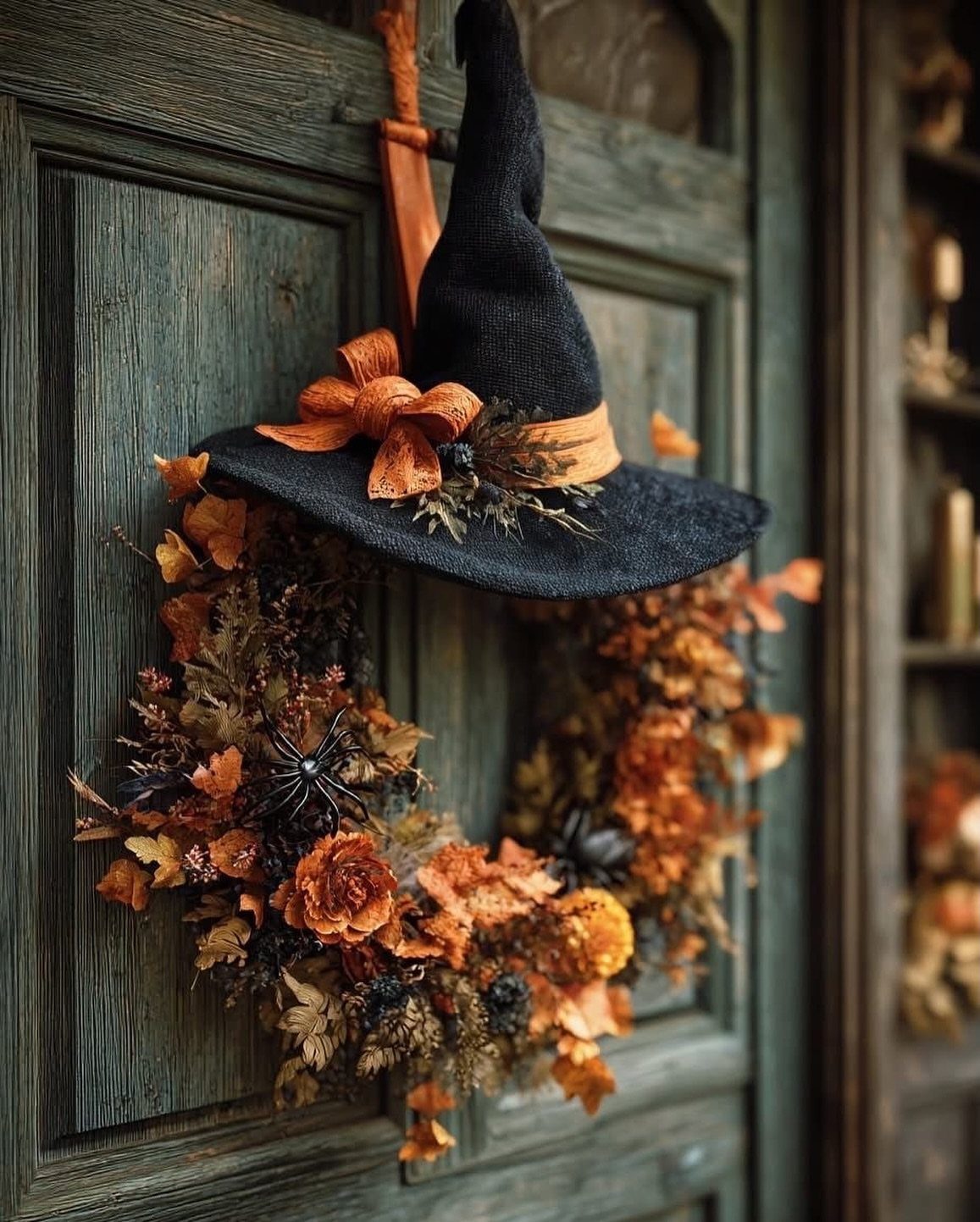
A wreath of autumn leaves and dried flowers already looks right on a rustic door, and a black witch hat turns it into Halloween with one move.
Pick a hat that sits flat on the wreath and wire it on at the top.
Keep the wreath’s colors warm, and the hat will be the only dark note, which is what judges notice first.
13. Beetlejuice Showtime Door
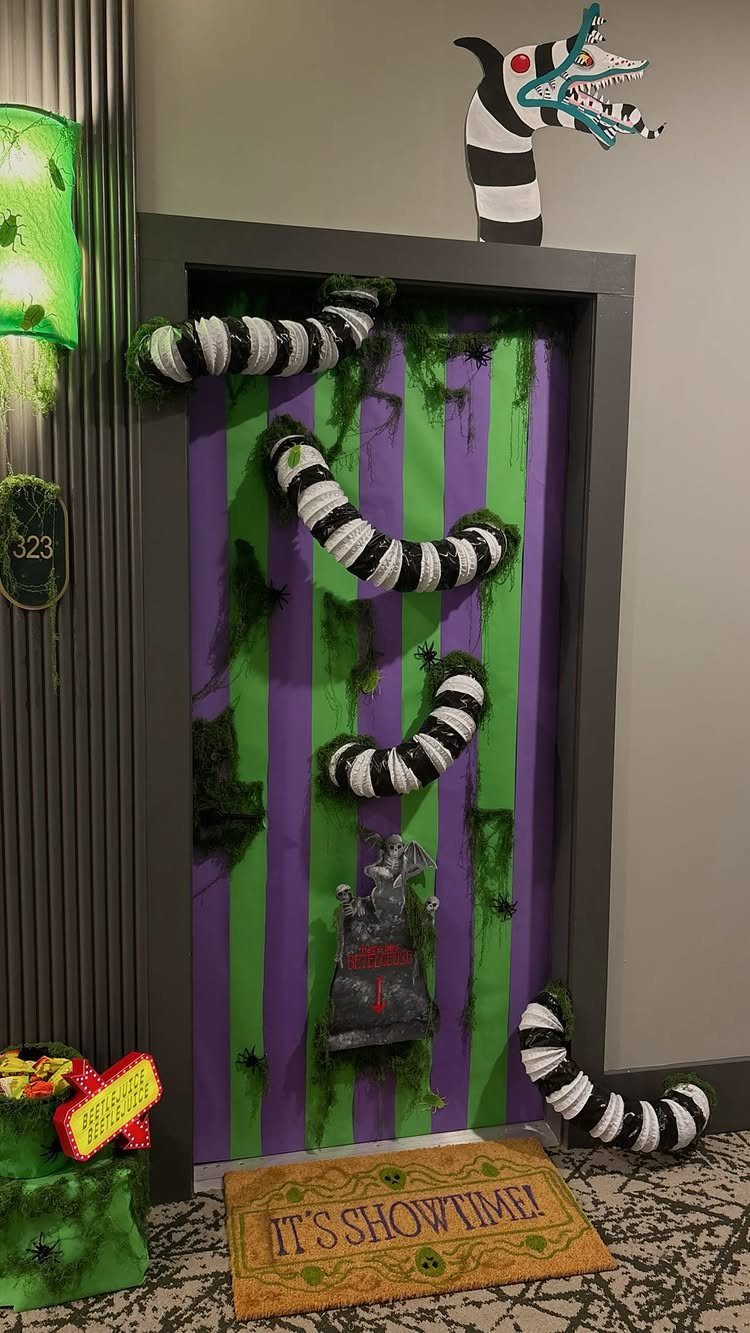
Purple and green stripes say Beetlejuice before anyone reads a word, so paint or paper the stripes first and let the rest follow.
Black and white stripes on the sandworm give it a clear contrast with the door, and coiling it across the door makes it look bigger than it is.
The "It’s Showtime" mat is a store-bought shortcut worth taking.
Poster board works for the head: cut it out, then stick it to the top of the door with hanging strips or a few loops of removable tape so the paint stays clean.
14. Monsters Inc. Classroom Door
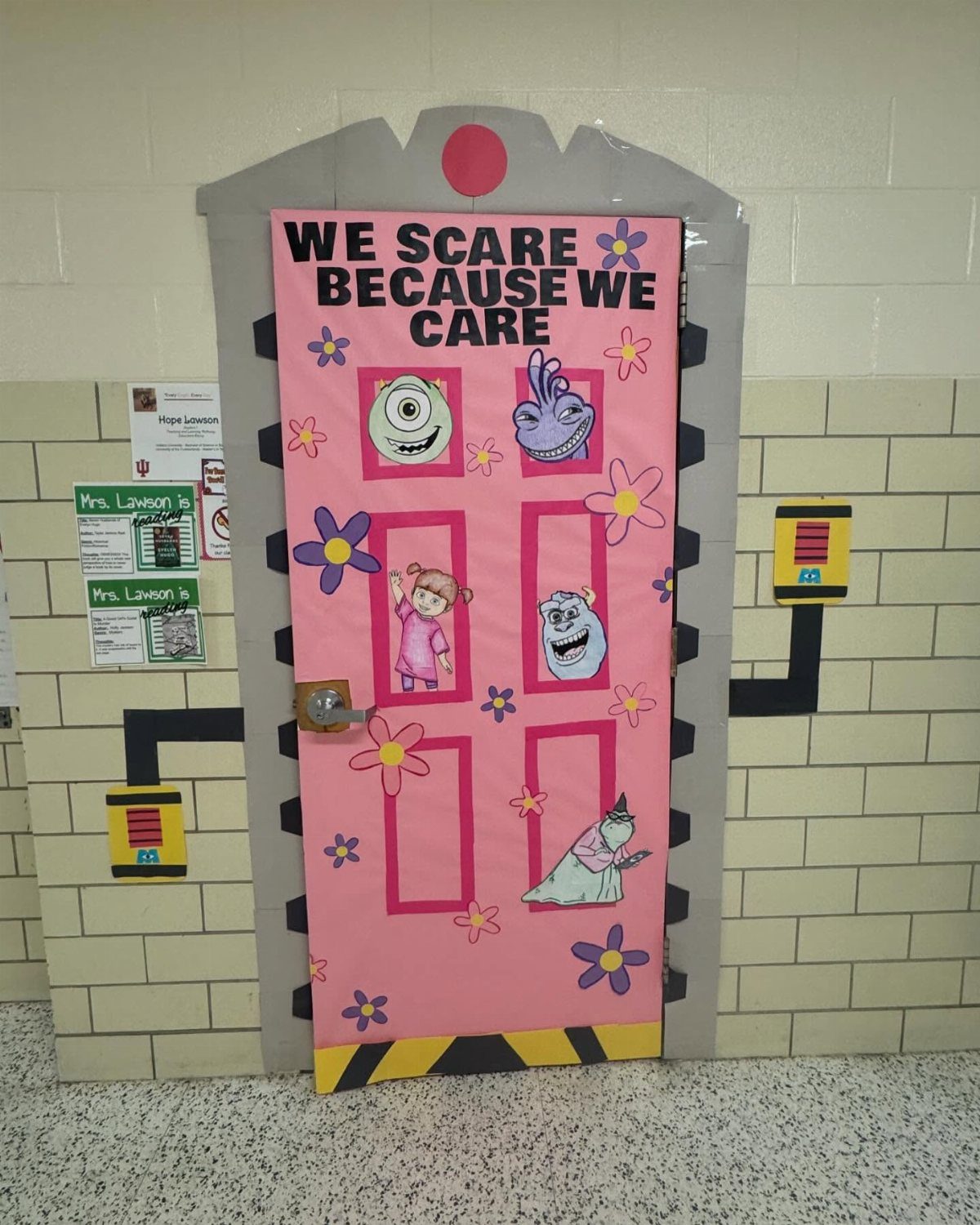
"We scare because we care" is a line teachers can read aloud, and it fits a school hallway better than most movie quotes.
Cut the characters from paper or poster board, and let students color them so the work is shared.
Grey paper bricks around the frame cost little and tie the door together. I would cut them in uneven sizes and stagger the rows, since a perfect grid looks stiff.
15. Hanging Witch Figure Door
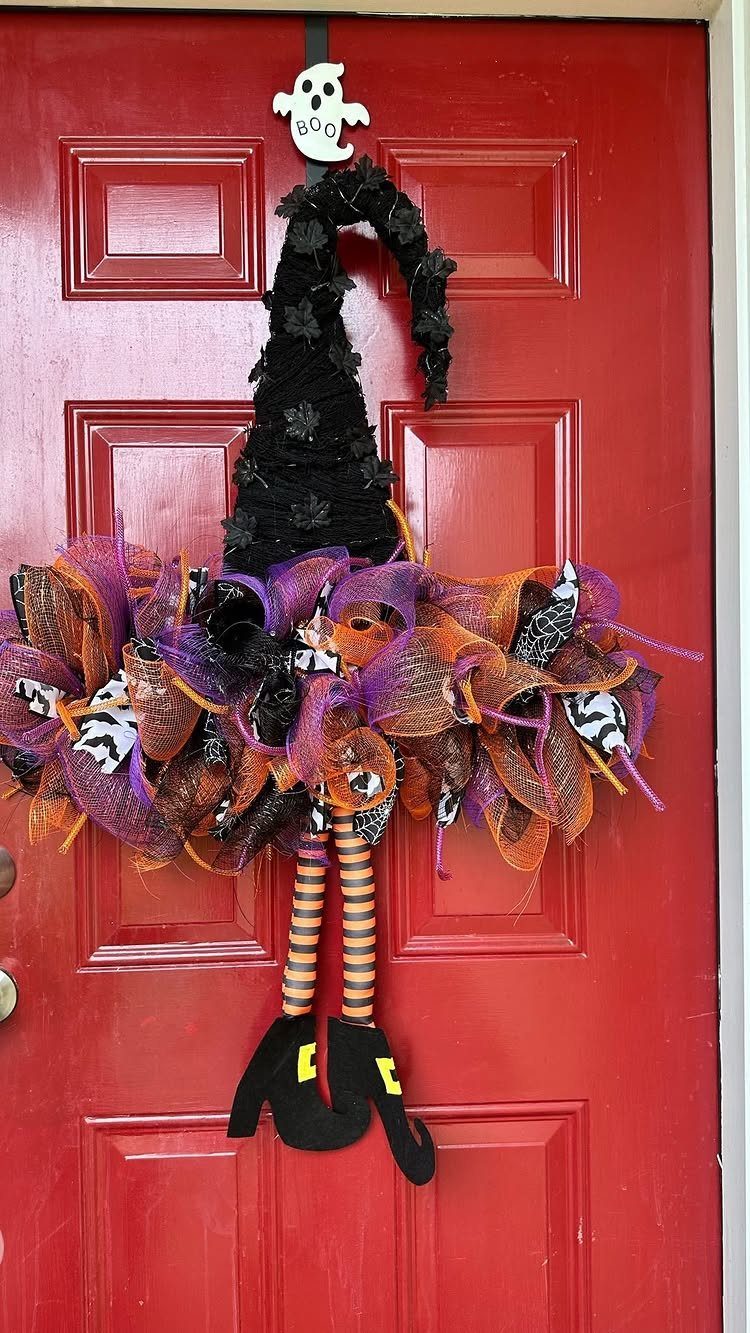
A witch built piece by piece from a black hat, tulle skirt, striped legs and buckle shoes gives a flat door a figure with real depth.
Orange and purple tulle gathered at the waist makes a full skirt for very little money.
Hang the figure from the top of the door so the legs dangle. A small ghost saying "BOO" up high is an easy add-on, and red is a strong backdrop for it.
16. Pink Haunted Caution Tape
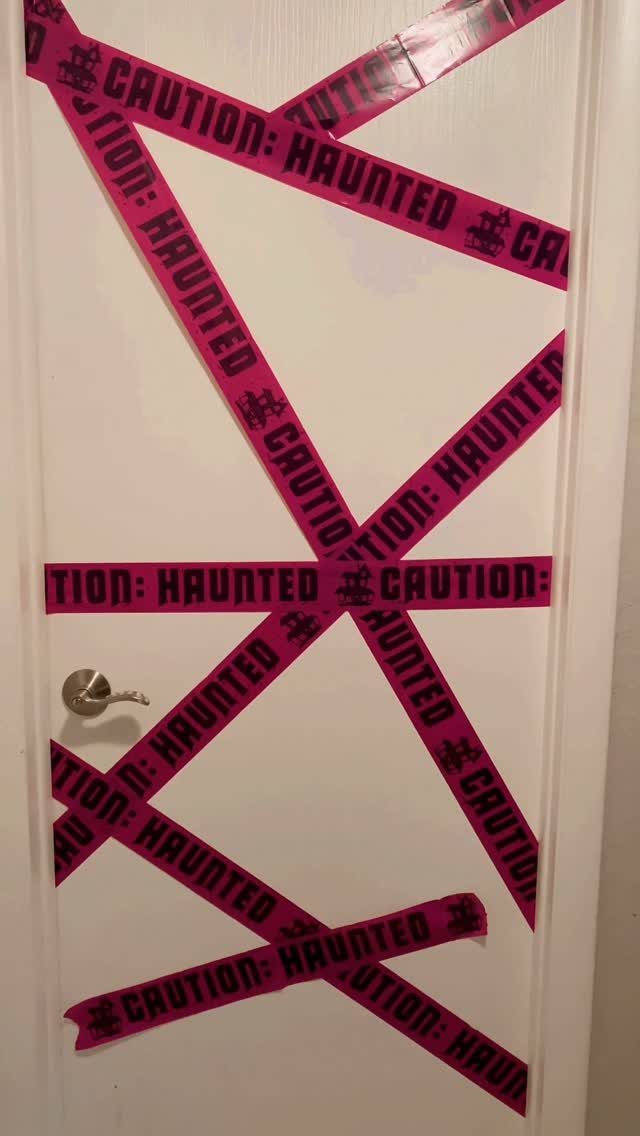
Pink caution tape that reads "Caution: Haunted" is a joke you can set up in minutes, which makes it a strong pick when time is short.
Run the strips diagonally in both directions so they cross, and press the ends firmly.
Keep the door itself plain white. I would use low-tack tape or hanging strips on the ends so nothing peels off the paint when you take it down.
Planning a Halloween Door Contest
Start with a timeline that works backward from judging day. Announce the contest well before judging day, so entrants can buy supplies and build without rushing.
Write the rules before anyone asks. Cover the door size or area each entry can use, the deadline for finishing, and whether decorations must come off without damaging paint.
Set a budget early, even a small one. Decide whether entrants pay for their own materials or you cover supplies, and say which in the announcement.
Choose a theme or let entrants pick their own, but ask for one story per door.
A haunted mansion, a giant monster and a witch’s cottage each hold together for the same reason: one set of colors, shapes and characters carries from the top of the door to the bottom.
For promotion, post a sign-up sheet where people walk past and send one reminder a few days before the deadline.
Judging Criteria for Contests
Write the criteria down and share them before entrants start building. Three work well: creativity, theme adherence and overall presentation.
Give each criterion the same number of points, so a door can’t win on one strength alone. A simple 1–5 scale per criterion keeps the math easy for a small panel.
Consider awards by category instead of one ranking. Categories such as most creative, best use of theme or best presentation let different doors win for different reasons.
When you announce each award, point to one specific detail that earned it. That makes the result feel earned, not arbitrary.
If children are entering, say out loud that the categories honor different kinds of creativity. Everyone should leave knowing what their door did well.