The list runs from free to ready-made: brass pieces and an urli already in storage cost nothing, while painted diyas and beaded torans are worth buying because the detail takes hours by hand.
Your time decides which ones you pick. Short on time?
Start at the front door: a rangoli on the floor, a toran overhead and 2 diyas beside it will dress an entry in under 20 minutes. With a full weekend, move inside to marigold garlands, lanterns and a chandelier.
1. Rangoli
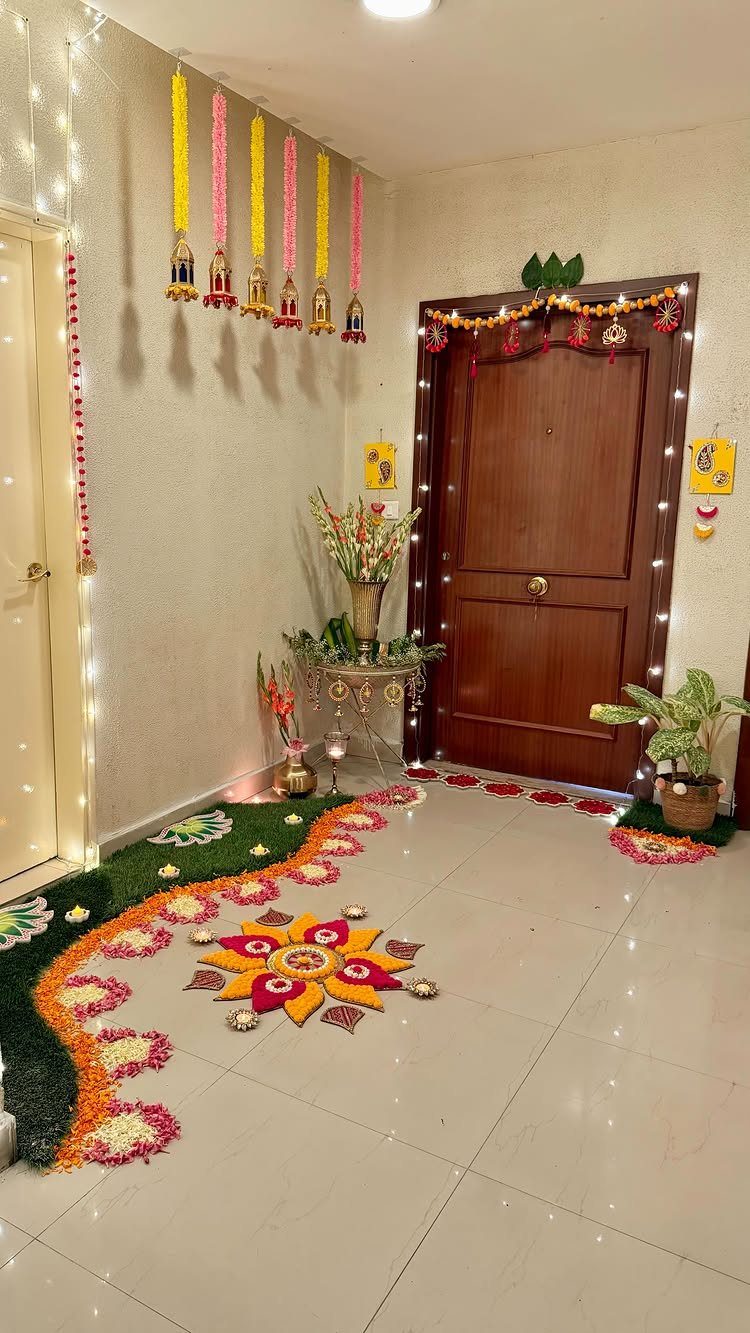
A rangoli by the front door tells guests the party starts before they step inside. Flower petals are the easiest material for a beginner, since there is no chalk dust to sweep and no powder to spill.
Keep the pattern simple and sized to the entrance. A circle with a few petal rings looks better than an ambitious design left half finished, and a small table of flowers beside it ties the corner together.
2. Fairy Lights
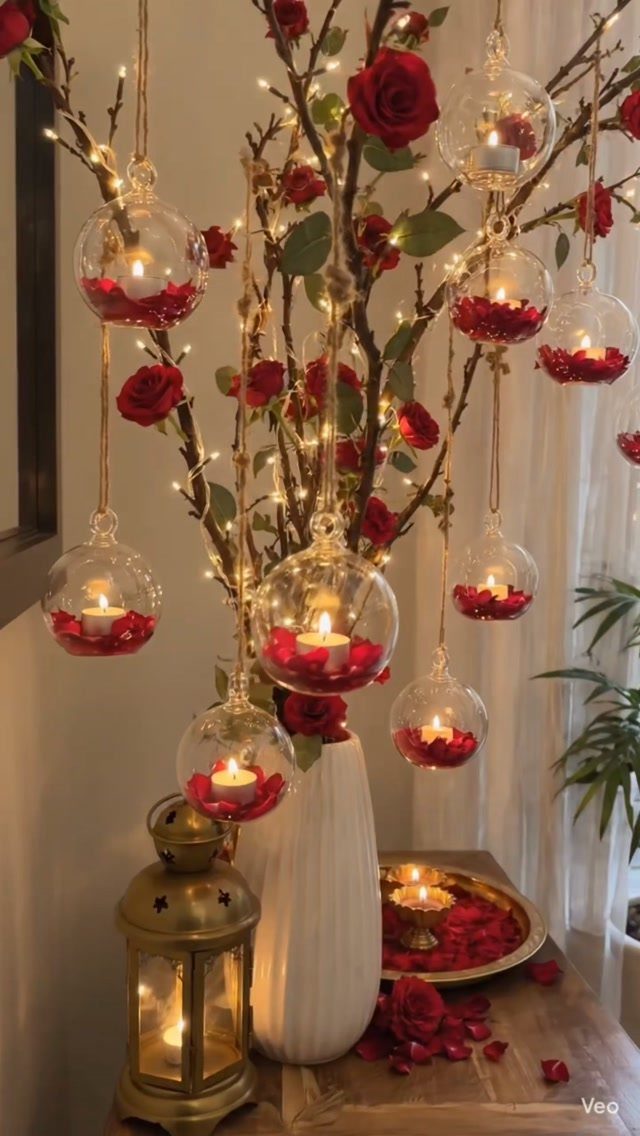
Warm fairy lights do the quietest work in a Diwali room, and they cost little. String them through greenery or loop them inside glass votives to fill out the arrangement without taking up space.
Warm white bulbs pair better with gold accents and marigolds than multicolor does. Plan where the plug sits before you hang anything, so the cord stays hidden.
3. Torans
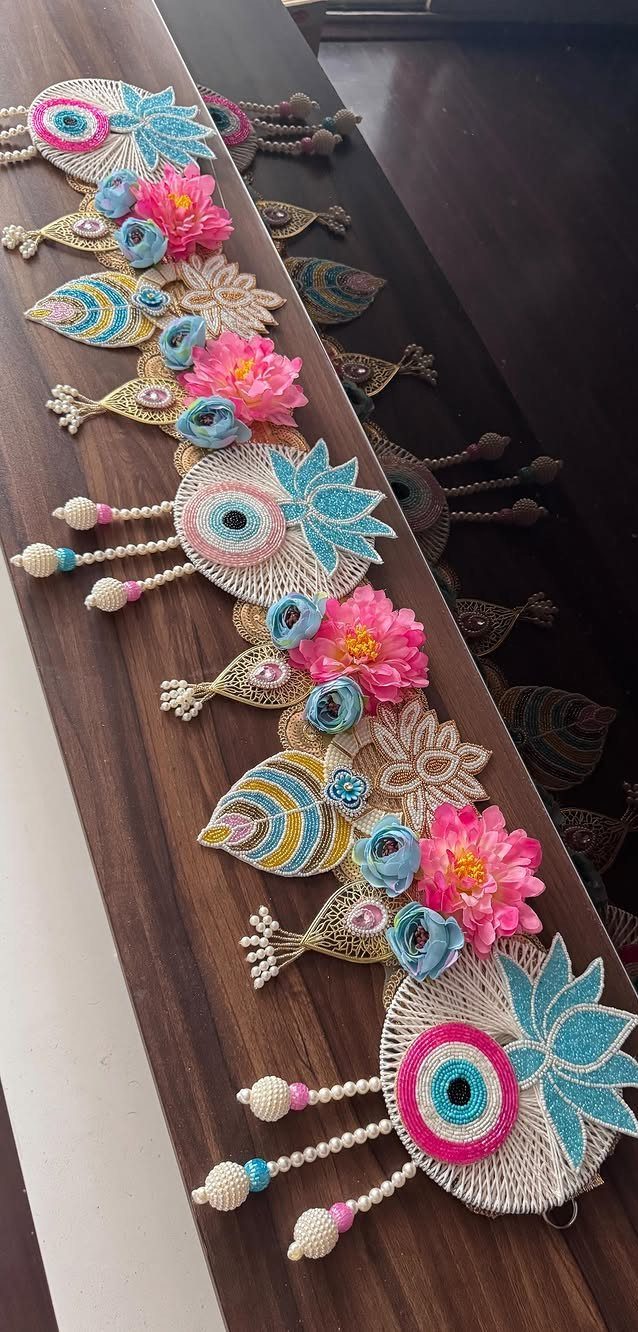
Across a doorway, a toran says welcome before anyone speaks. Pink flowers, beadwork and small blue accents make a good combination, and a long, ornate piece reads clearly from the porch.
Store-bought is a fair shortcut here, because the beadwork takes hours to make by hand. Hang it on the door frame at the top, centered, and keep it clear of the door’s swing so the strands do not tangle.
4. Festive Dining Table
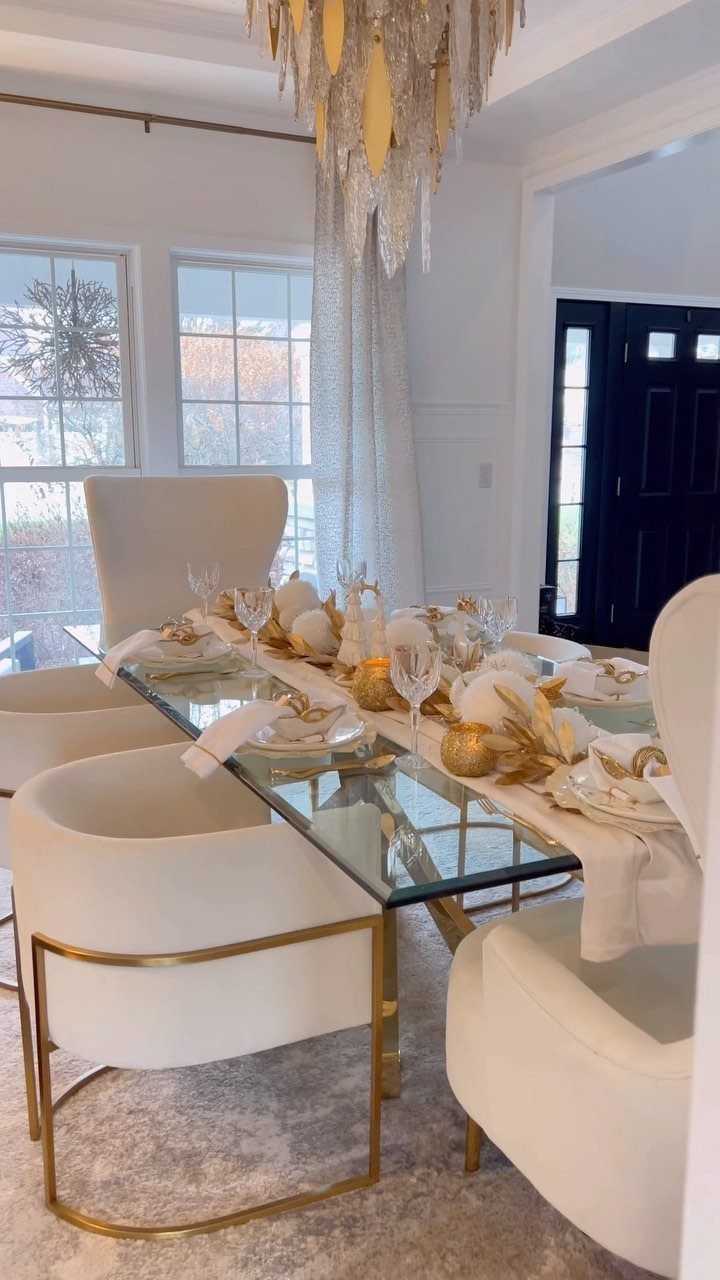
Gold and white is a calm palette for a dining table, and it lets the food supply the color. A white runner, gold-rimmed plates and white flowers will do most of the work.
Keep the centerpiece low enough that guests can see across the table. Choose one metallic and stick with it; mixing golds with silver makes a table look cluttered.
5. Puja Room Decor
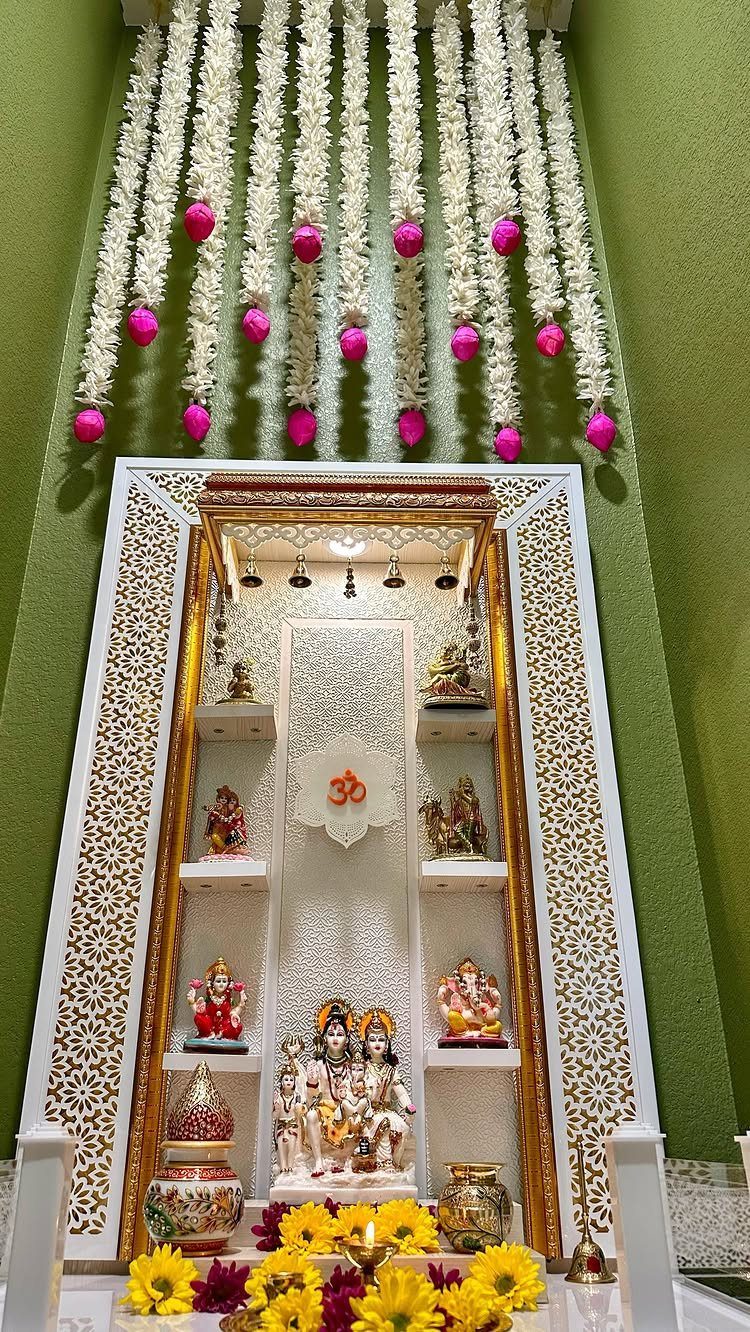
The prayer room gets decorated first, then the living areas. Fresh marigold strands and rose garlands hang along the mandir frame, enough decoration to mark the occasion without blocking the idols.
Keep the arrangement modest so the deities stay the focus. Replace the flowers close to the day itself, since wilted petals undo the effect faster than any missing ornament would.
6. Urli Bowls
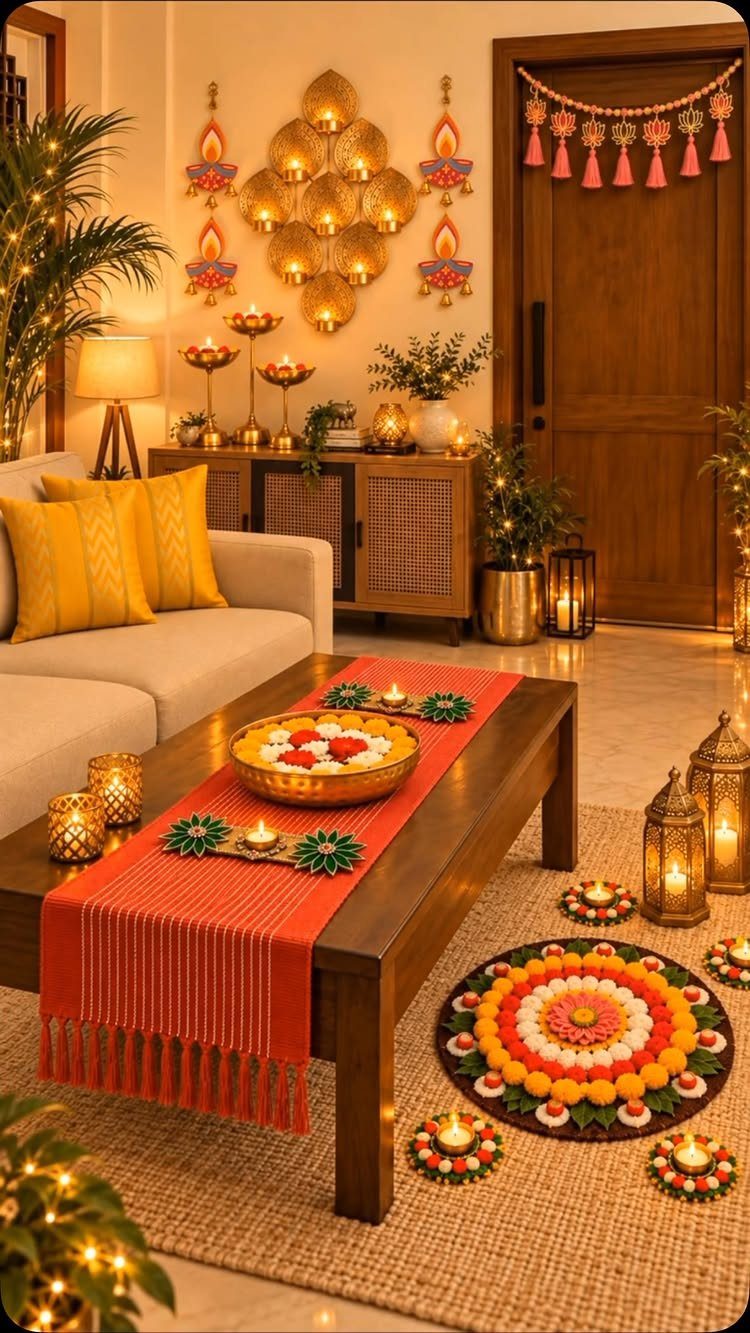
A wide, shallow urli bowl turns a coffee table into a centerpiece, with flowers floating on the water. Use blooms with short stems, or snip the stems off, so the heads sit flat on the surface.
Fill the bowl nearly to the rim; a half-empty bowl looks sad. Setting diyas around it adds light, and a runner underneath protects the wood from drips.
7. Diyas and Candles
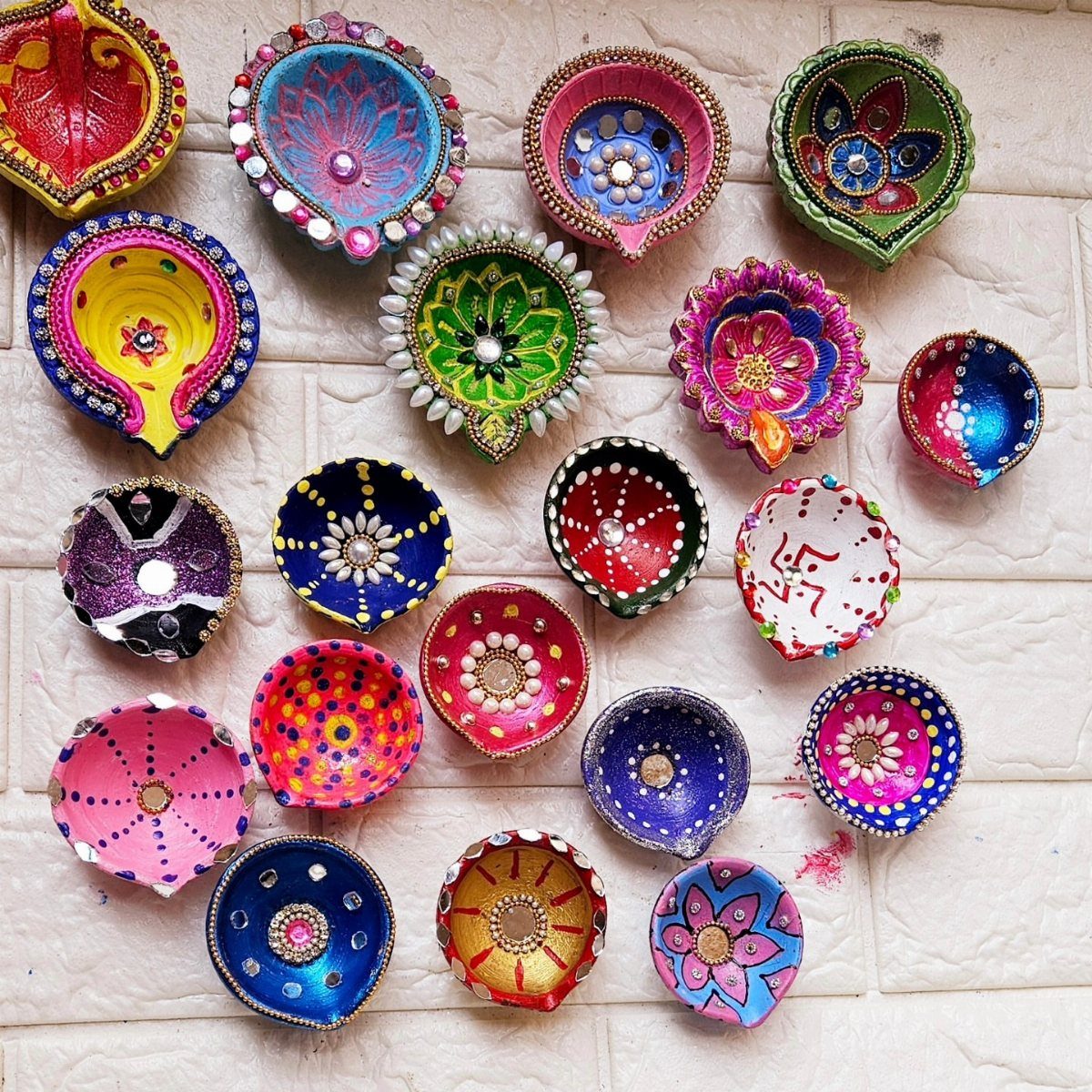
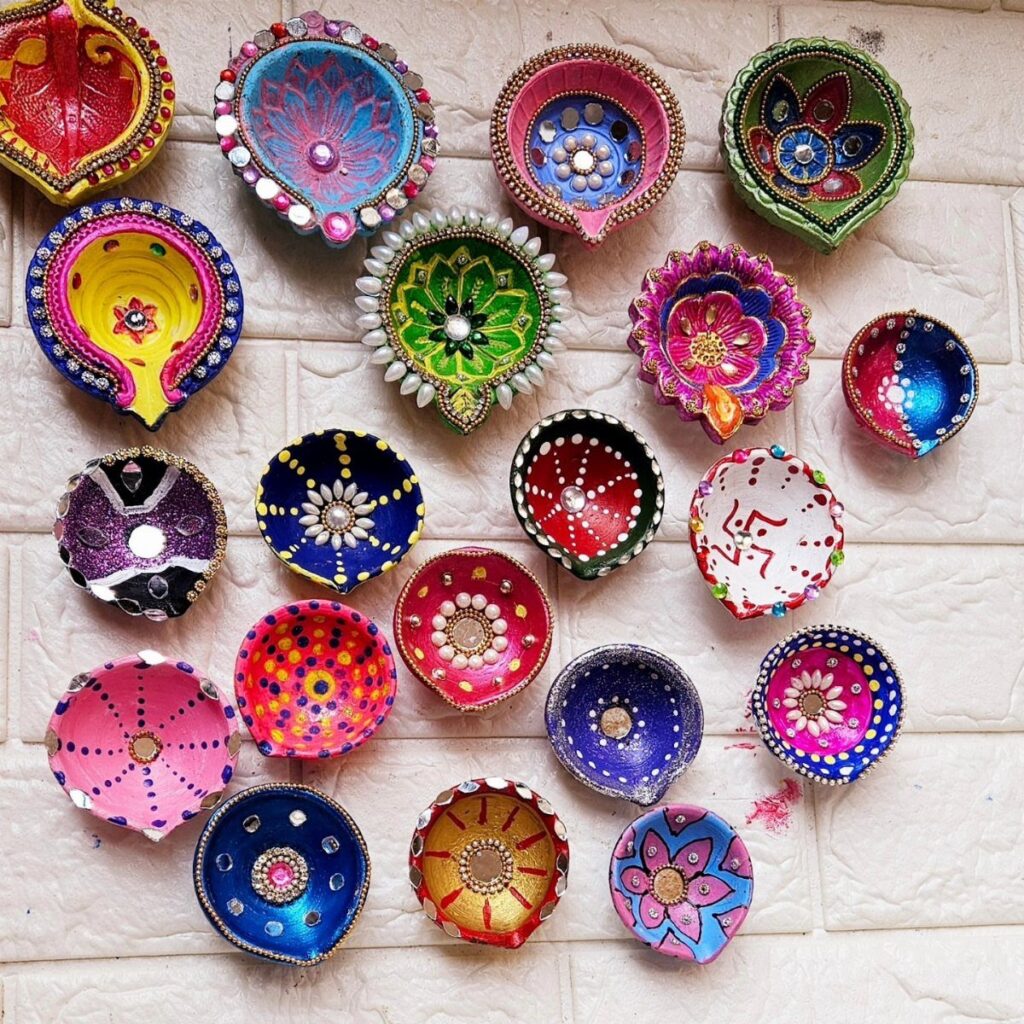
Clay diyas painted in bright colors, with mirror and glitter work, look good even unlit, so a grouped cluster on a white surface works as decor all day.
Painted ones are worth buying ready-made, since the beading and mirror detail is slow to do by hand.
Set them in tight groups rather than a single scattered line. Add plain candles in between if you want a few taller points of light.
8. Flowers in Vases
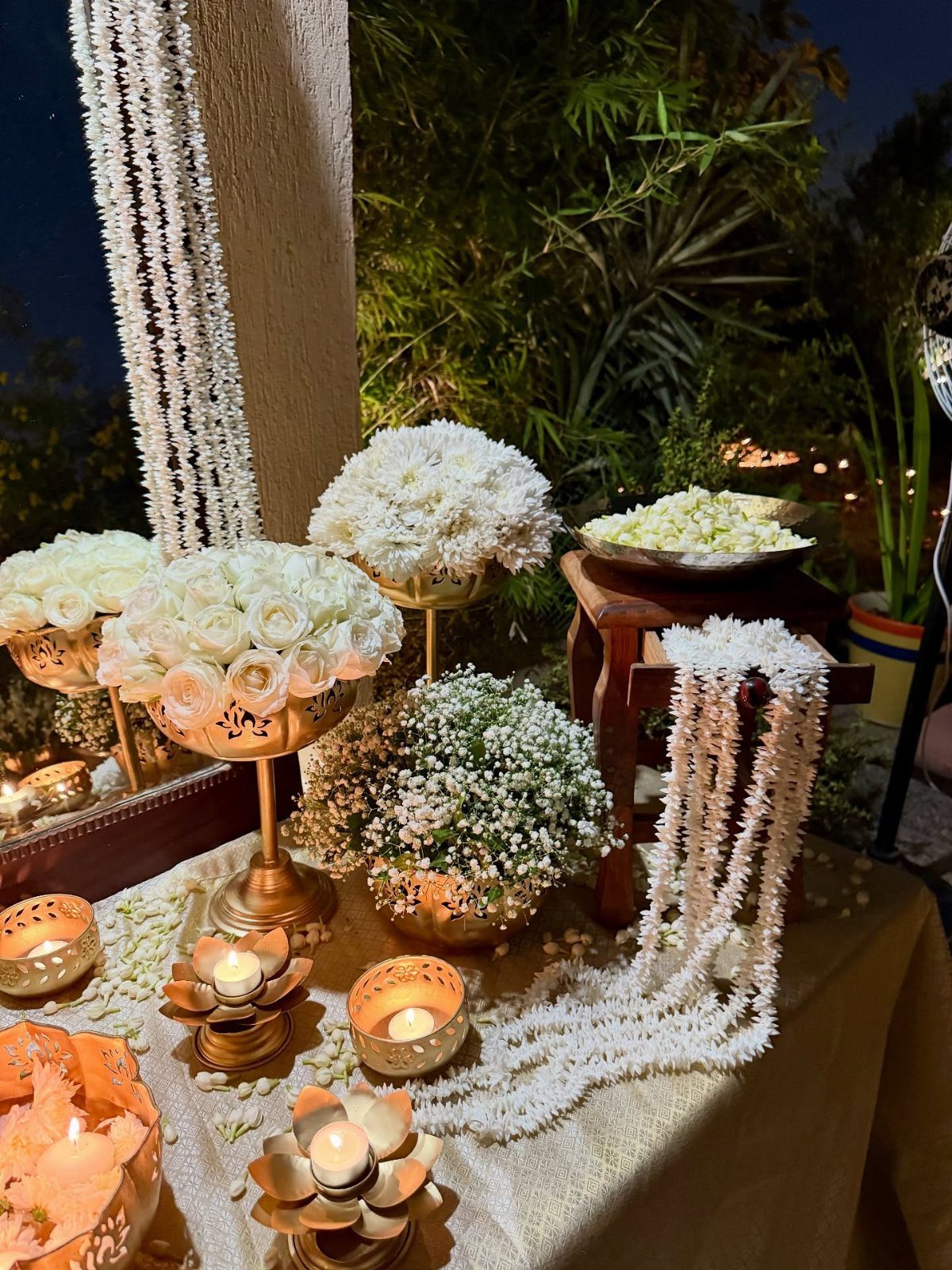
White flowers in gold vases pair well with tea lights, and the two together make an outdoor table feel finished after dark. Artificial stems are a fair shortcut if you want to set up days ahead.
Vary the vase heights and tuck a few candles between them. Stick to one flower color so the gold does the talking, and keep arrangements low enough to talk over.
9. Cushion Covers
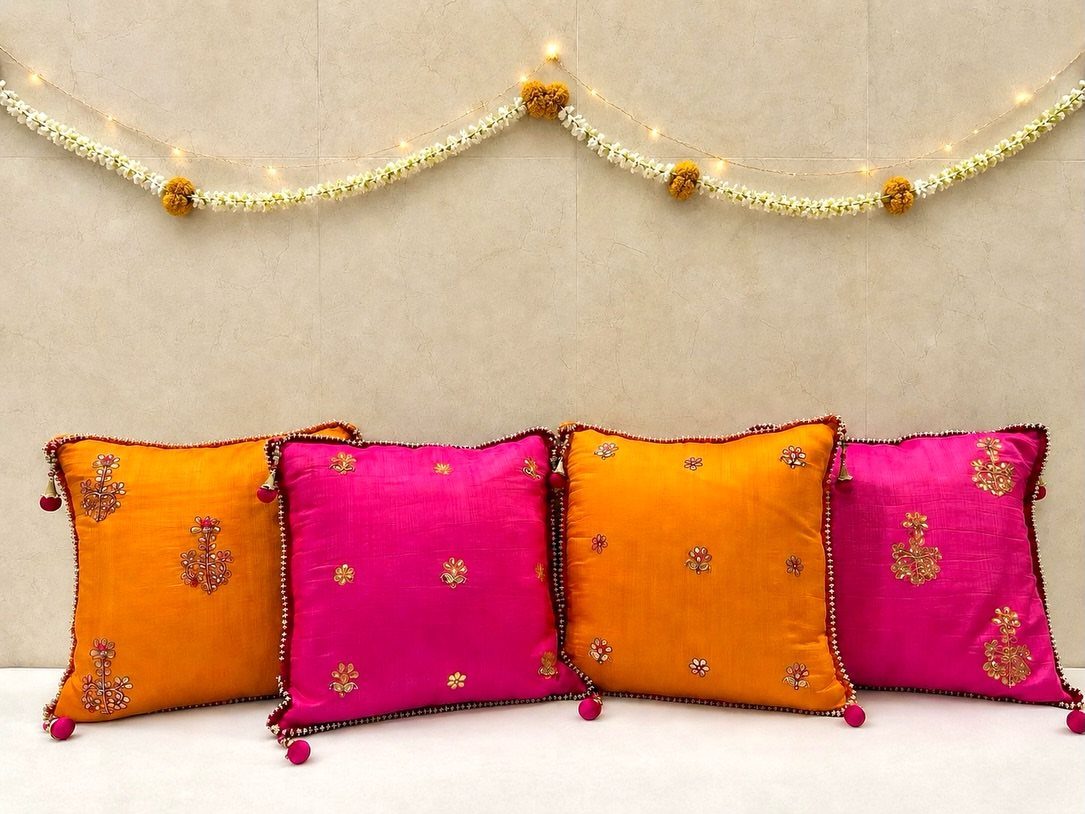
Swapping the covers on your sofa cushions takes under a minute and needs no tools or hardware.
Buy covers, not new cushions, and keep the inserts you already own. Use four or five on one sofa, rather than spreading them thin across the room.
10. Marigold Garlands
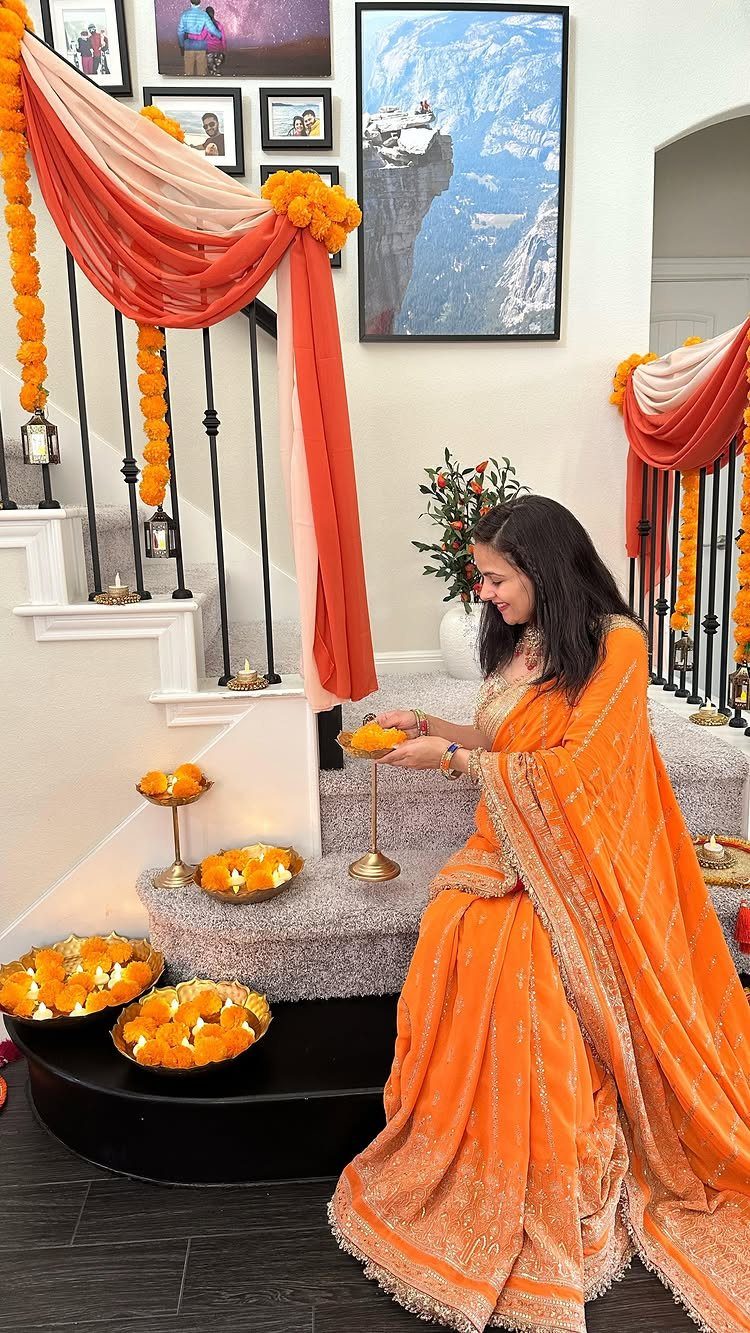
Marigold garlands on a staircase give you color down the whole run, in a spot guests walk past. I like them draped along the railing and looped in a gentle swag, with fabric drapes behind to soften the line.
Strands are cheap enough to buy by the dozen, and artificial ones can go up early. Fresh ones are best hung the day before the party.
11. Decorative Sweets Display
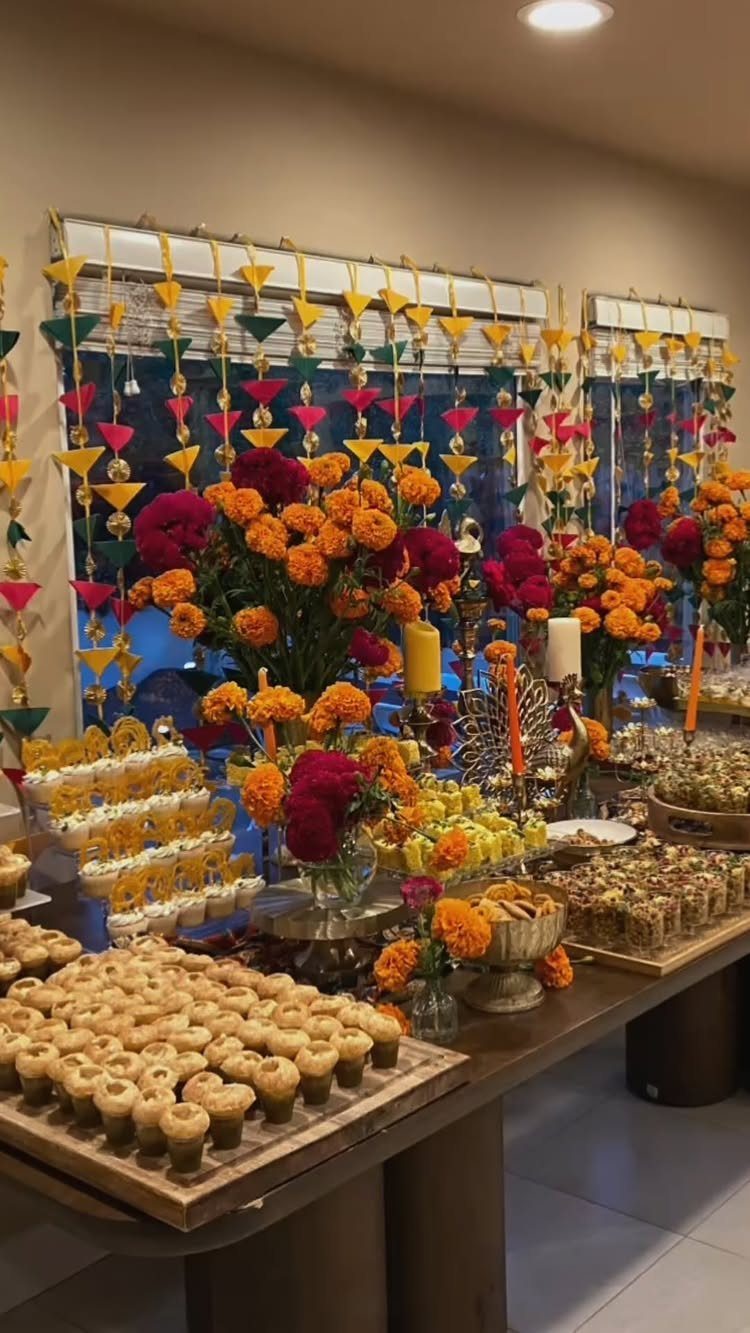
A sweets table works best when the display does as much as the food. Small sweets arranged in rows on a wooden table, with marigolds scattered between them, look generous without needing a big batch.
Candles at the base and a banner hung behind the table complete the display. Store-bought sweets are a perfectly good shortcut, and plating them well matters more than who made them.
12. Lanterns
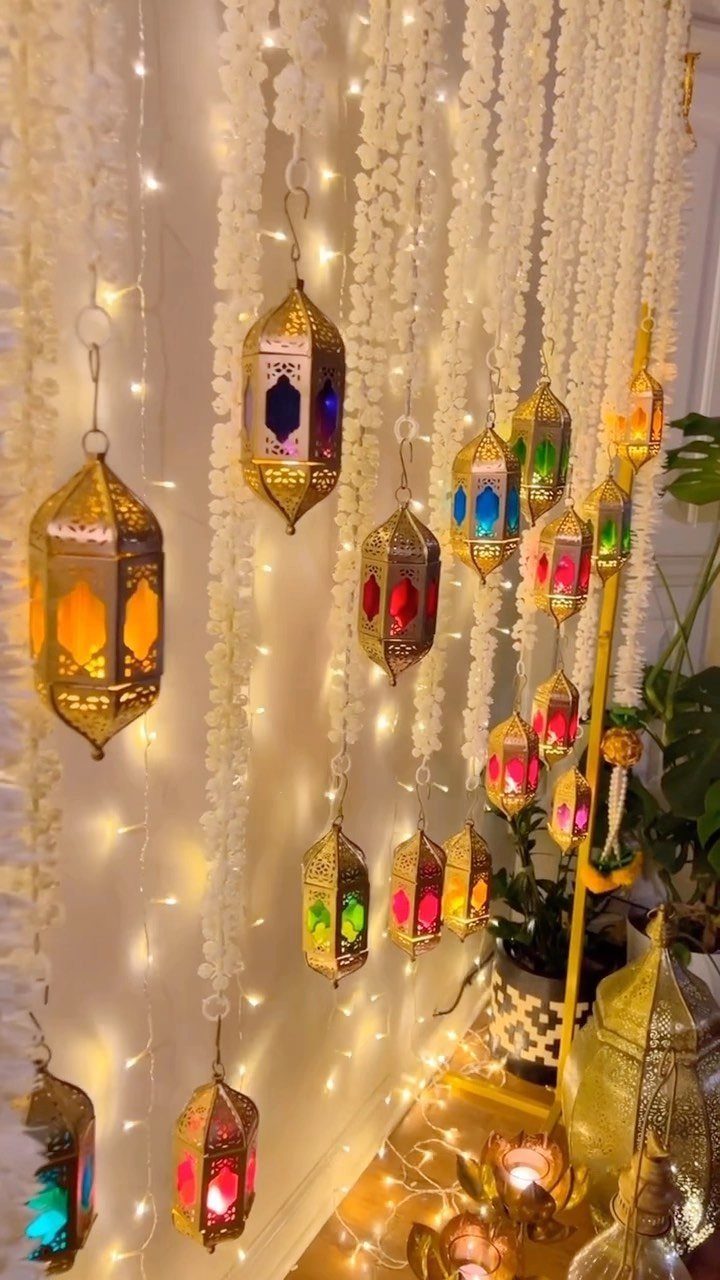
Gold lanterns with colored glass panels throw patterned light across a wall, which is something plain bulbs cannot do. Hung at staggered heights from white floral garlands, they fill a blank wall with very little effort.
Thread warm fairy lights through the garlands to tie the row together. Hang the lanterns from sturdy hooks, and plan the cord route before you start.
13. Chandeliers
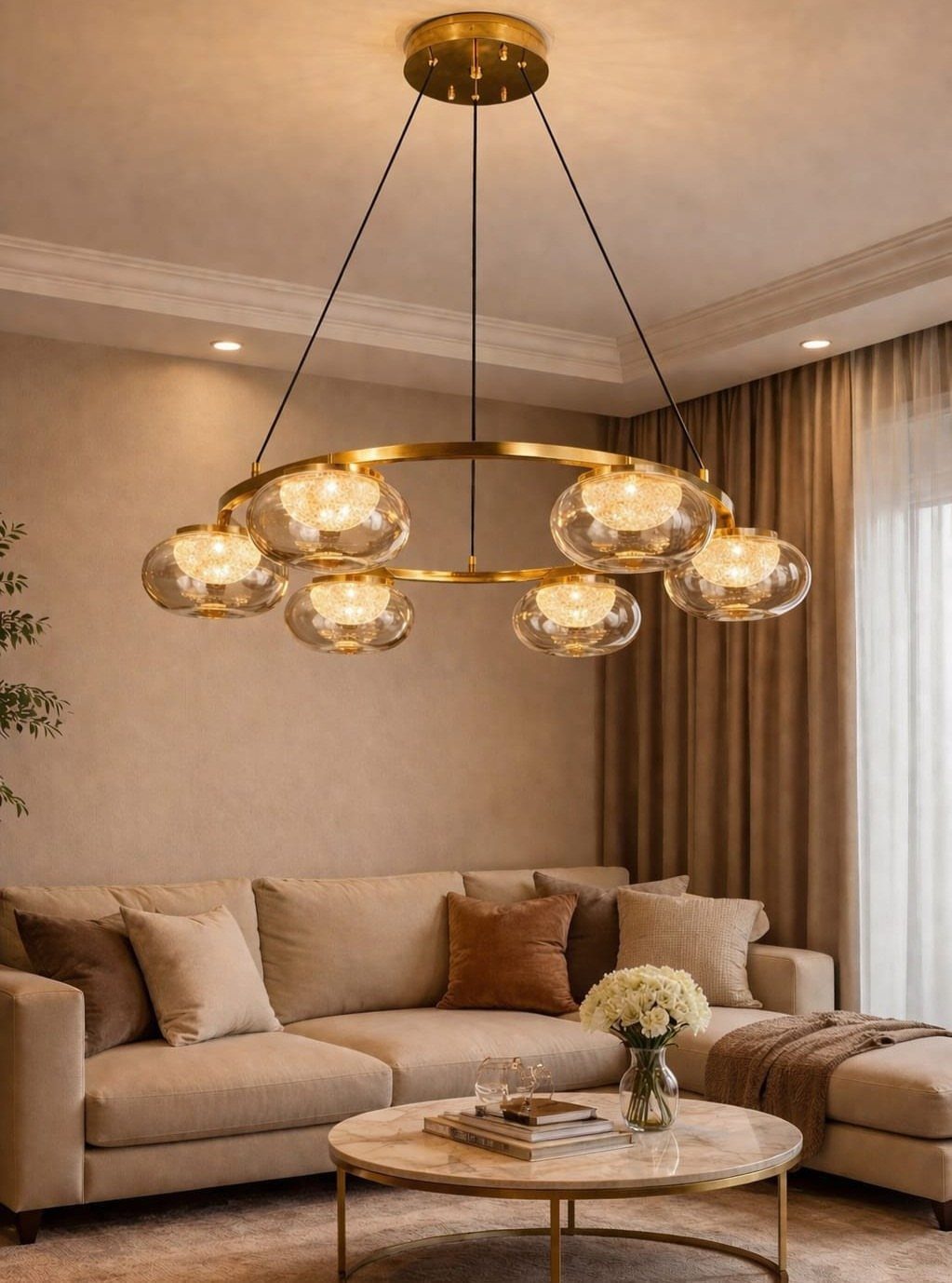
A gold circular chandelier with glass globes can carry a living room on its own, so let it be the one big statement overhead and keep the rest of the room quiet.
Center it over the seating area so the light falls on the guests. Wrap a thin strand of warm fairy lights around the ring if you want extra glow, and keep the cord route planned before you climb the ladder.
Importance of Cleanliness
Cleaning comes before any decorating. Diwali welcomes Lakshmi, and a clean, clear home is how that welcome starts, so give every room a full tidy before a single garland goes up.
Clear surfaces and open floor space also show you what you have to work with. Once the space is clean, choose a few ideas and add more only if the room still feels bare.
If your building limits outdoor decorations, a door wreath or a banner on the door itself still gives the entrance a festive look.
The aim of the holiday is to spread positivity and joy, so if you’re looking for the best Diwali decoration ideas, remember that they should reflect that.
Family Involvement
Give each person a job that fits their age. Younger kids can press stakes into the ground or pass supplies, older ones can sketch layouts, and the adult handles the ladder.
Decorating together turns the work into a shared project, and the kids tend to remember it.
Before you plug in any outdoor lights, run them from a GFCI-protected circuit. Check cords and bulbs for damage first, and keep the ladder work to the adults.
Budget-Friendly Tips
Start with what you already own. Brass pieces, candle stands or a single urli can come out of storage and go somewhere visible, which costs nothing.
If time and money are short, spend them at the entrance first, since guests see it before anything else. A rangoli, a toran and 2 diyas deliver most of what a decorated entry needs, and the whole setup takes under 20 minutes.
After that, run a string of lights across one shelf or along a window frame. They change a room’s mood faster than any single object.
A shallow bowl filled with loose marigold petals and 3 floating candles sits on a table nearly as well as a full arrangement.
Flowers and small decor pieces cost less and stay fresher when you buy them 2 days before Diwali instead of the morning of.
For a lower-waste route, use paper decorations that can be recycled, dried leaves and flowers, and natural powders for rangoli.