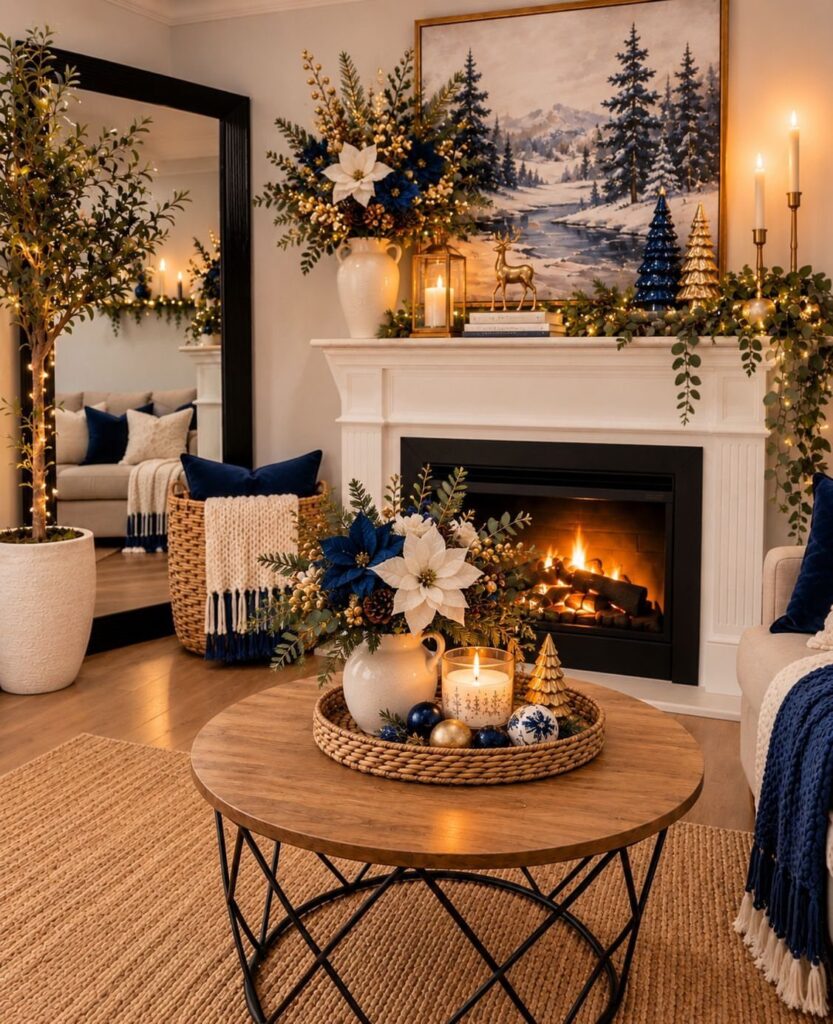
Whether the house still looks like Christmas decides where to start: if the stockings, greeting pillows and red bows are out, Transitioning from Christmas comes first, and the icy blues and soft neutrals that follow build on it.
The list runs from a candle or a string of fairy lights, which take minutes, to a weekend of chunky knitting, and most ideas land closer to the quick end.
1. Natural Greenery Garlands and Wreaths
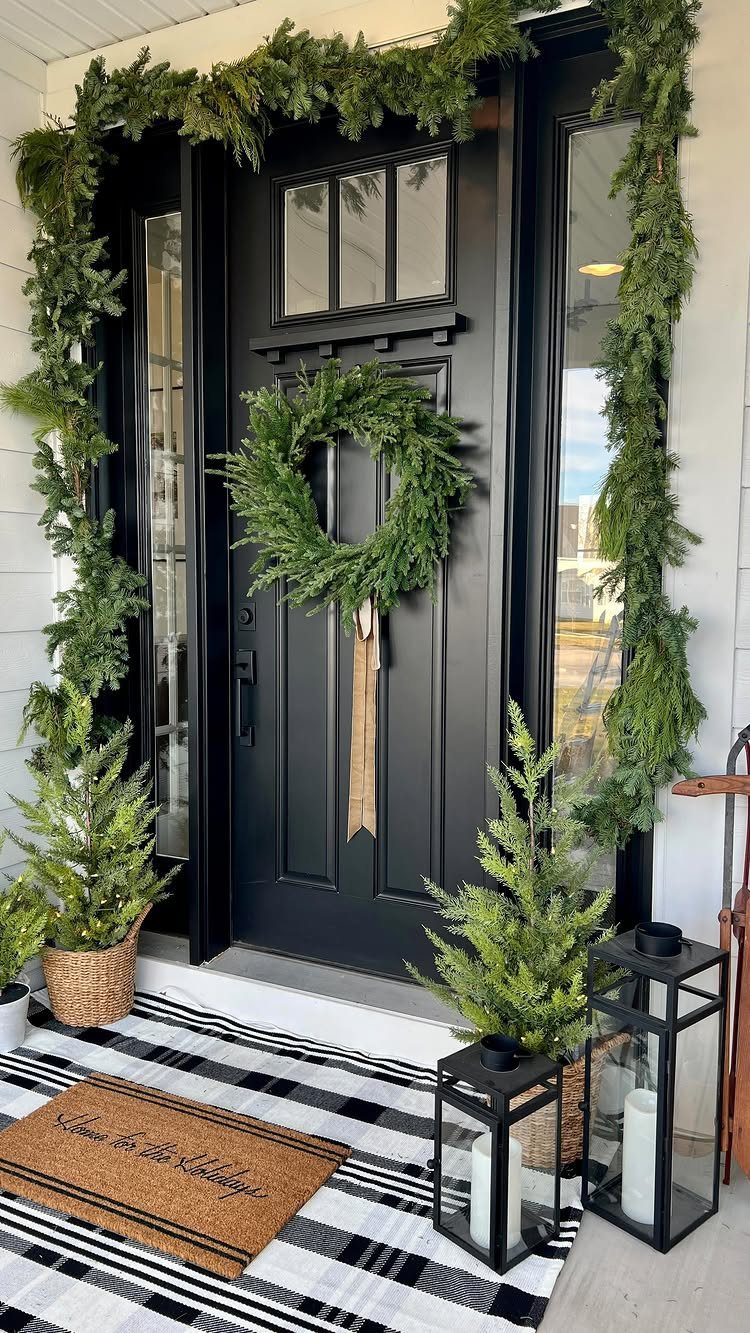
A black door makes evergreen look sharper, and a wreath with a matching garland framing it reads as one planned piece instead of two separate buys.
Keep the greenery the same type on both so the color and needle texture agree.
Plaid rug, doormat and a pair of lanterns can stay out after the holidays. Swap the "Home for the Holidays" mat for a plain one, and the whole entry works as a January look.
2. Icy Blues and Soft Neutrals Decor
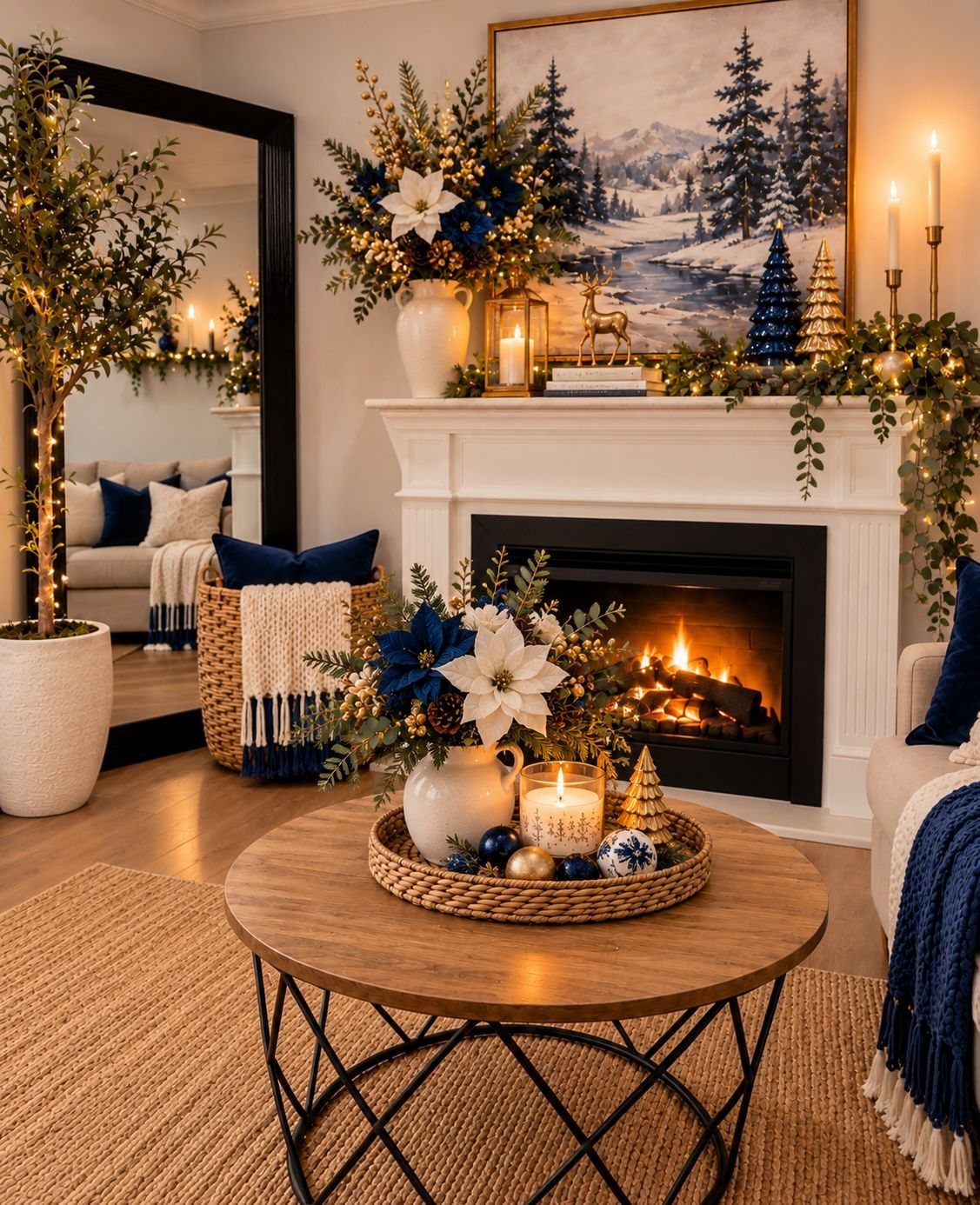
Cool blue against white and soft neutrals is the easiest way I know to make a room feel wintry without any holiday signal.
Blue and white flowers do the work here, and a snowy painting over the mantel carries the same palette up the wall.
Pick 2 blues at most and let the neutrals fill the rest. Swapping flowers and a few pillows costs far less than repainting.
You can easily shift your decor into winter mode by trading out your deep reds and greens for softer, more seasonal tones—think icy blues or soft, sage greens.
3. Restyle Your Shelves
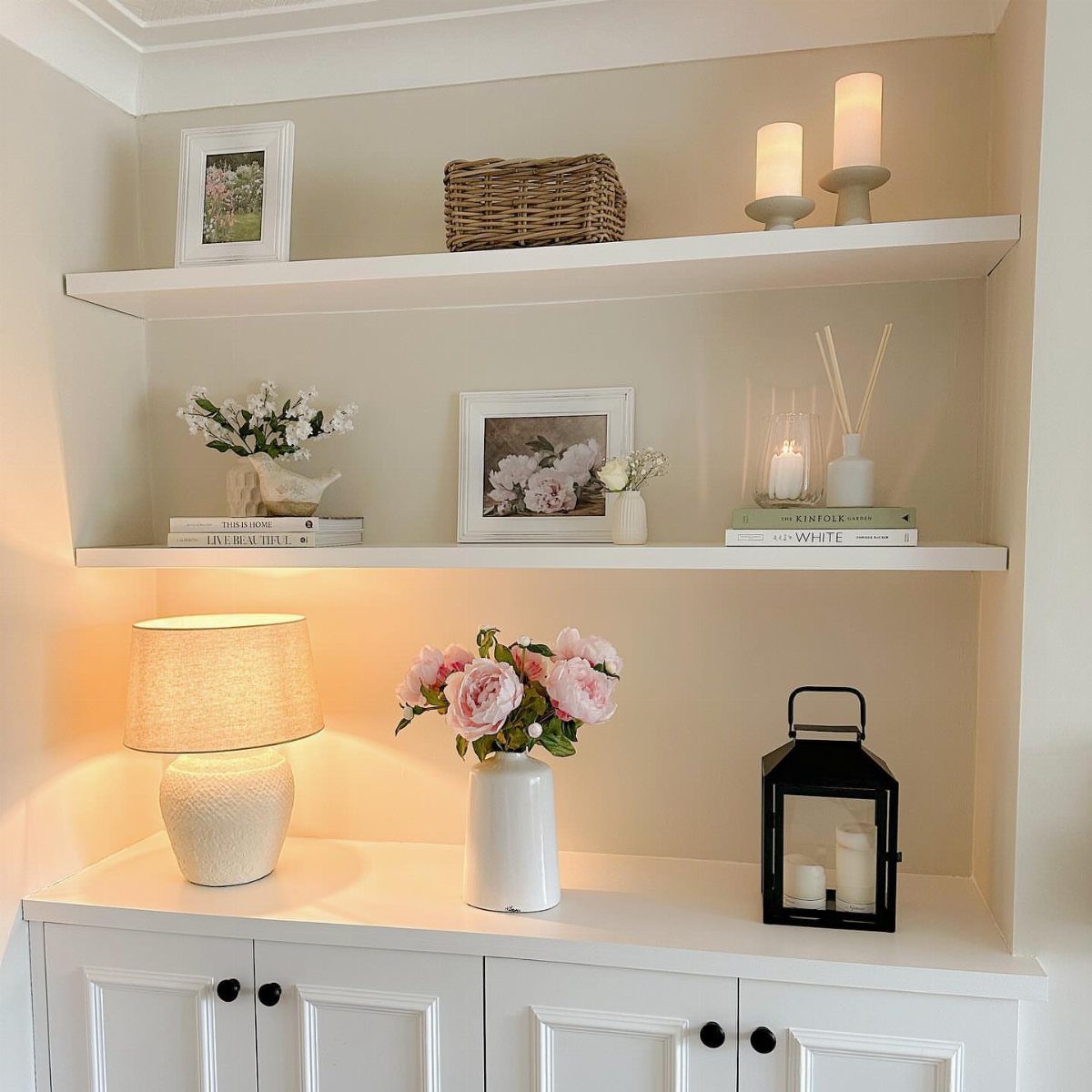
Shelves are where post-holiday clutter piles up, so start by clearing everything off and putting back only what you love.
Group books, framed art, vases and candles in odd numbers, and leave some empty space so each piece can be seen.
Pink flowers add a warm note against white shelving. Short stems in a vase are cheap and quick to swap, which suits a January budget.
4. Chunky Knits and Faux Fur Throws
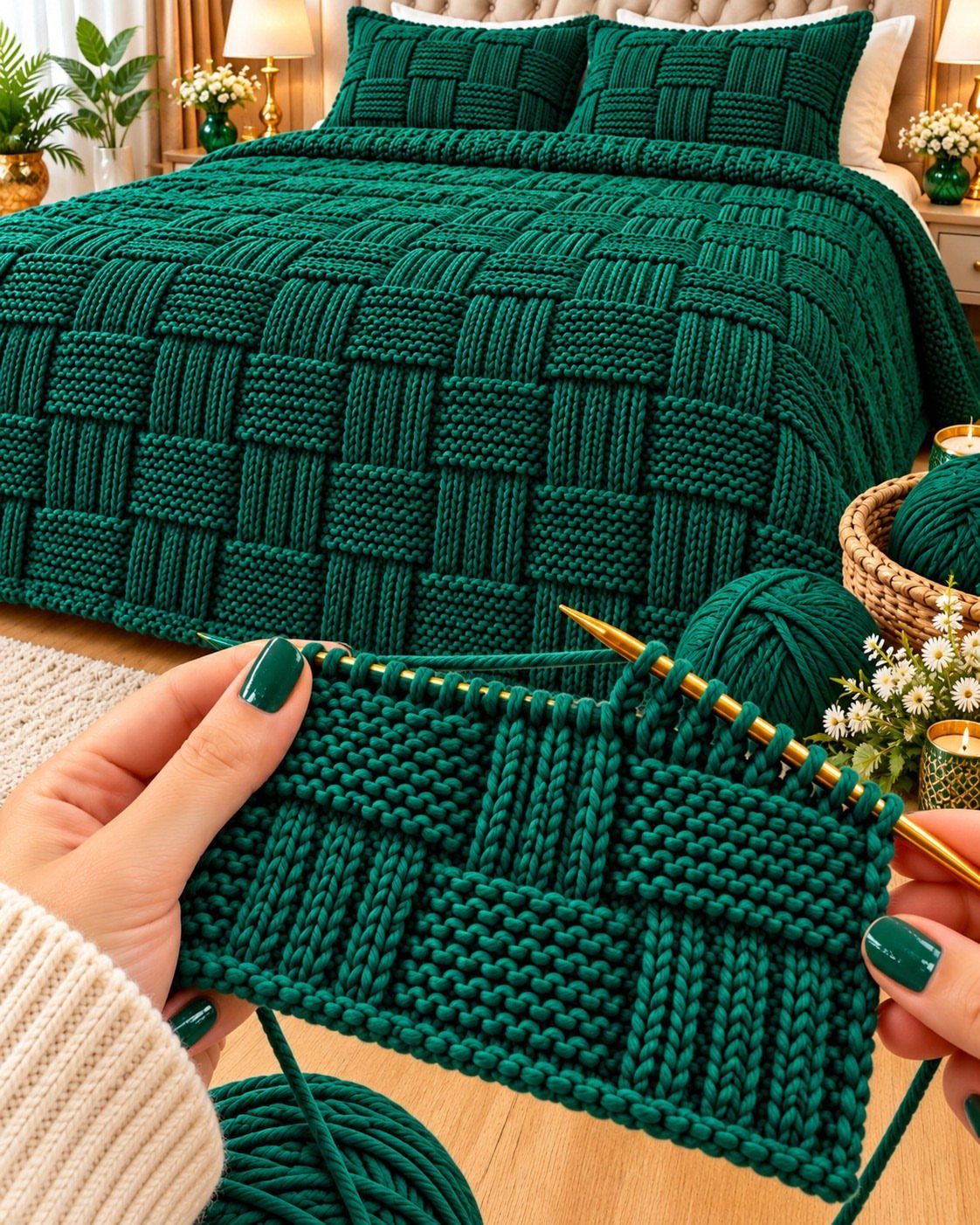
Chunky knit in a deep green turns a bed into the warmest spot in the room. Thick yarn and big needles knit up fast, so a throw is a realistic weekend project if you are willing to learn.
Buying one is the faster route. Layer it over the bed’s foot with a couple of pillows in matching tones, and add a faux fur throw if you want a second texture.
5. Winter Vignette
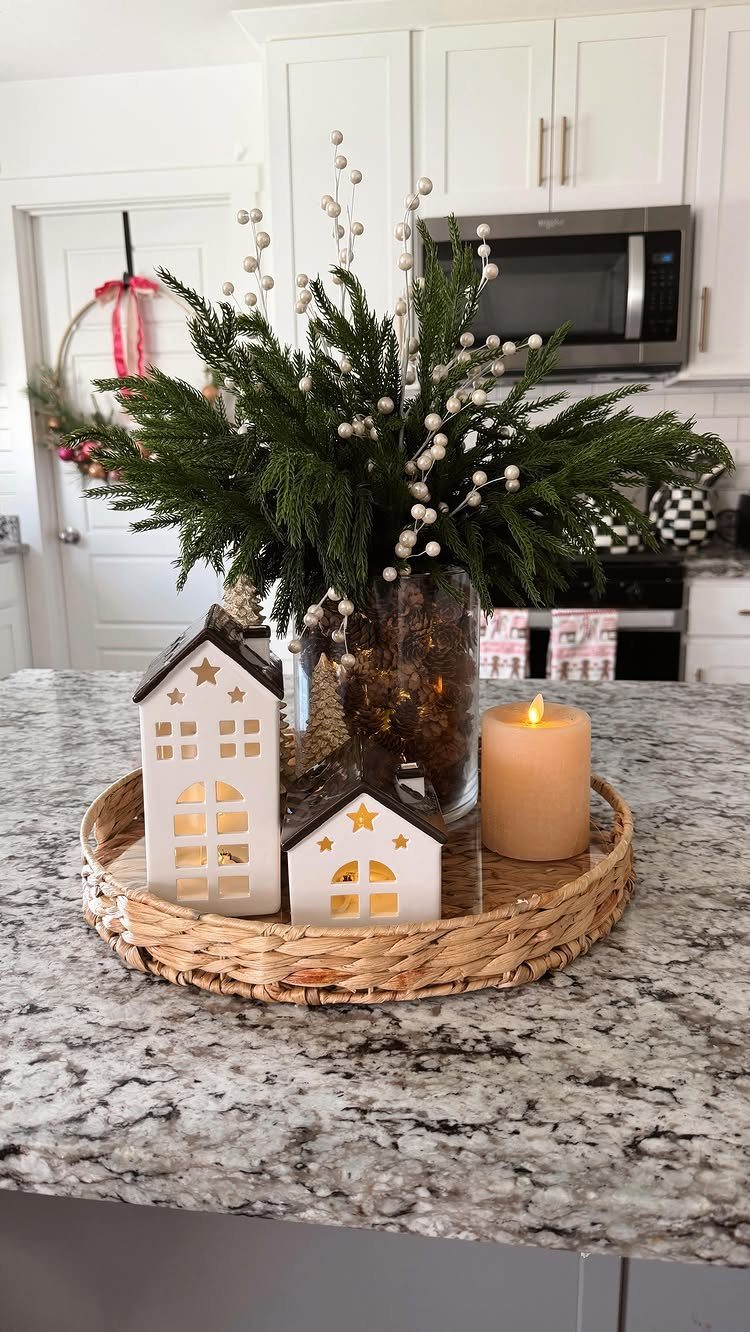
A small tray gathers a winter scene into one tidy spot. Wicker holds a vase of evergreen branches, two little lit houses and a candle, and the grouping works because the tray keeps it from looking scattered.
Vary the heights: tall greenery, mid-size houses, low candle. A kitchen counter or an entry table is the right scale for it, and it takes a few minutes to put together.
6. Candles and Fairy Lights
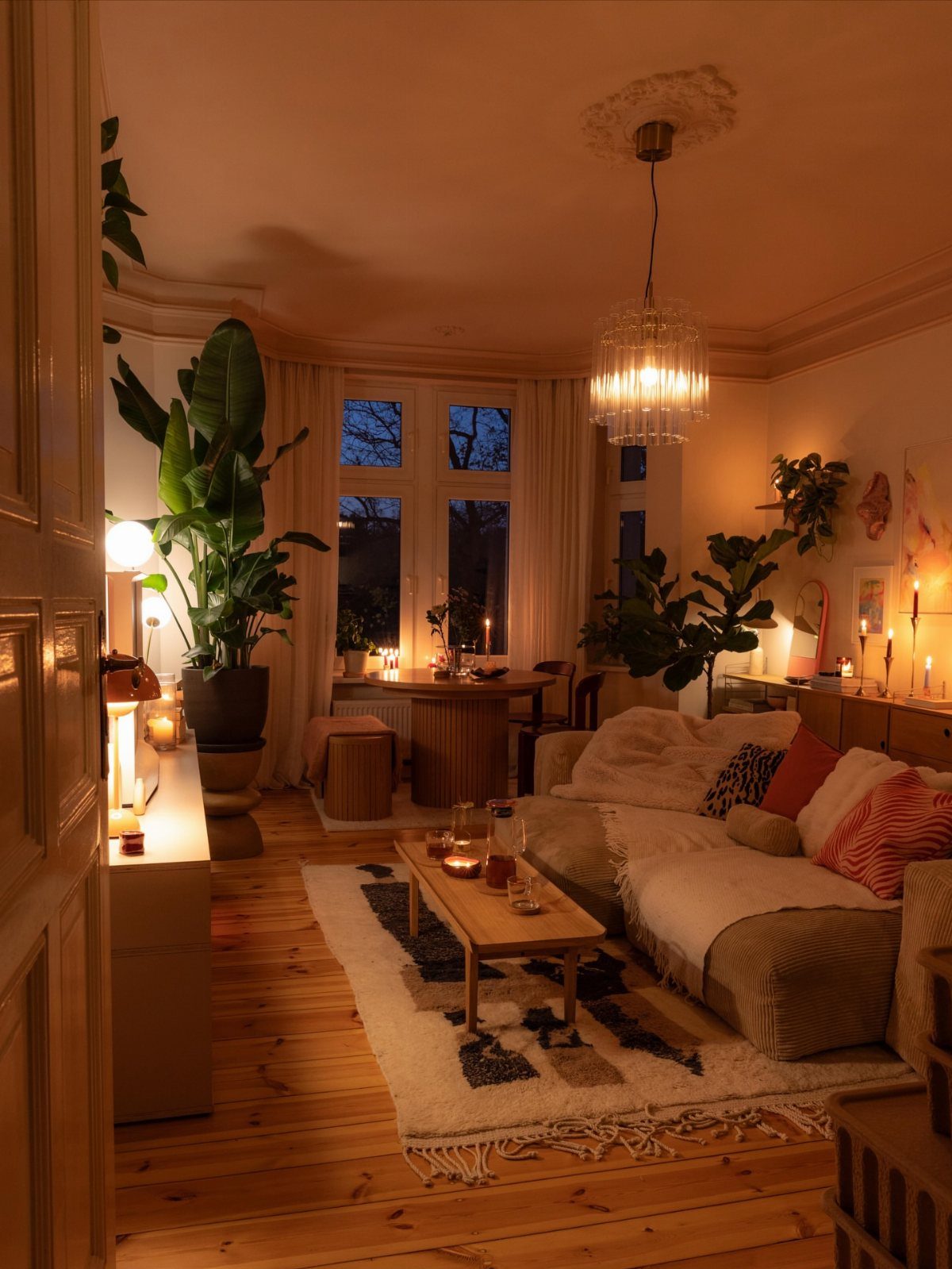
Light sources at different heights make a room feel warm in a way one bright overhead fixture never will. A chandelier overhead with several candles on tables and surfaces gives that layering, and green plants soften the glow.
Dim the main light and let candles do the rest. Fairy lights are a cheap addition for a dark corner or a plant, if you want one more level of glow.
7. Pinecone Decor

Pinecones cost almost nothing and fit January well, since they read as winter without any holiday signal. Pack them around a pillar candle in a glass holder with moss tucked between, and you have a centerpiece in minutes.
Use pinecones of similar size so the ring looks deliberate.
A single holder on a side table is plenty.
8. Birch Logs and Candles Centerpieces
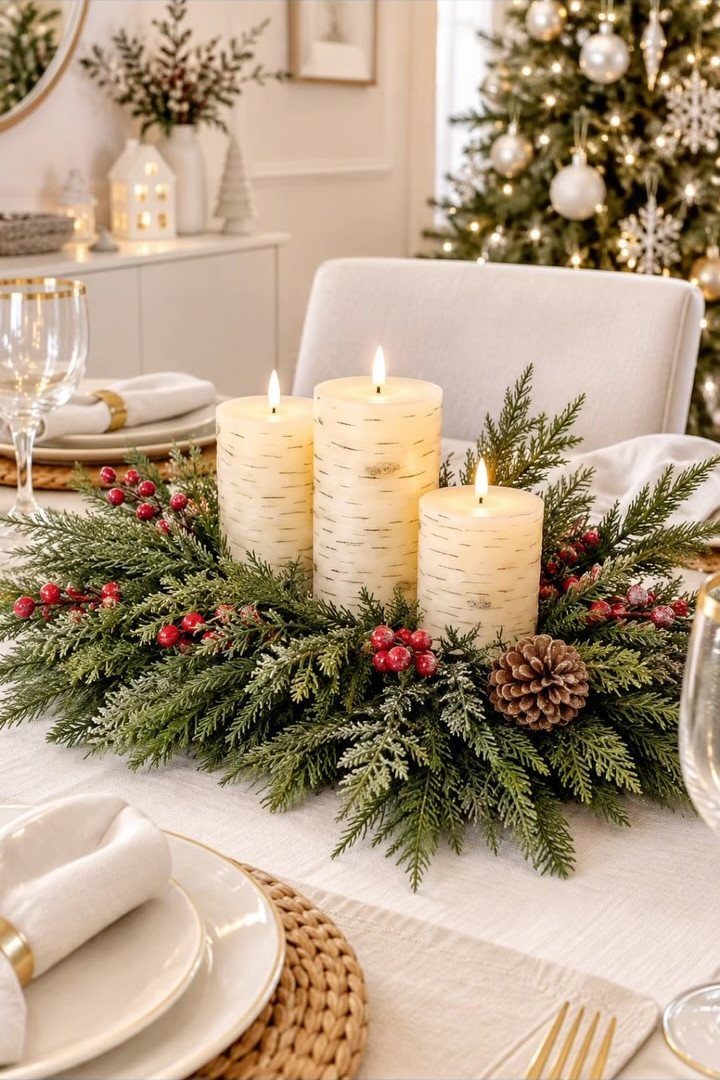
Birch-patterned pillar candles give you the look of birch logs with none of the sawing, and three of them grouped together make a centerpiece that stays low enough for conversation.
Keep the greenery loose rather than packed. Pull the berries and the tree-trimming extras once the holiday look has to go, and the birch and evergreen still carry a January table.
9. Cake Stand Displays
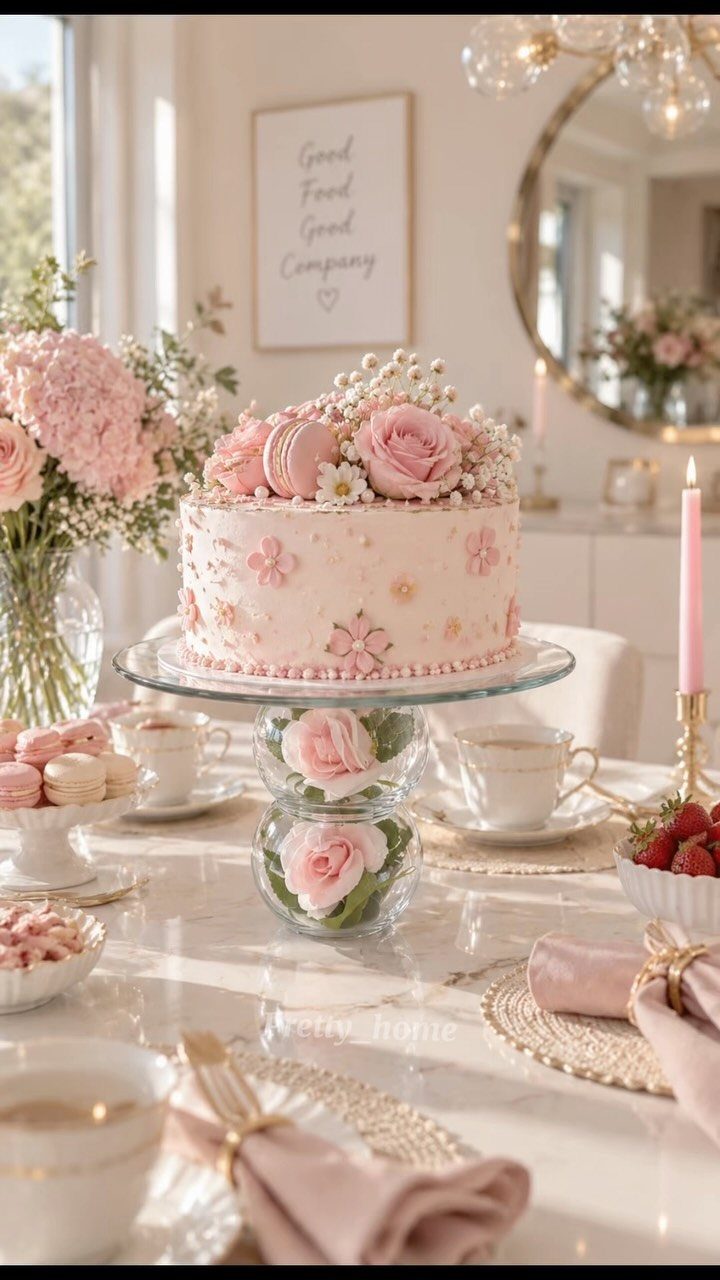
A glass cake stand lifts a dessert to eye level, so the table gets a focal point without buying a single flower.
Pink frosting with roses sits well on a marble surface, and a small sign beside it adds a message.
I would bake a simple cake or buy one from a store, since the stand does the styling. Between gatherings, the same stand can hold ornaments, pinecones or lemons.
10. Hydrangeas and Snowball Flowers Decor
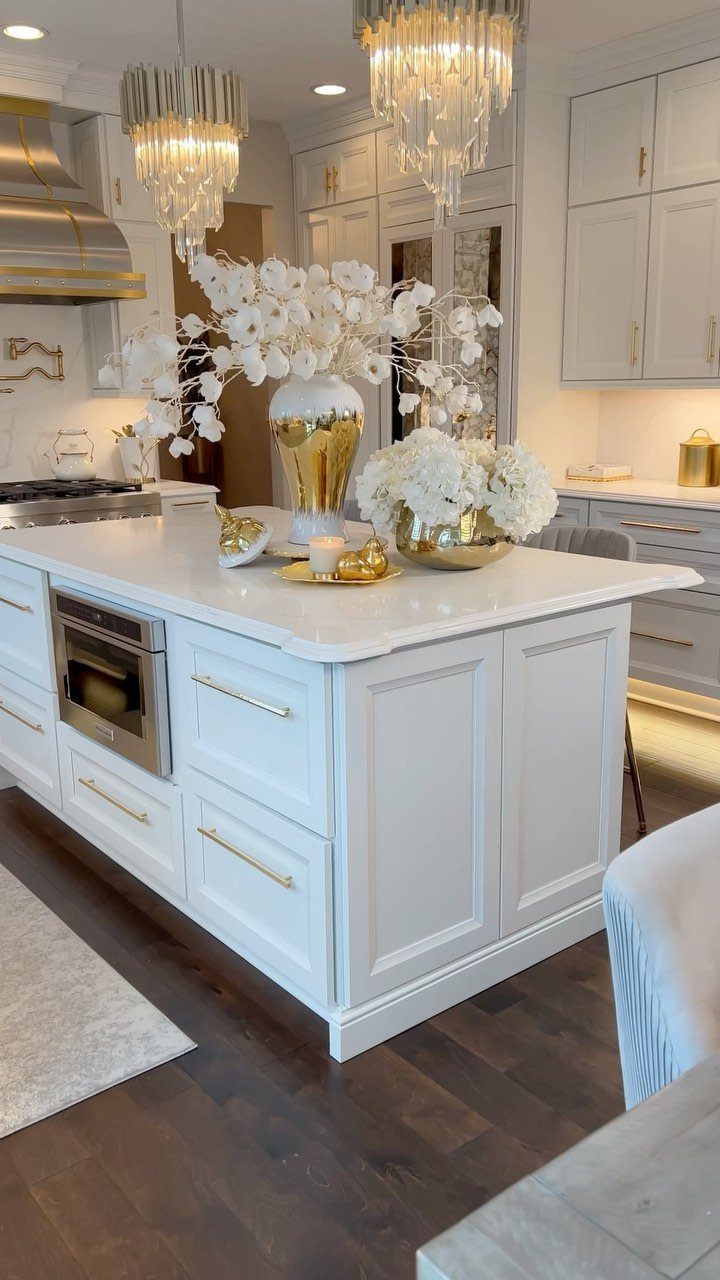
White hydrangeas and snowball flowers bring fullness to a kitchen island in a month when most color has gone.
Gold vases and a gold bowl suit white blooms, because the metal warms them up and the flowers stay clean and bright.
Use one tall vase and one low bowl so the heights differ. A big bloom head in a bowl needs few stems, which keeps the cost down.
Swap in fresh stems when petals start to brown.
11. Hot Cocoa Bar
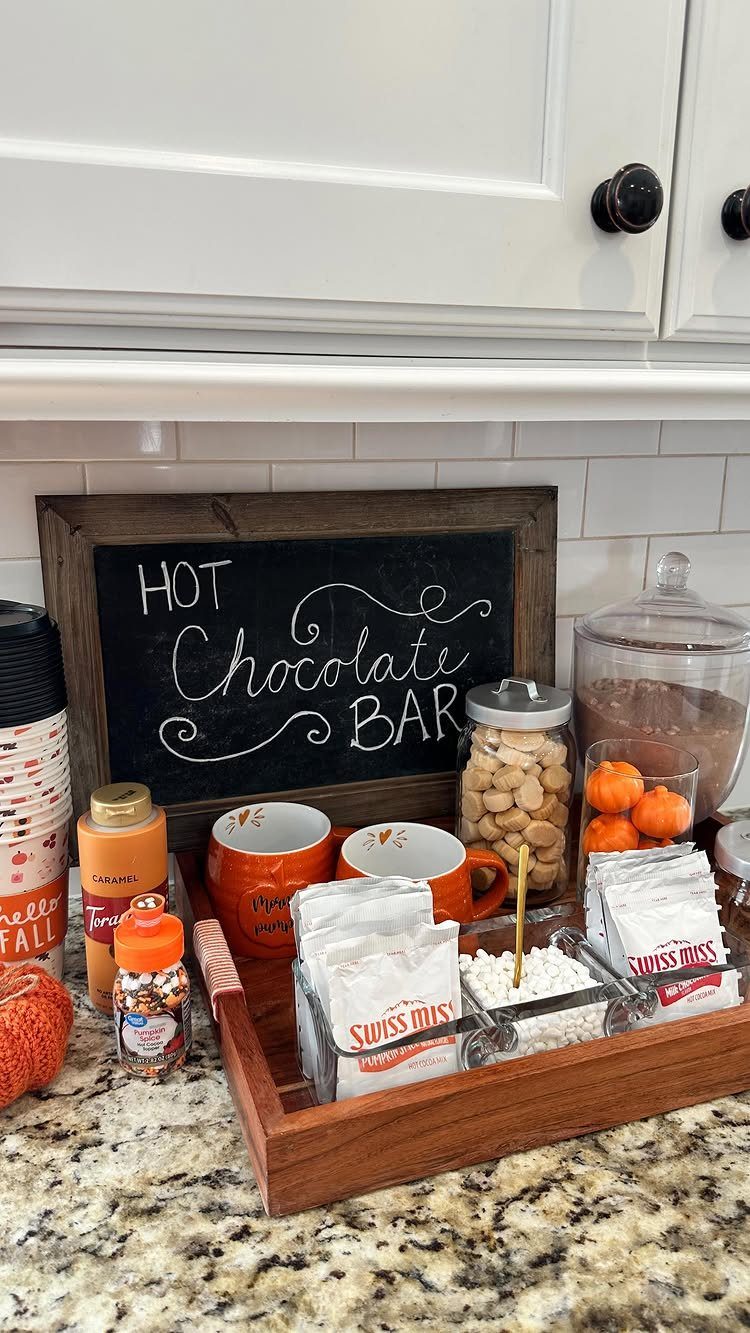
Put cocoa packets, mugs and toppings on a wooden tray, and keep cocoa powder in a jar for anyone who wants it richer.
I like bright mugs, such as orange, to give the counter a color note. Add a hand-lettered sign, and the whole bar costs little per guest, since packets are cheap and toppings stretch far.
12. Choose a New Home Fragrance
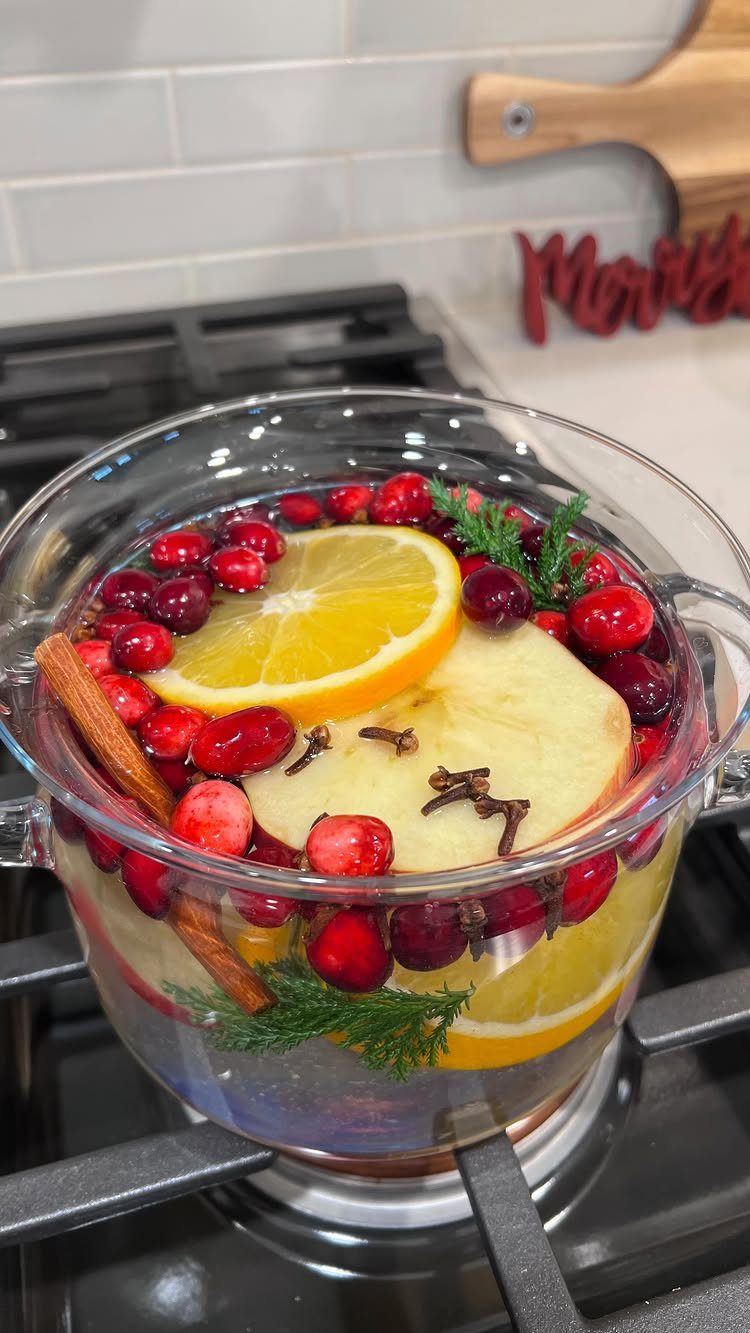
A simmer pot scents the house with nothing but fruit and spice, and it costs a few dollars. Fill a pot with water, orange slices, apple slices, cranberries, cinnamon sticks and cloves, then heat it on low.
Check the water level now and then and top it up so the pot never boils dry. I prefer this to a candle for January, since it smells like baking and leaves no wick to trim.
Advice on January Decor
Soft light, natural materials and warm textiles are the 3 levers that make a house feel good in the gray stretch after the holidays. Pick one from each group and the room reads as cozy rather than stripped.
Thrift stores are a good first stop for baskets, wooden bowls, glass jars and extra blankets. Natural and warm-toned pieces tend to cost little there, and they suit a quiet month.
January is also a good time to declutter and set goals, so let the house follow that mood: fewer objects, each one chosen for comfort.
Transitioning from Christmas
Start by removing anything that says Christmas outright: stockings, signs, pillows with a greeting, Santa figures, bows and ornaments. Anything in classic holiday colors goes too.
Trees taller than 3 feet go into storage; smaller ones can stay if they work without ornaments. While the boxes are open, set aside decor you did not use and do not plan to use again.
Some things can stay.
A flocked tree with white lights only looks lovely through January if it stands under 3 feet. Garlands and wreaths hold up through January if you pull out anything in bright red or Christmas-specific ribbons.
For the swap, lean on whites, creams, silver and evergreen. If you want a true reset, clear each surface down to bare, flat space, even the throw pillows, and add back only what fits.
Importance of Lighting
Avoid the big overhead light in the evening. Give every room at least 2 lamps, and use warm-toned bulbs so the light stays soft.
Winter asks for more light than you think you need, and another lamp usually fixes a room that feels flat.
Candles go on top of that, and you will likely want more than you expect. Lanterns work indoors too, and they throw patterned light across a wall or table.
A fireplace only works if you keep wood nearby and actually light it. Short days make your body want a slow, calm evening, and layered light is how you give it one.
Frequently Asked Questions
What do you decorate for in January?
Decorate for winter itself, not for a holiday.
Natural materials like evergreen, pinecones and moss, plus warm textiles like chunky knit throws, give the house a cozy look once the Christmas pieces are packed away. Soft layered light from lamps and candles finishes the look.
What to hang on the front door in January?
Hang a simple winter wreath of natural greenery. A Christmas wreath can stay up if I pull off the bright red pieces and any Christmas-specific ribbon.
A matching garland around the door in the same type of greenery makes it look like one planned piece, and a plain doormat in place of a holiday one finishes the entry.