Ribbon on a Christmas tree ranges from spiraled mesh to layered spools in contrasting colors, and the deciding fact is how much experience you have with trimming.
1. Contrasting Colors Ribbon on Tree
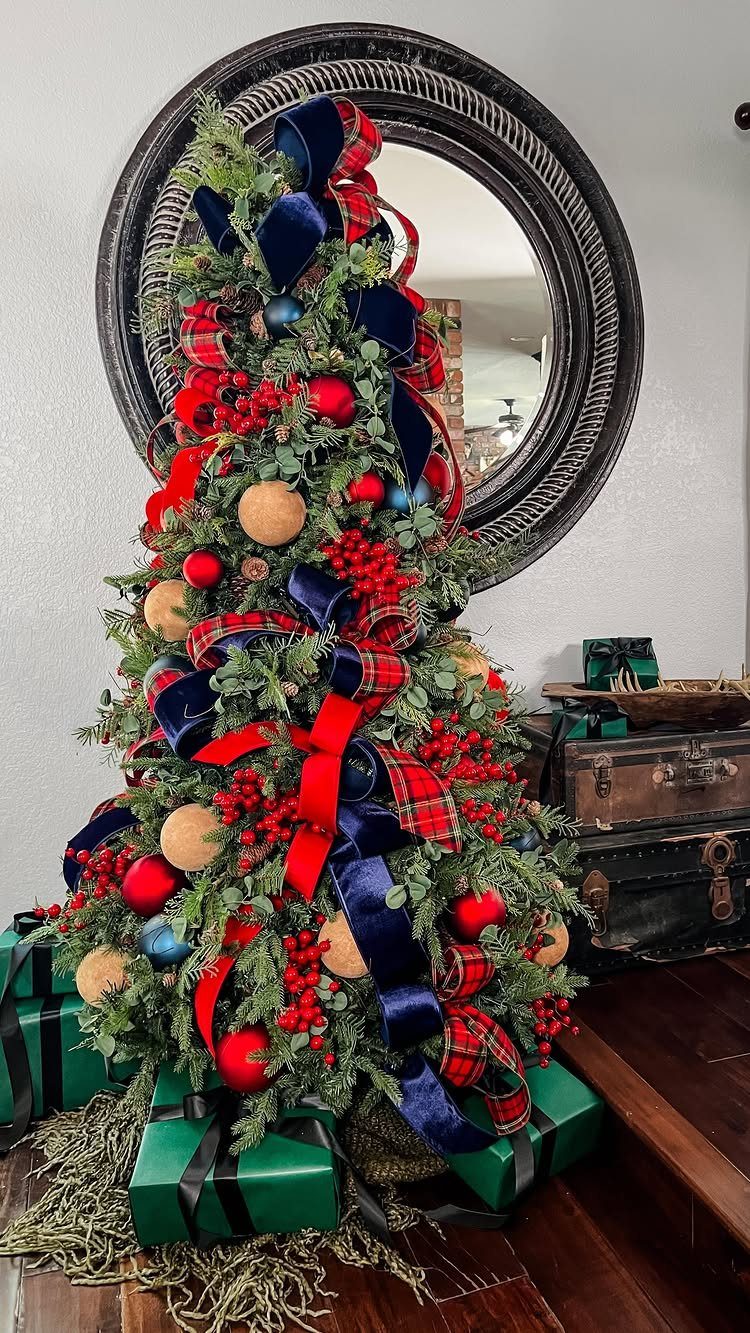
Red, blue and plaid sit well together because the plaid does the translating: it carries both colors in one ribbon, so the other two look chosen instead of random.
I would pick the plaid first, then buy a solid red and a solid blue in the same width.
Repeat each ribbon at least 3 times around the tree so no color ends up in a single lonely spot. Red ornaments tie the whole thing back together.
2. Wired Ribbon Loops
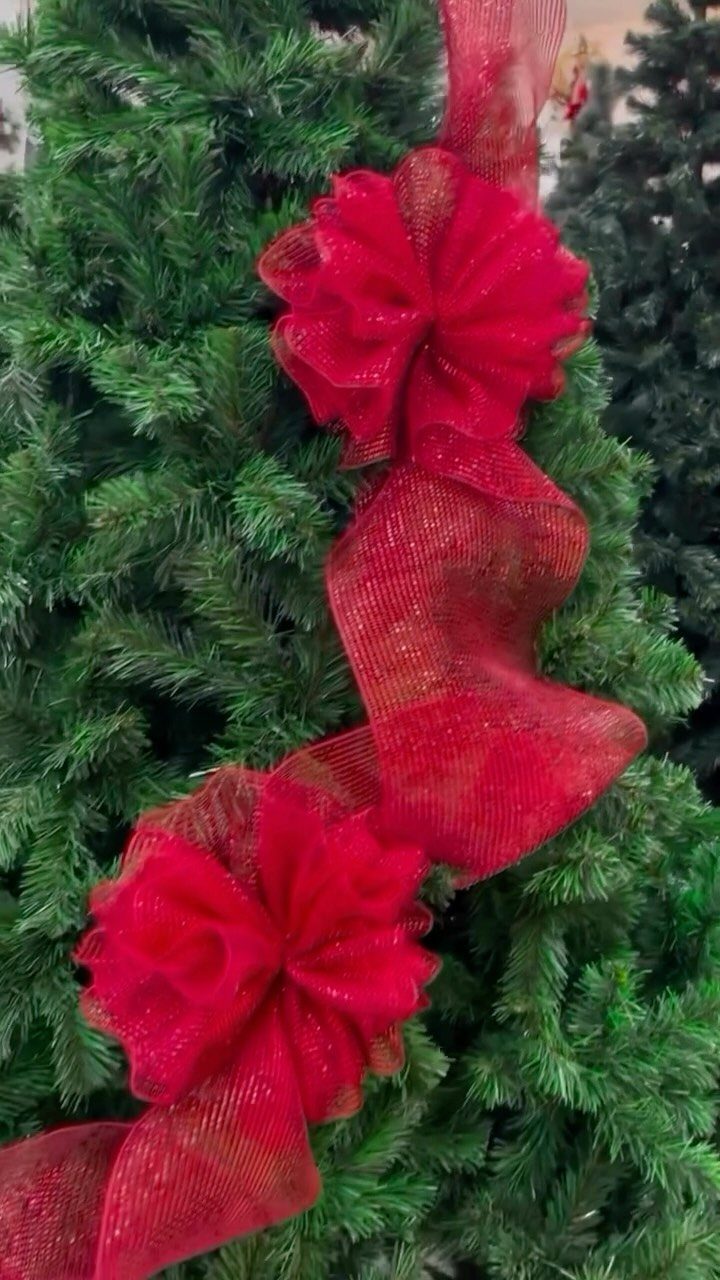
Glittery red wired ribbon is the forgiving choice for anyone short on tree-trimming experience. The wire lets you pinch a loop, bend it, and have it stay put in the branches, so a lopsided bow can be reshaped in seconds.
Make the loops large, then tuck them deep into the green so the shimmer catches light from inside the tree. Work from the bottom up, and fix any loop that droops before moving on.
3. Layer Different Ribbons on Tree
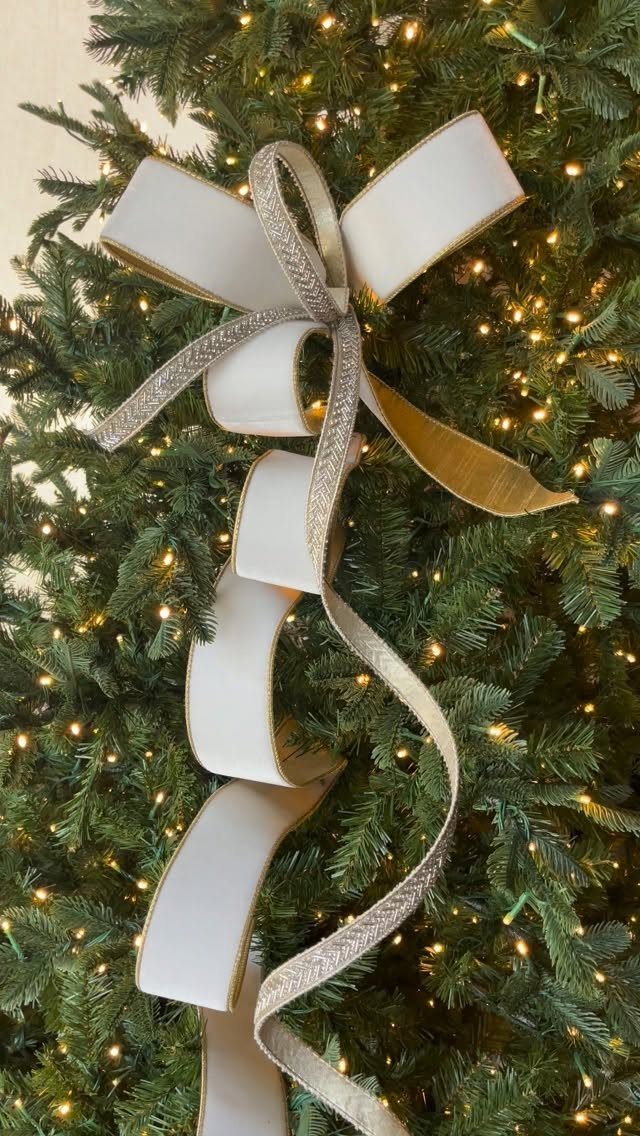
A wide cream ribbon with a thin silver glittery one laid on top gives you two textures from a single bow. The cream supplies the soft body; the silver adds a sparkle line that reads clearly against the lights.
Tie them together as one bow and let the tails cascade down the branches.
Keep the wide ribbon underneath, since a narrow one buried below would vanish. It costs only 2 spools, which suits a tight budget.
4. Ribbon Bow Tree Topper
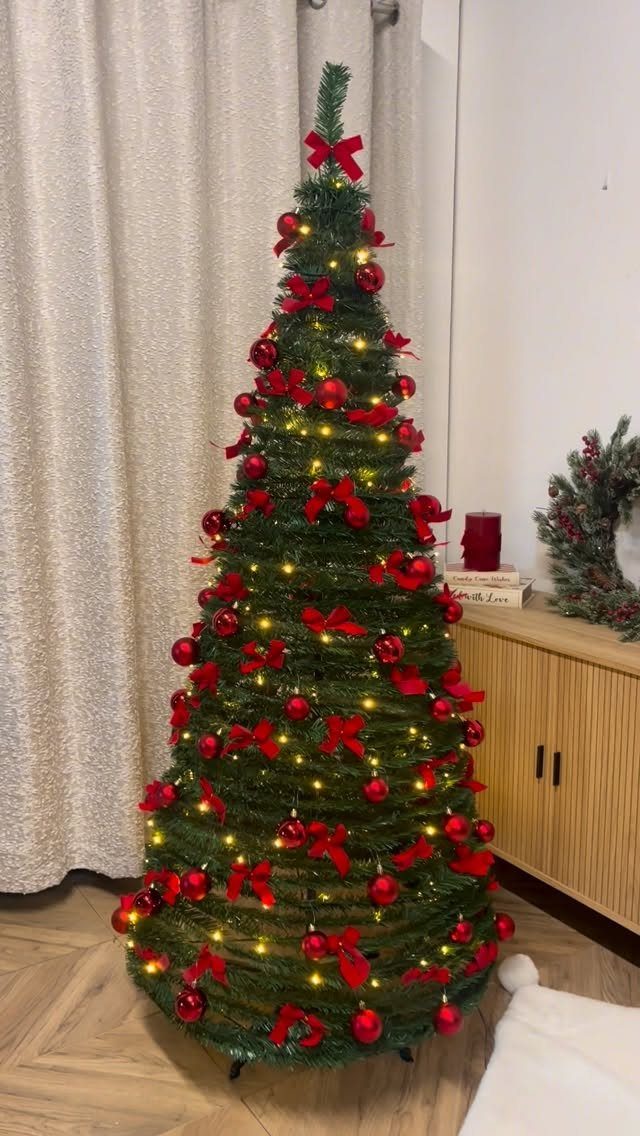
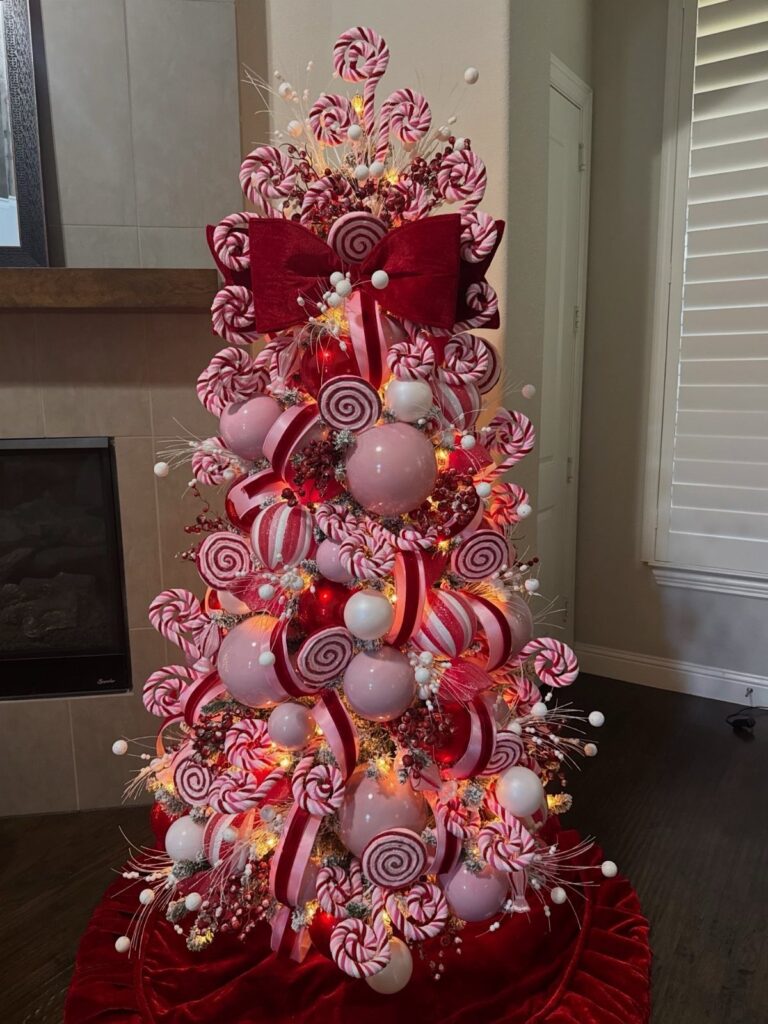
On a slim tree, a red bow at the top does more than any single ornament, because the eye goes straight to it. Make it fuller than feels necessary; a small bow at the peak looks timid from any distance.
Repeat the red in a few smaller bows lower down so the topper feels connected to the rest. Secure the base of the bow firmly to the tip of the tree before you add anything else.
“Ribbon is the unassuming detail that can really upscale your tree,” says professional tree decorator and florist Julia Testa. “An oversize ribbon as a tree topper is not only a creative alternative to a traditional star or angel, but it gives wonderful height and drama.”
5. Red Velvet Ribbon Bows
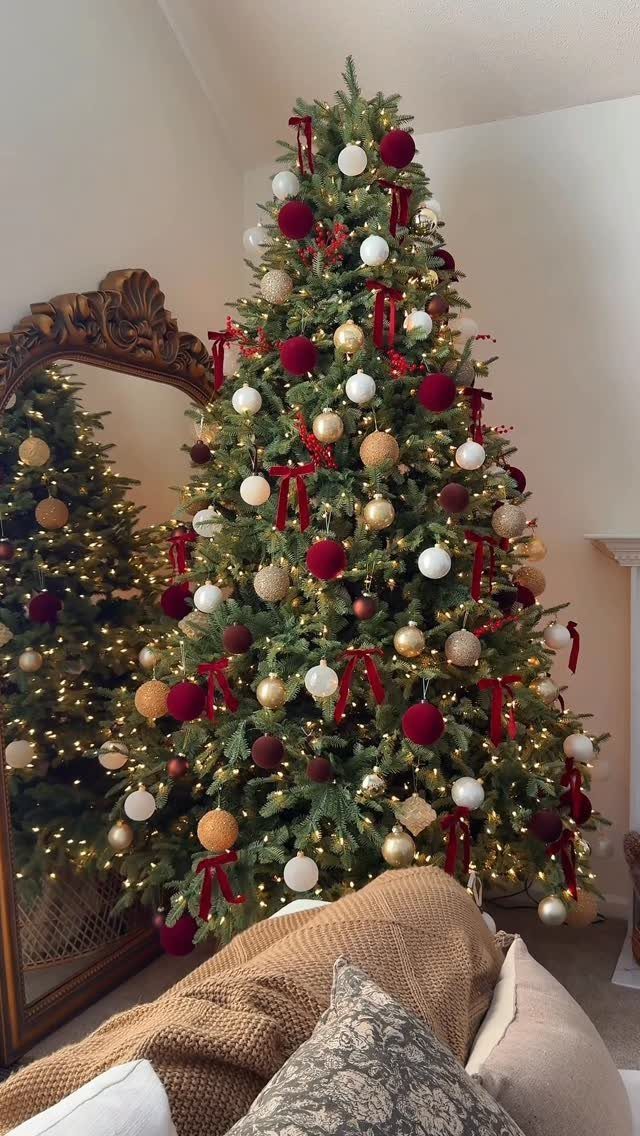
Velvet reads richer than satin in warm light, which is why small red bows tied on branch tips look so good beside gold ornaments and yellow-white lights. The nap soaks up glare and gives deep color instead of shine.
Tie each bow directly onto a branch tip so it sits at the edge of the tree, not buried. Make all the bows the same size and spread them evenly; a consistent bow is what makes the look feel planned.
6. Woven Wide Ribbon Garland
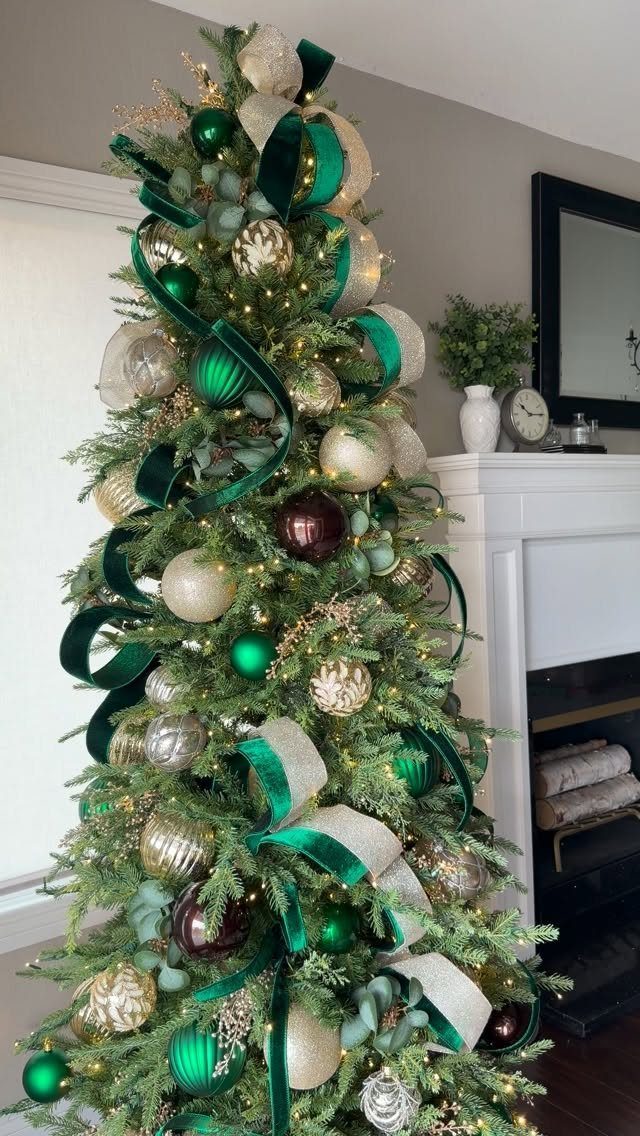
Weaving ribbon through the branches, instead of wrapping it around the outside, gives the tree real depth. Wide green and gold ribbon dips in and out, so some of it hides and some of it shows.
One maker recommends a 1" emerald ribbon for extra layers, which is a good width to start with. Weave in horizontal swags, tuck the ribbon behind branches, and hang ornaments afterward so they cover any spot where the ribbon turns.
7. Spiraling Striped Ribbon
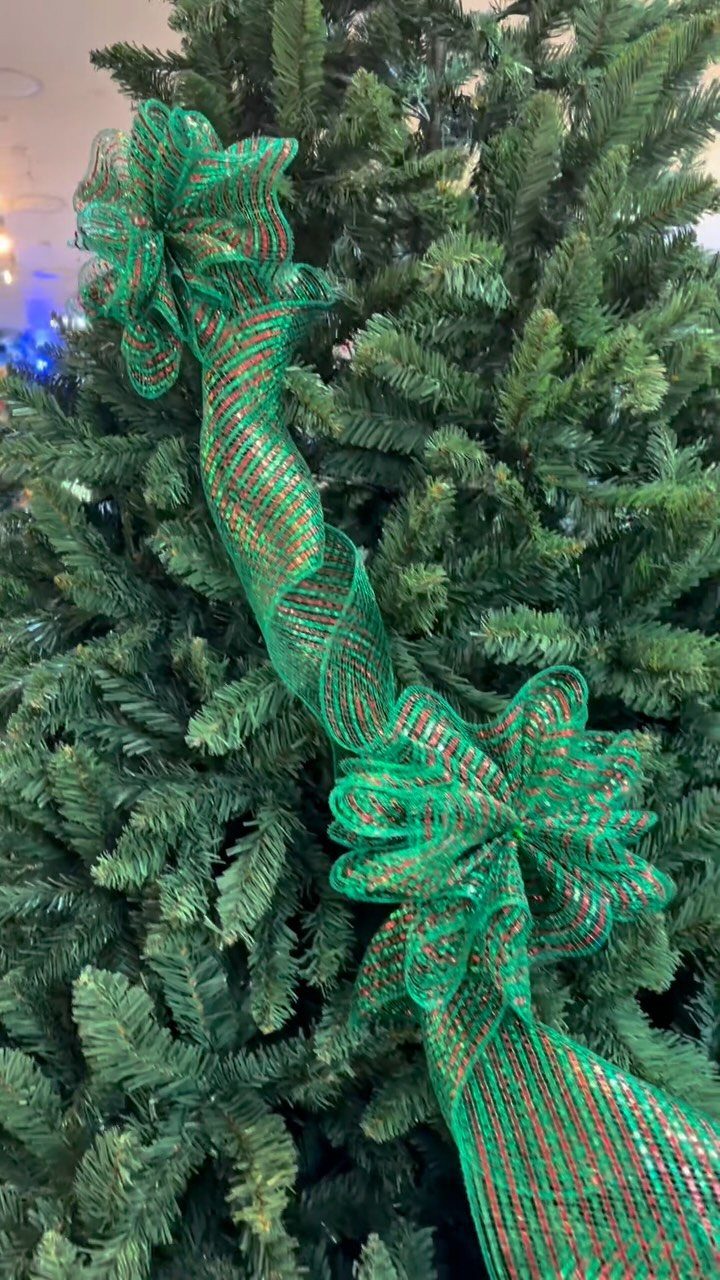
A wide striped ribbon laid on a slant covers more tree per yard than a plain one, and the stripes keep it busy without any ornaments competing. Mesh suits this job because it bends easily around the branches.
Start at the top and let the ribbon drop in a steady diagonal, keeping the gap between turns the same all the way down. Large bows in the same red and green sit well along the line.
Buy extra ribbon. A spiral eats length quickly on a full tree.
8. Silver Mesh Ribbon Tucks
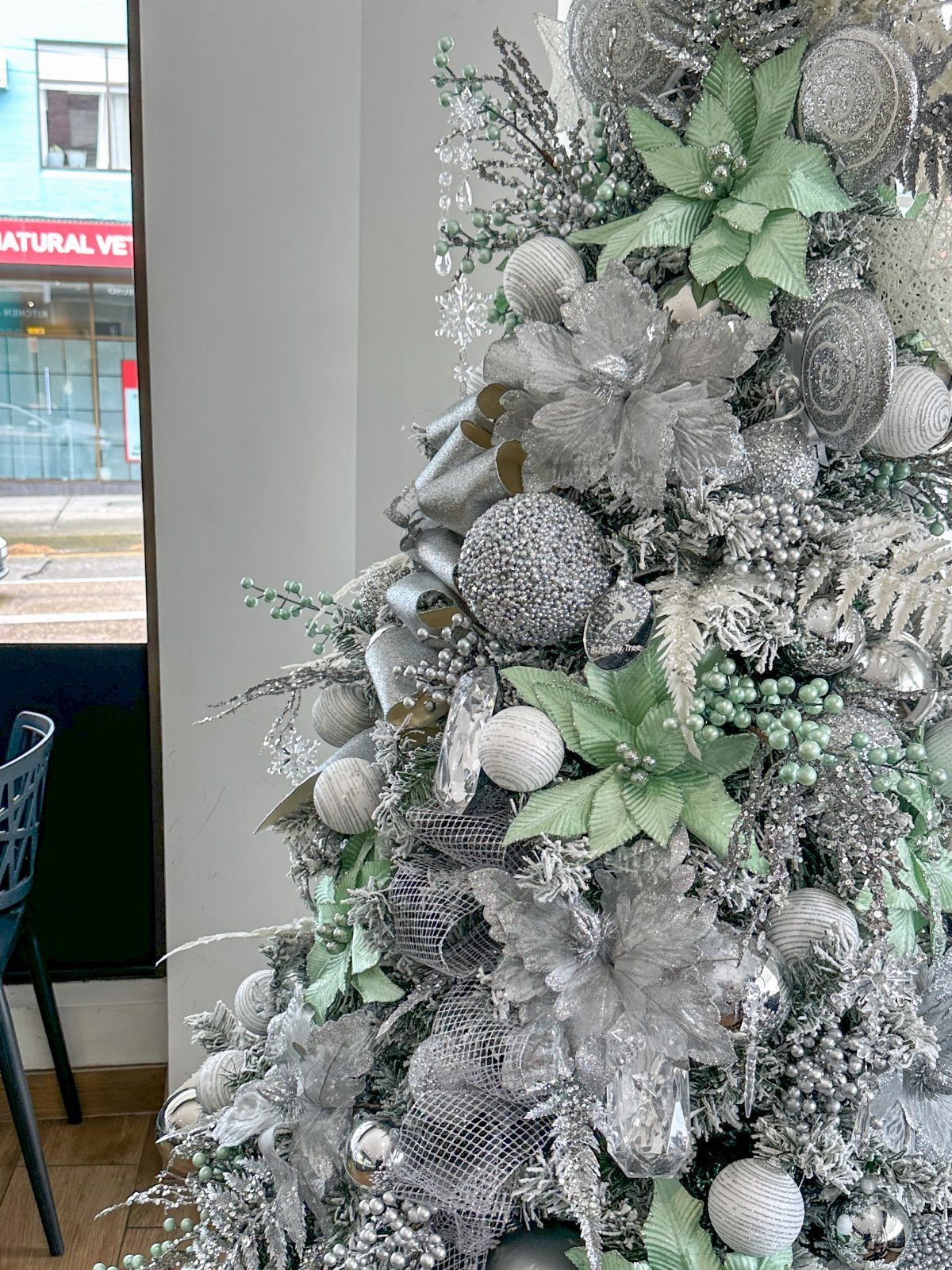
Silver mesh looks its best a little careless, with loose loops and uneven tucks instead of tidy, measured bows.
Pull a length into loose folds and push the folds between branches, so the mesh peeks out around glittery ornaments instead of sitting in a line.
Floral picks in pale green help here, since the mesh and the stems fill the gaps between ornaments. I would keep the color range tight: silver, pale green and nothing else.
Tuck every few branches, then step back and fill any bare patch.
9. Polka Dot Ribbon Bow
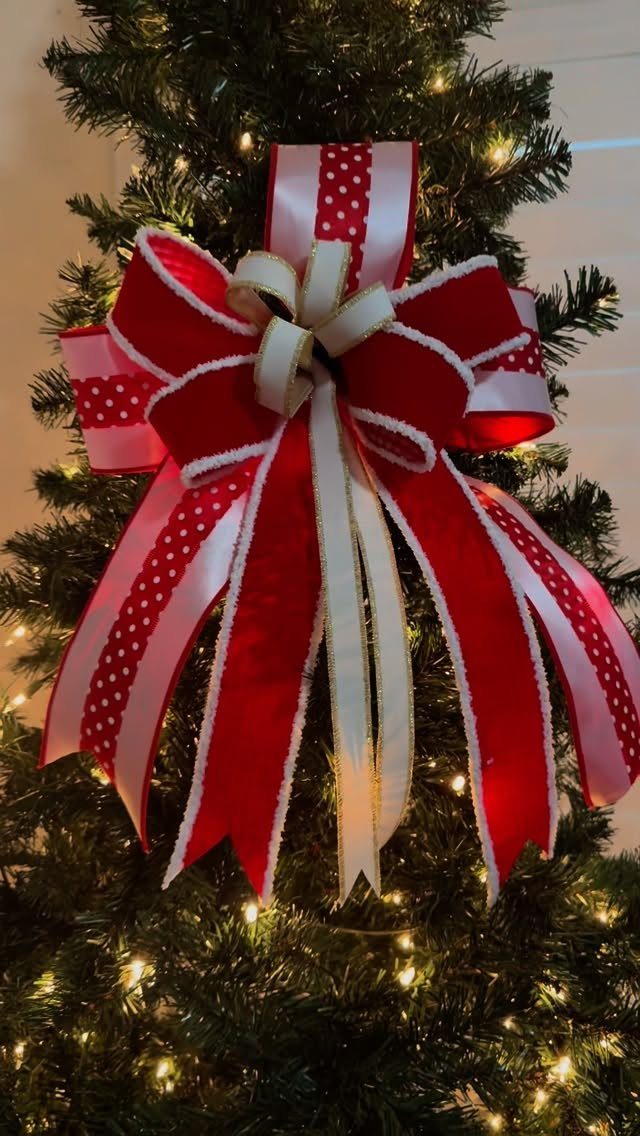
Polka dots are the easiest way to make a bow feel playful on a tree that is otherwise traditional. Red and white is a safe pairing because both colors already live on most trees.
Tie one big bow with long streamers and set it where the lights will hit it, on a sturdy branch instead of a drooping tip.
One large bow beats several small ones, since a dotted pattern gets lost at small sizes.
Let the tails hang free.
10. Patterned Fabric Branch Bow
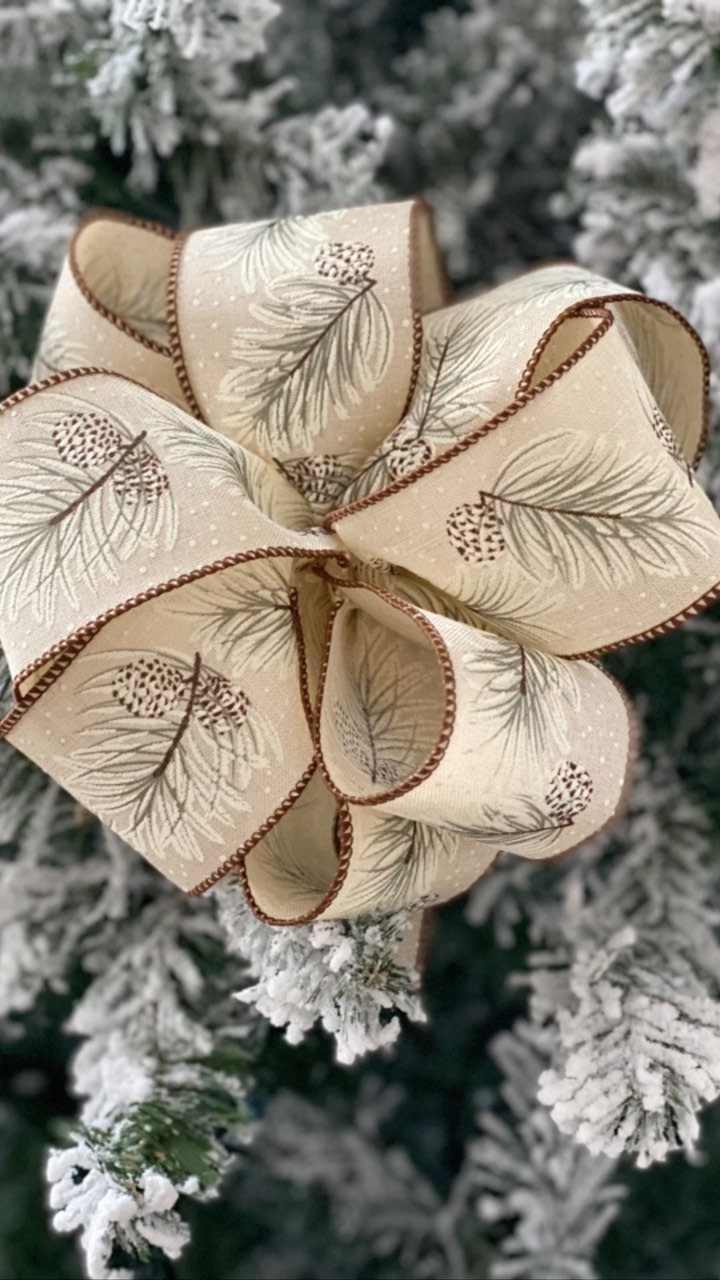
Pine needle and cone patterns on cream fabric make a bow that echoes the tree itself, which is why it looks so natural on a frosted branch. Fabric is softer than ribbon, so the bow drapes instead of standing stiff.
Make it large, then tie it securely around the branch so the weight does not pull it down.
I like one or two of these placed in the middle of the tree, with plain ornaments around them so the pattern stays readable.
11. Magenta Velvet Ribbon Accent
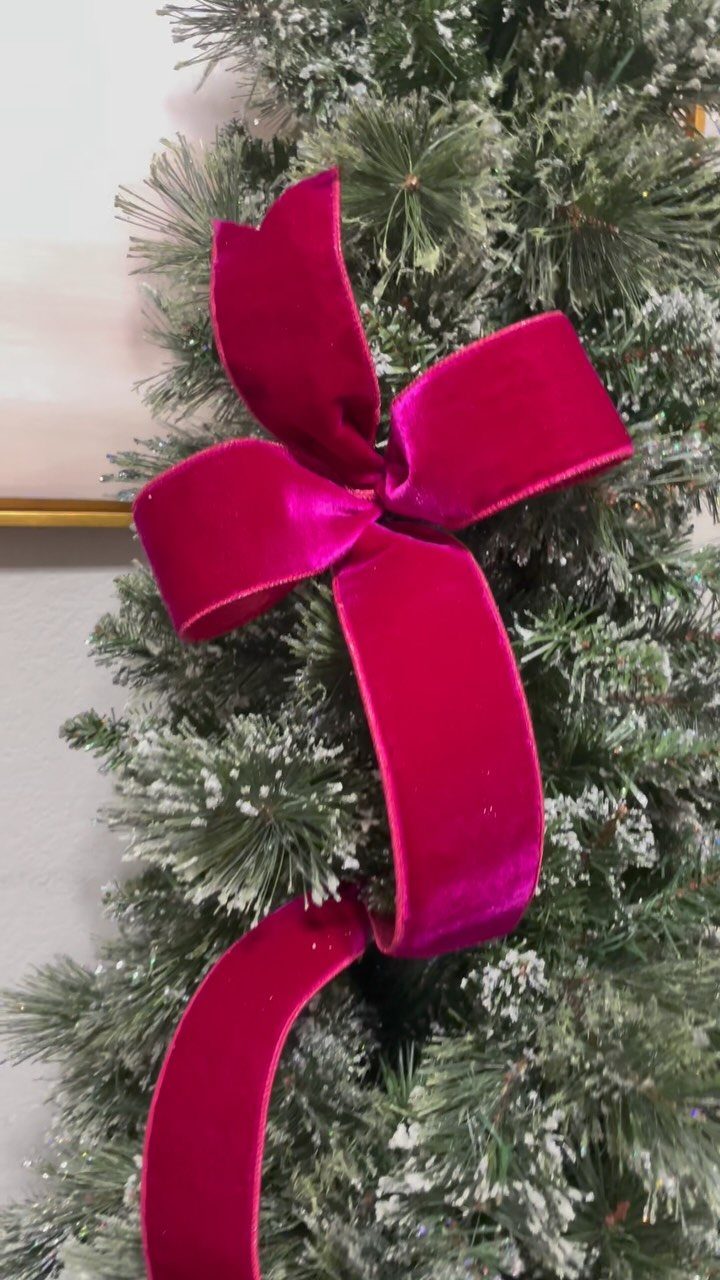
A single bright magenta velvet bow can carry a whole branch. Against frosted green, the color jumps forward, and the velvet keeps it deep instead of loud.
Let the ends trail down the branches rather than trimming them short. I would use only a few bows, spaced well apart, because magenta is strong enough that a crowd of it stops looking like an accent.
Keep the surrounding ornaments quiet, in white or silver.
Why Use Ribbon on a Tree
Ribbon on a Christmas tree sets a color scheme and theme faster than any other single material, and it moves the eye around the tree instead of letting it stall on one spot.
It also fills gaps.
Swapping the ribbon is the cheapest way to change the look from one year to the next. Keep the same ornaments and lights, buy new ribbon, and the tree reads as a different design.
Best Ribbon Types
Wired-edge ribbon is the one I would buy.
Width matters as much as wire.
For the main ribbon, go 3–4 inches wide so it stands out from the branches; supporting ribbons can run 2–3 inches. Anything under 2 inches tends to disappear on a full tree.
If the color you want only comes in a narrower width, you can make your own wide ribbon.
To make a wider band, glue two 2 1/2-inch ribbons side by side with hot glue, then hide the join under a thin ribbon in a matching or contrasting shade. That gives you a 5-inch ribbon.
Placement Techniques
Anchor ribbon deep, near the trunk end of the branch, so it looks like it grows from inside the tree.
Ribbon fastened flat against the surface of the tree looks stuck on, so I tuck most of it into the branches and save the tips for bows.
Leave some slack as you work, because ribbon stretched flat across the branches looks stiff and pulls them out of shape. Tight ribbon loses its body and drape, so form real loops and let them billow.
If you fall for a non-wired ribbon, you still have options.