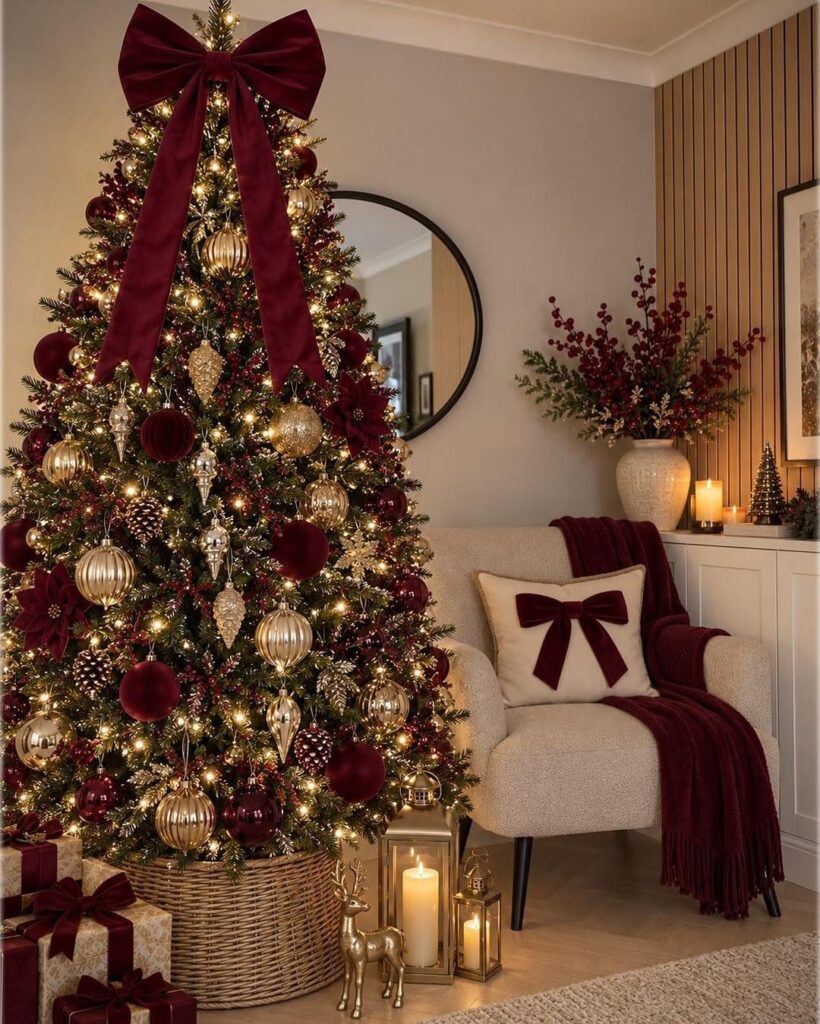
Every idea here keeps red and gold as the base, but the tree itself decides how much work the rest takes: on a flocked white tree, red reads clean and bright, while plain green makes red ornaments compete with the needles.
Pick your tree first, then choose from ideas that run from a single plaid ribbon topper to gold deer antlers, star picks and poinsettias with gold foliage tucked into the branches.
A woven basket around the stand is the cheapest way to hide the cords and the metal.
1. Gold Satin, Metallic, and Glitter Ornaments
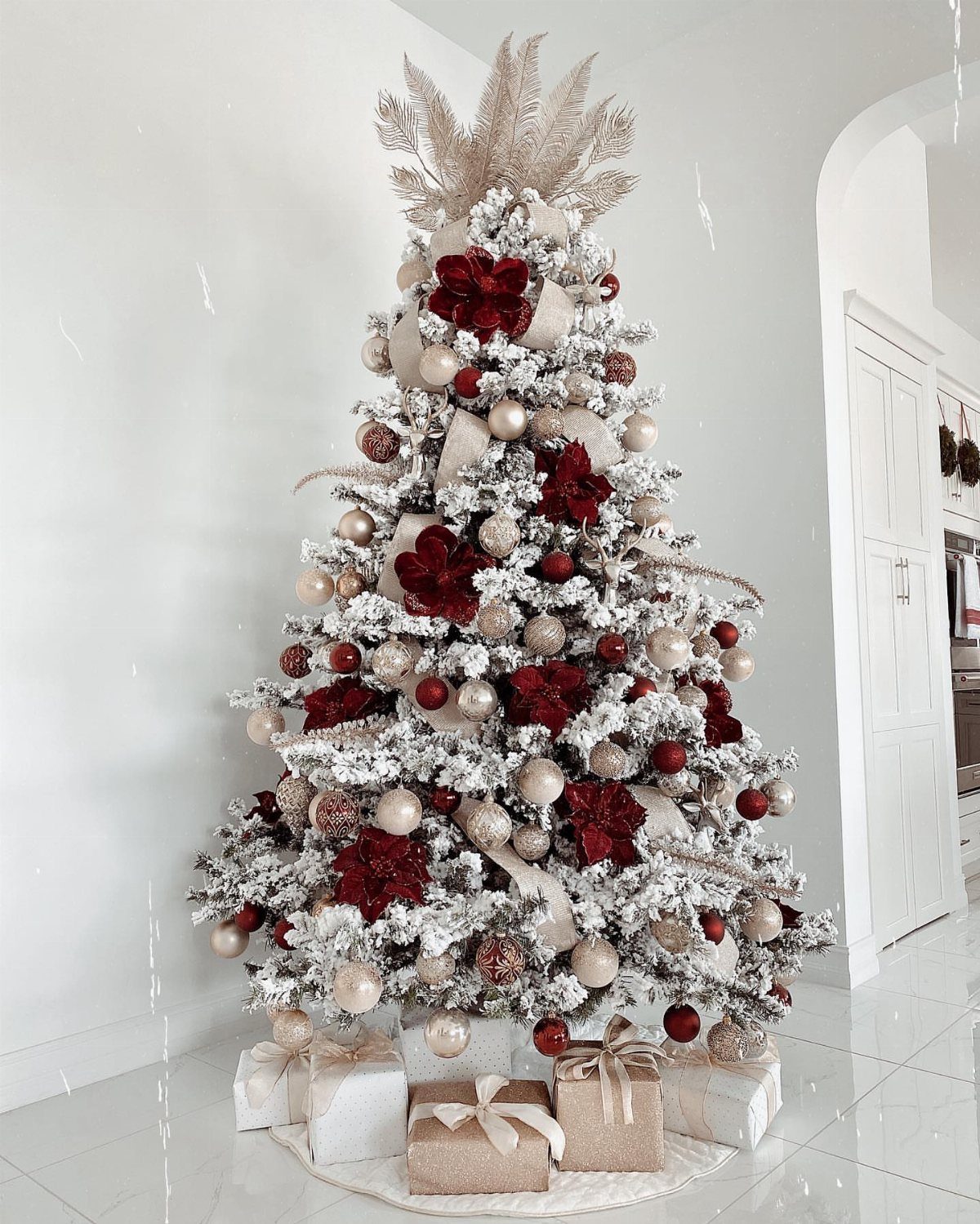
3 finishes do the work here: satin, metallic and glitter. Satin sits soft and quiet, metallic throws sharp highlights, and glitter adds sparkle that shifts as you walk past.
I would pick one gold tone across all three, since mixing warm and pale golds looks accidental rather than layered. Vary the sizes too, with the largest ornaments deep in the branches and the smallest near the tips.
Red flowers between the ornaments give the gold something to play against.
2. Flocked Christmas Trees
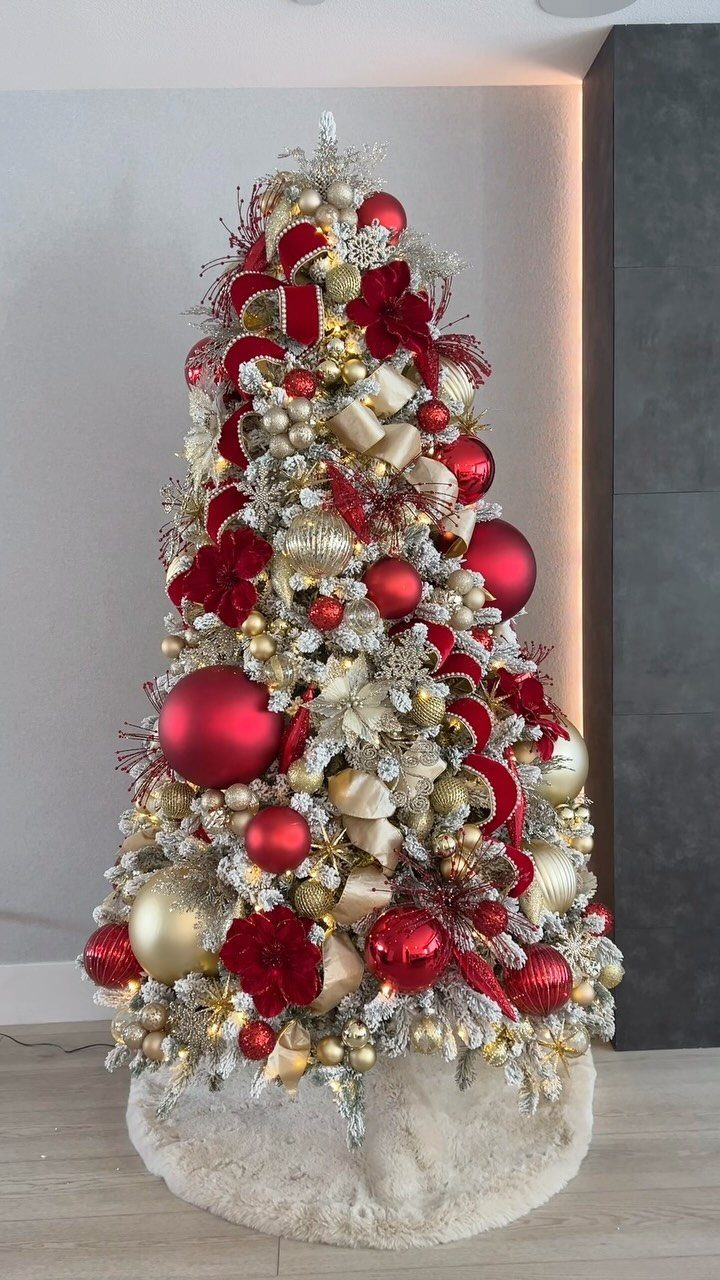
White flocking is the reason red looks so saturated on this tree. Against plain green, red ornaments compete with the needles; against white, they read clean and bright.
Gold then plays the supporting role, warming up all that white so it doesn’t feel icy.
A white faux-fur skirt carries the same idea down to the floor, and I like it better than a red one because it keeps the red concentrated on the branches.
Choose ornaments with some shine, since matte red can look flat on flocking.
3. Deer Antlers, Gold Star Picks, and Gold Pinecones
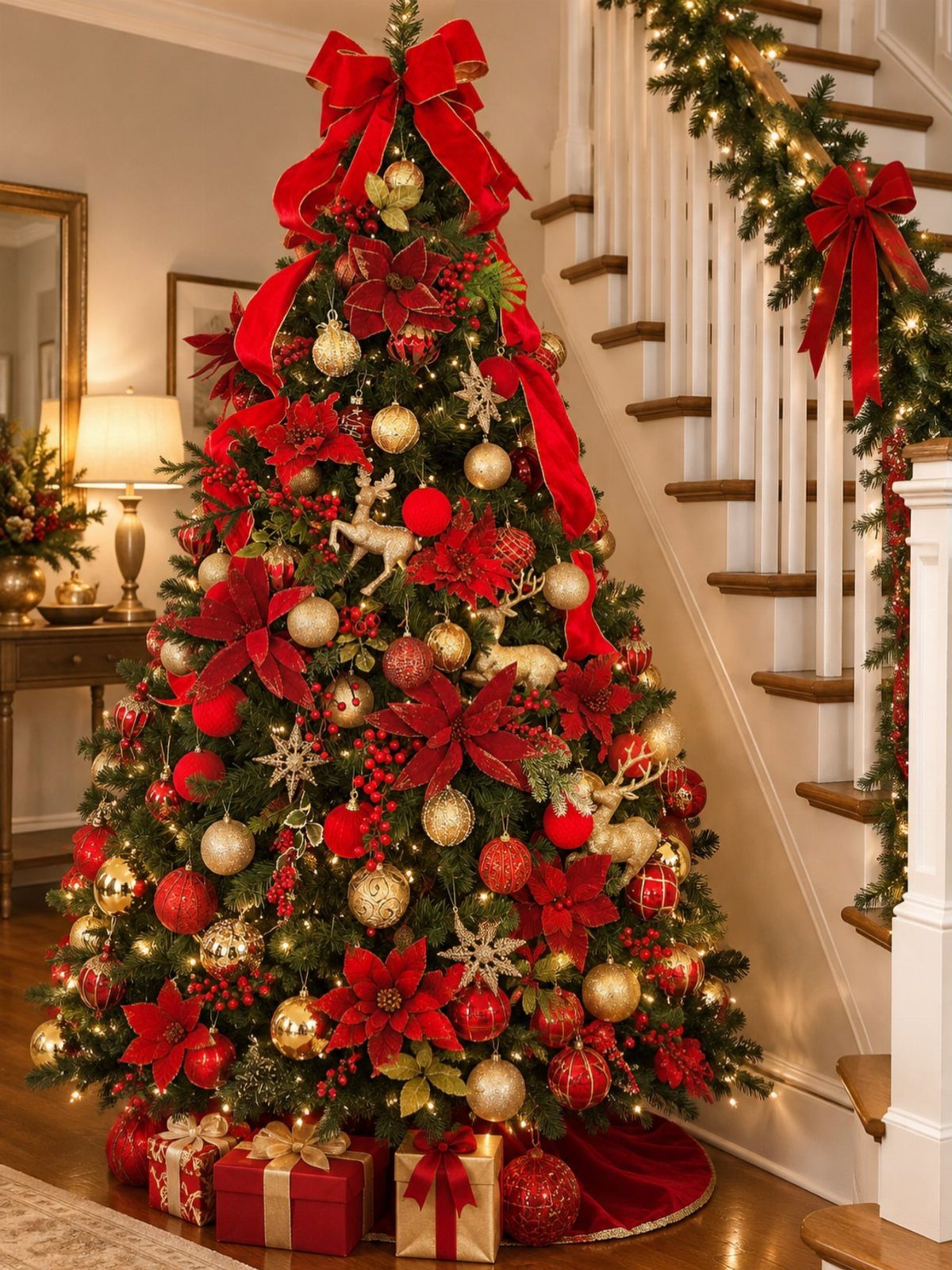
Gold deer figurines, star picks and pinecones add shape, which round ornaments can’t. Pushed into the branches on their stems, they break up the outline and give the eye something to follow.
I would keep the count low: a few deer spaced well apart, with stars and pinecones filling the gaps. Red poinsettias tucked in nearby tie the tree back to the red bow on top.
Group the animal figures in odd numbers so they feel placed, not scattered.
4. Red Plaid Ribbon Topper
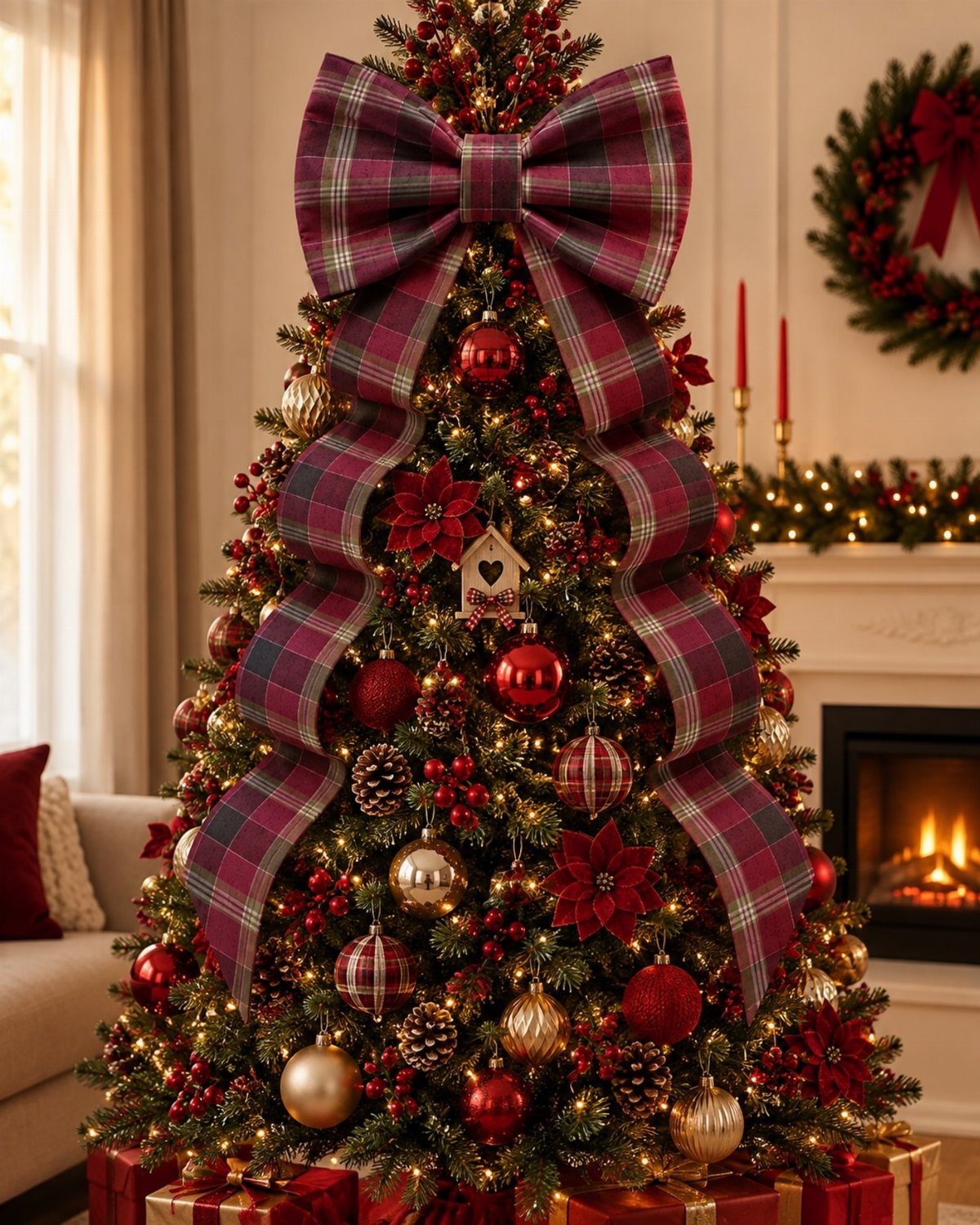
Plaid on top is a quiet surprise, because most trees get a star or an angel. A big red plaid ribbon, gathered into a full bow with long tails, looks like a gift wrapped around the tree itself.
Plaid also brings a country, cozy feel that softens a mostly shiny red and gold scheme. Choose a plaid with some gold or cream in the weave so it belongs with the ornaments.
Wire the bow’s center to the top branch for a firm hold, and let the tails drape down the sides.
5. Cohesive Room Decor
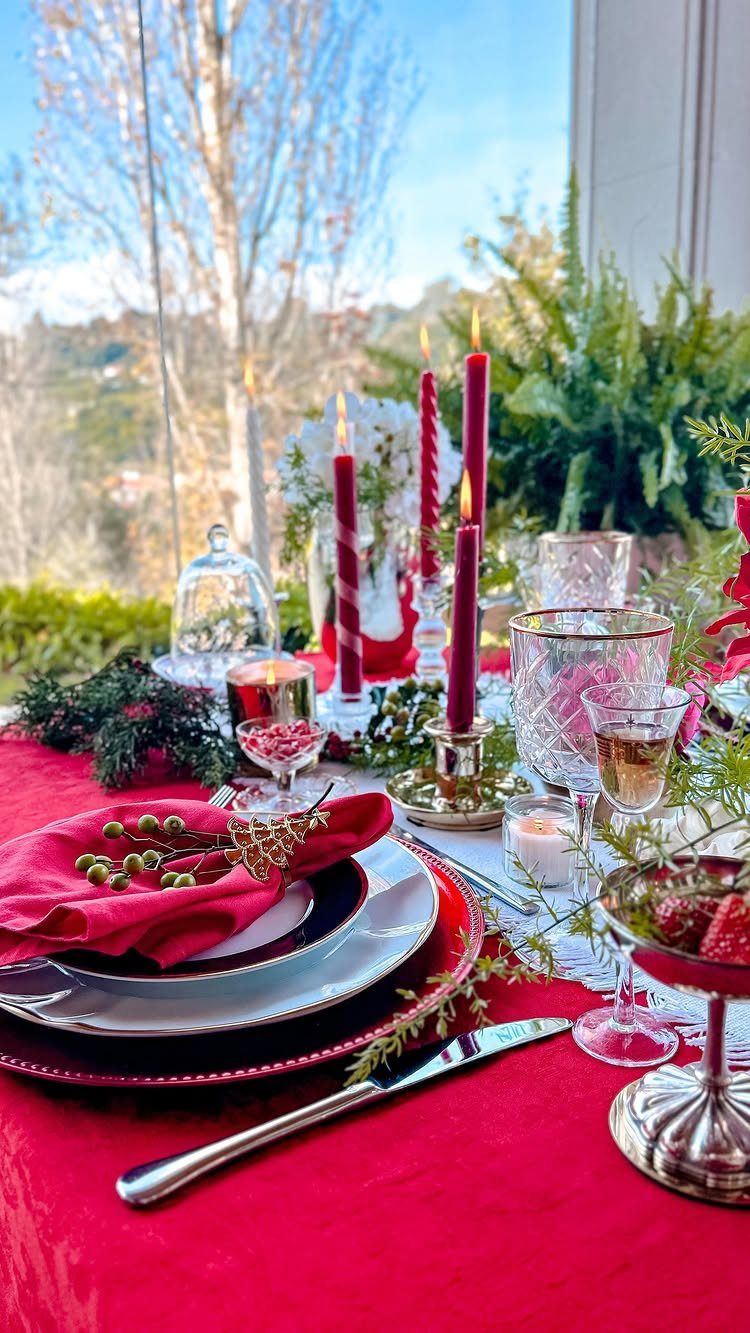
A red and gold tree looks best when the room agrees with it.
Red linens, red candles and gold accents on a dining table repeat the palette at a different height, so the tree stops feeling like a lone color burst.
Keep greenery as the neutral that links everything. I would limit the repeats to two or three spots, such as the table, the mantel and a doorway, rather than coloring every surface.
Candles and a tablecloth are cheap ways to start.
6. Wired Designer Ribbons
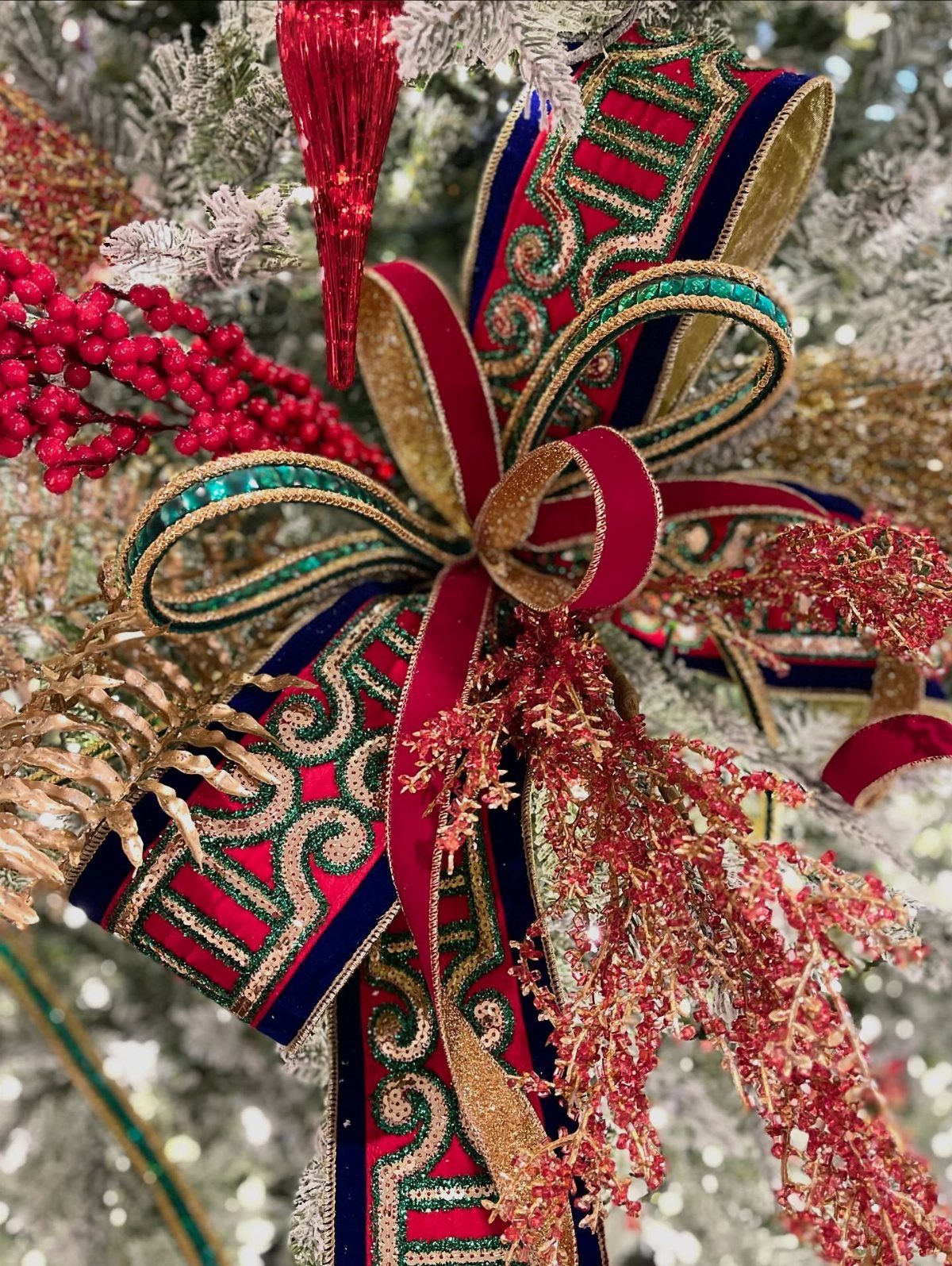
A wired ribbon holds its shape, which makes it the easiest way to get a full, sculpted bow on a tree. The wire lets you pinch, bend and fan the loops until they sit exactly where you want.
A patterned designer ribbon in red and gold, with a touch of blue as it shows here, adds richness that solid ribbon can’t. Choose a wide width for impact on a flocked tree.
Tuck bows deep among the branches, then run long tails outward so they trail between ornaments.
7. Woven Basket Tree Base
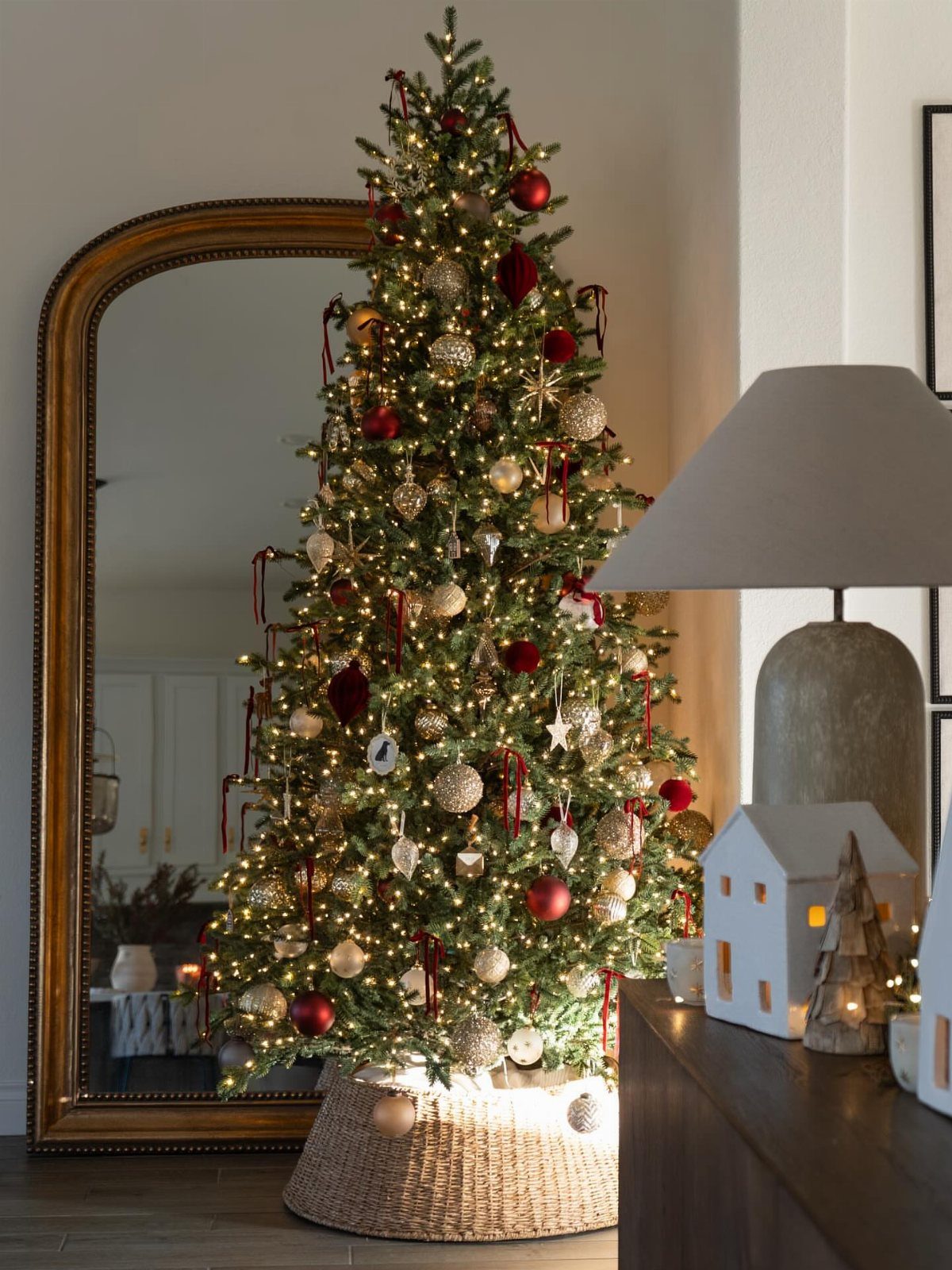
A natural woven basket around the tree stand swaps the usual skirt for texture, and its warm tan sits well beside red and gold. The basket also hides the stand and cords in one move.
I would pick a basket wide enough to clear the stand with a few inches to spare, and tall enough that no metal shows.
Fairy lights in a warm white match the gold better than cool white, which can make the baubles look pale.
Fill any gap between stand and basket with crumpled paper or fabric so the tree stays put.
8. Red Poinsettias and Gold Foliage
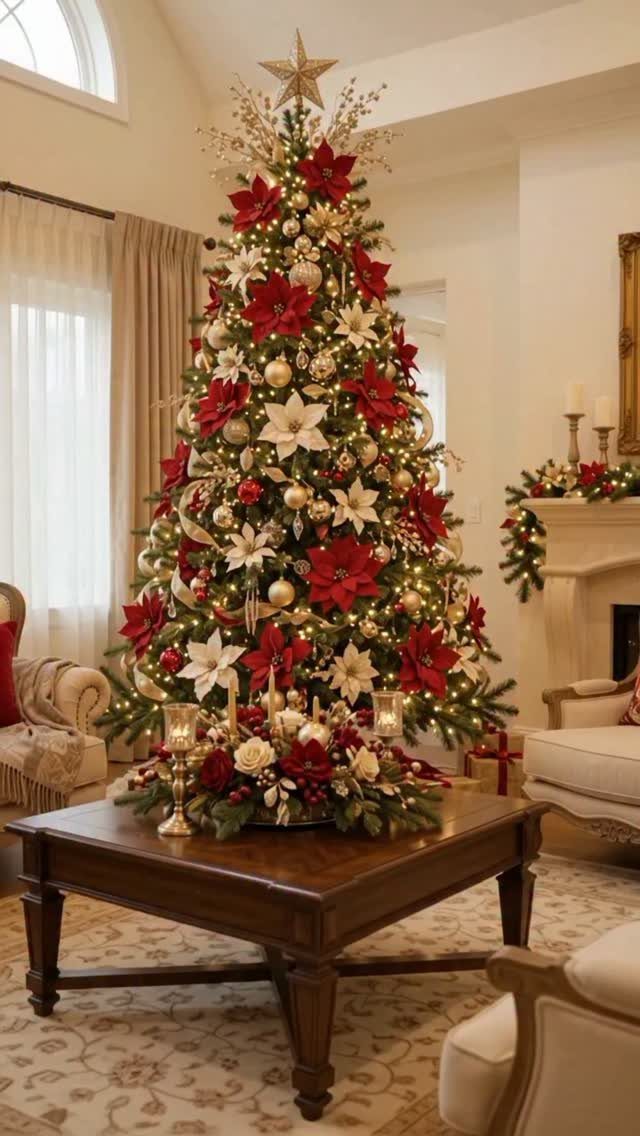
Poinsettia stems wired into the branches give a tree petals instead of more round ornaments. Red and white blooms with gold ornaments make a softer mix than all red, and the white keeps the gold from feeling heavy.
Faux stems work best for this.
Cut them short, then twist the stem around a branch so each bloom faces outward. I would space them evenly, with gold baubles filling the gaps between.
Repeat the blooms in a centerpiece on the coffee table, so the tree and the room share one flower. A single bowl or tray is enough.
Tips for Decorating a Christmas Tree
Work in layers over the whole tree instead of finishing one section at a time: lights first, then ribbon or garland, then the largest ornaments, then the small ones, so the red and gold spread evenly from top to bottom.
You’ll spot uneven spacing early, and you won’t run out of a favorite ornament halfway down.
Push lightweight plastic ornaments into the upper branches and skip the hooks entirely. Lightweight pieces stay put that way, and the hooks are saved for heavier ones.
On a large tree, big gaps show up fast. Fur ribbon and larger picks fill that space better than a crowd of small baubles.
Wrap gifts to match the palette so the presents under the tree finish the look.
Choosing Colors for Christmas Trees
Champagne, silver, white and other metallics all work as bridges between the 2 colors.
Red also holds up outside that pairing. It looks good with white, with black, and even with green plaid, so a tree in red, white and black is a real option if gold feels too expected.
If you want something other than round ornaments, try whimsical figures or wooden ornaments for shape.
Real or faux flowers add another layer: magnolias are my favorite, though poinsettias, roses, hydrangeas and peonies all fit.
When to Decorate for Christmas
Most people wait until after Thanksgiving to decorate. I think any time after November 1st is fine.
A tree takes real hours to dress, so starting early gives you more weeks to enjoy it. That is the best argument for an early start.
Decide when you’ll take it down before you start: the week after New Year’s keeps the calendar tidy.
Frequently Asked Questions
What color goes with gold on a Christmas tree?
Red leads the pairing, and champagne, silver, white or another soft metallic can sit between the two and tie them together.
White flocking suits gold especially well, since the gold warms it up so the tree doesn’t feel icy. Stick with a single gold tone; a warm yellow gold next to a pale one reads as a mistake, not a choice.
Do red ornaments and gold ornaments go together for Christmas?
Yes, and it is the pairing most people picture when they think of a traditional tree.
Red reads cleanest against white flocking, and gold keeps that white from looking cold. Pick red ornaments with a glossy or glittered finish, because a flat matte red tends to soak up the light and look dull.
What are the things used to decorate the Christmas tree called?
Most are called ornaments or baubles, and the round ones come in satin, metallic and glitter finishes.
Beyond those, you can add picks (such as gold stars), figurines like deer, pinecones, faux flower stems, ribbon and a topper. Wired ribbon bows and a tree skirt or basket around the base finish the look.
What not to do when decorating a Christmas tree?
Don’t mix warm and pale golds, since the result looks accidental. Don’t crowd a large tree with small baubles to fill gaps, because fur ribbon and bigger picks cover that space better.
Also avoid decorating all at once without sections: finishing the top, middle and bottom one at a time shows uneven spacing early.
When should you put up Christmas decorations?
Many hosts wait until the weekend after Thanksgiving, but I think anything from November 1 on is fair game. Dressing a full tree can eat up several hours, so an early start buys you extra weeks with it lit.