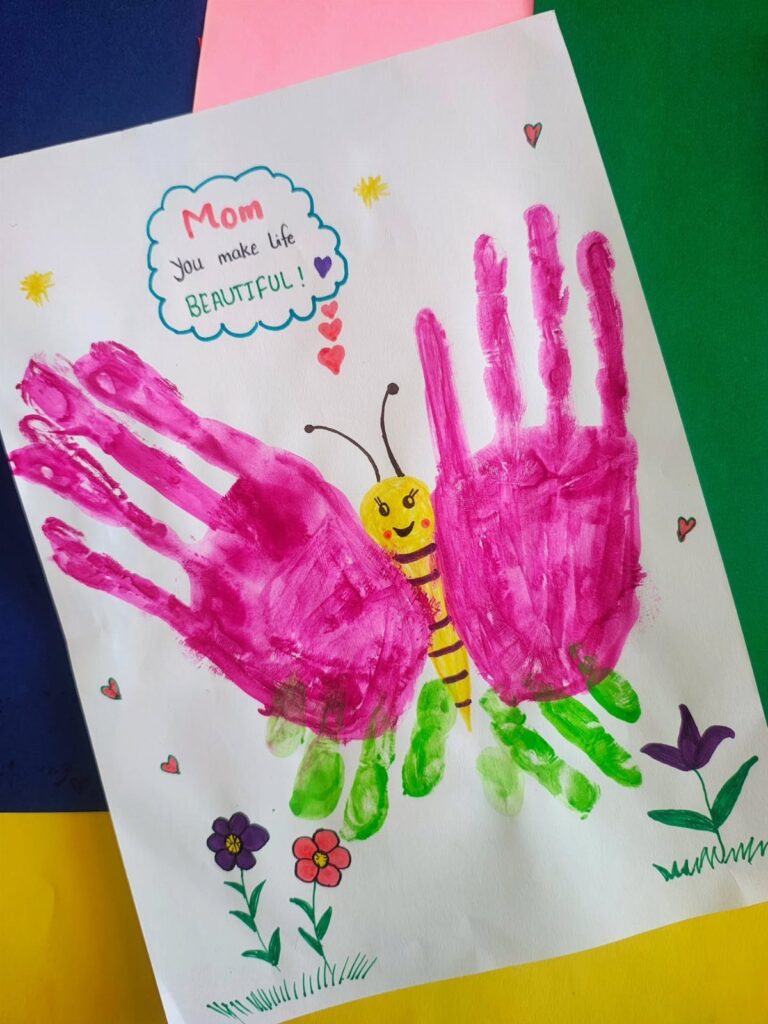
A child’s age and patience decide which of these handprint ideas fits: a single press in one color (the bee, the watermelon card, the heart palm print) suits a toddler, while two prints that must dry between presses (the butterfly) or repeated hands fanned around a center circle (the sun) suit a child who can wait.
Cardstock is what holds up under wet paint.
1. Handprint Flower Craft
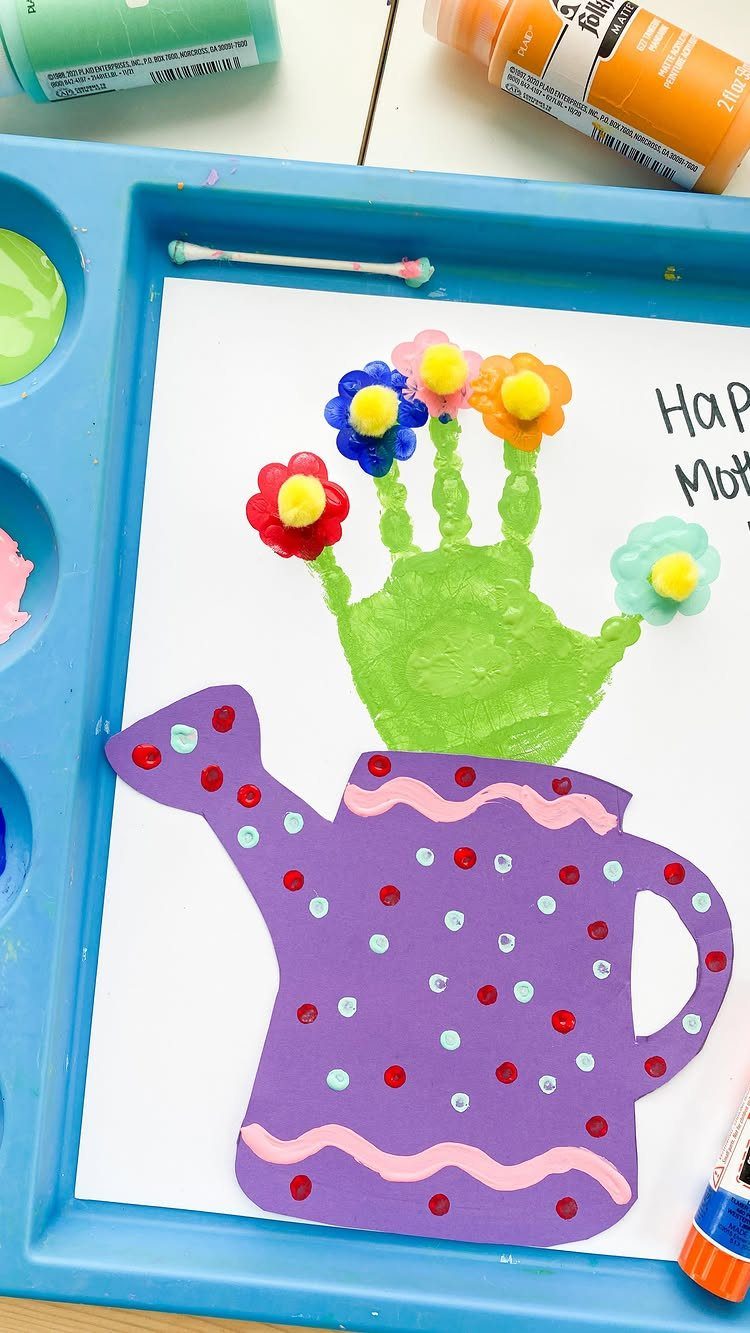
A green handprint makes a good stem and leaves, with the fingers fanning out like a small plant. Paint the whole palm and fingers in one even coat, then press firmly and lift straight up so the fingers don’t smear.
Pom-poms for the blooms keep the paint to one color and save time, since there’s nothing to wait on but the green layer.
Glue them on once the print is dry. A paper pocket cut from construction paper holds the plant like a watering can, and it’s cheap enough to make several in case the first print goes wrong.
2. Butterfly Handprint Art
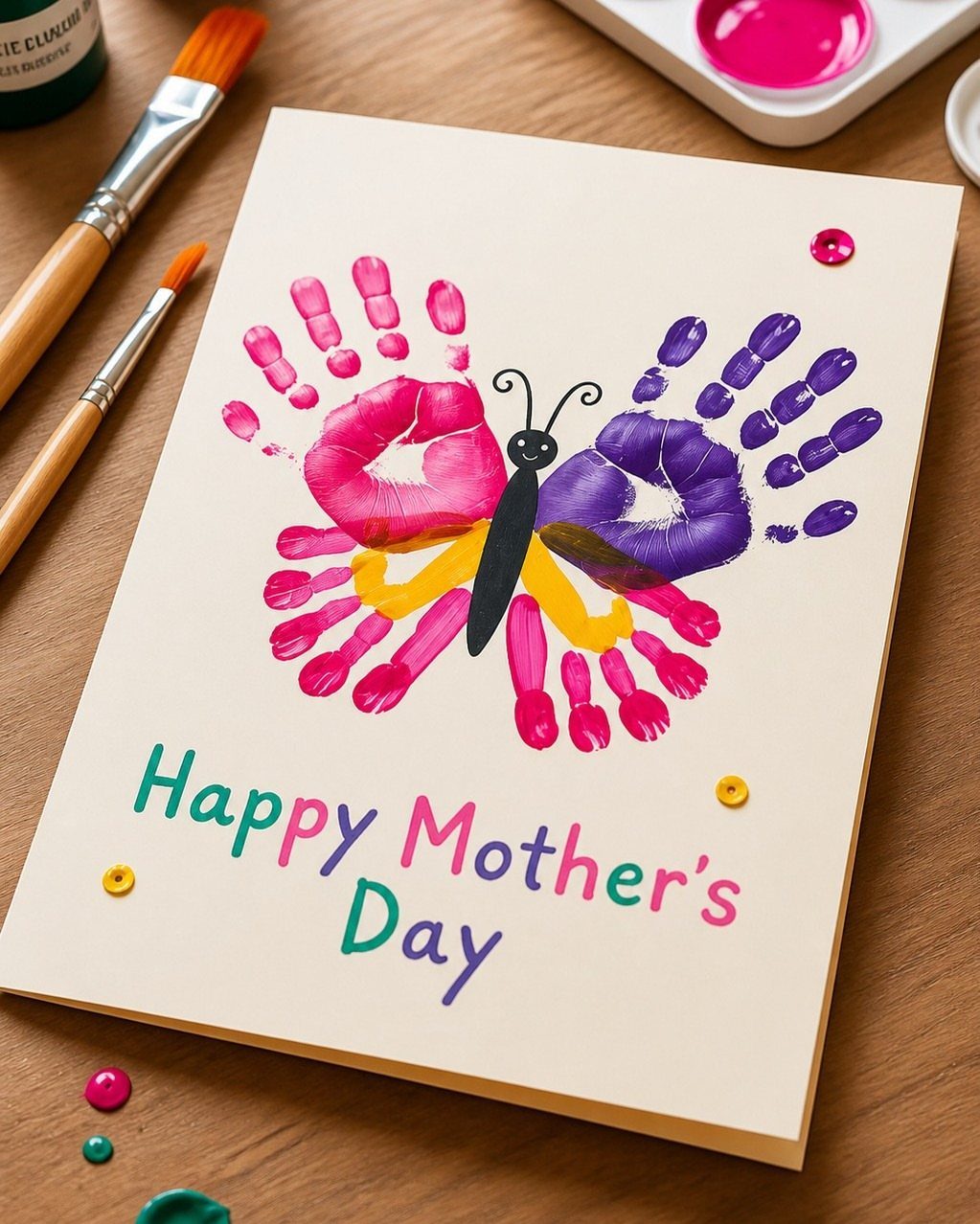
2 handprints, pressed side by side with the thumbs angled toward the center, become a pair of butterfly wings. Pink and purple work well because the overlap near the thumbs looks like a body without any extra effort.
Press one hand at a time and let the first dry before the second, or the wings will blur together.
Add a thin marker line for the body and two curled antennae once everything is dry. A folded card gives a flat, sturdy surface, and the butterfly fits neatly on the front.
3. Bee Handprint Art
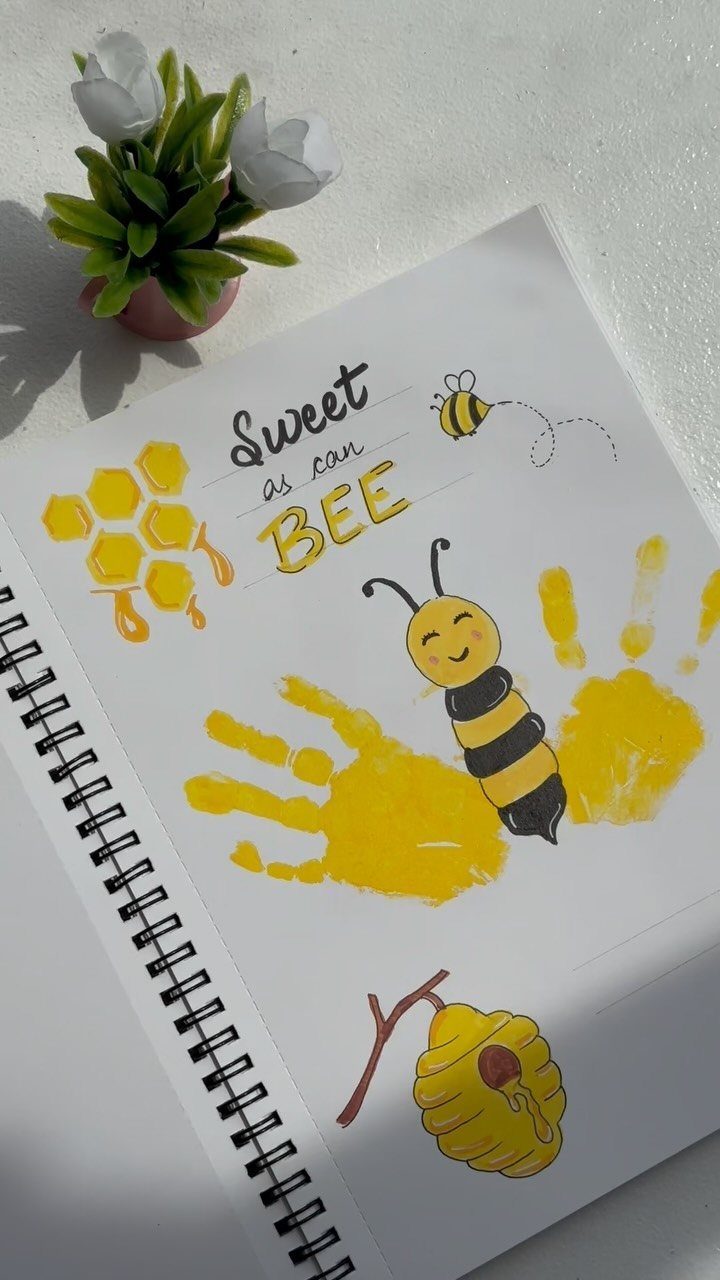
Sweet as can BEE is the kind of pun that carries the whole card, and a single yellow handprint does most of the work.
Turn the hand sideways so the palm reads as a round body, then draw stripes, wings and a face with a marker once the paint is dry.
A sheet of notebook paper keeps this casual, which suits a quick craft with a small child.
Add a few hexagons in the corner for a honeycomb. Drawing is the step I’d save for a grown-up, since the details are small.
4. Sun Handprint Art
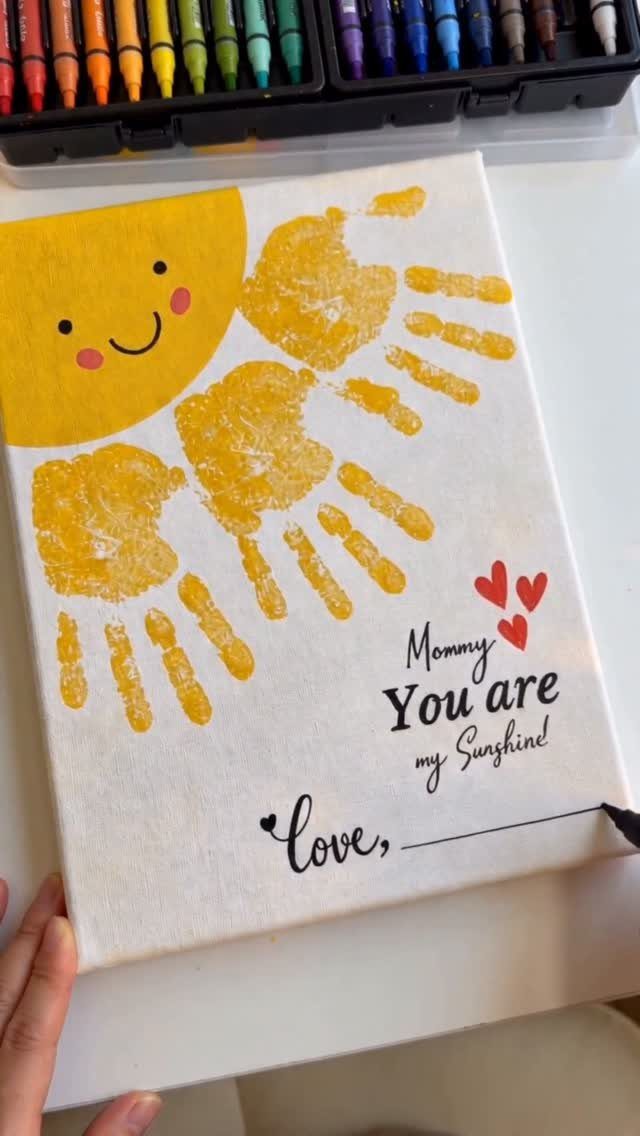
Handprints fanned around a center circle read as sun rays, so one yellow hand repeated 8 or 10 times builds the whole sun. Start with the face in the middle, then press the hands around it, fingers pointing outward.
Plan the spacing first by tracing light pencil circles, because the rays crowd quickly.
A canvas takes paint well and hangs afterward without a frame. Write the message in marker once the paint is fully dry, and "You are my sunshine" does the sentimental work for you.
5. Handprint Poem Template
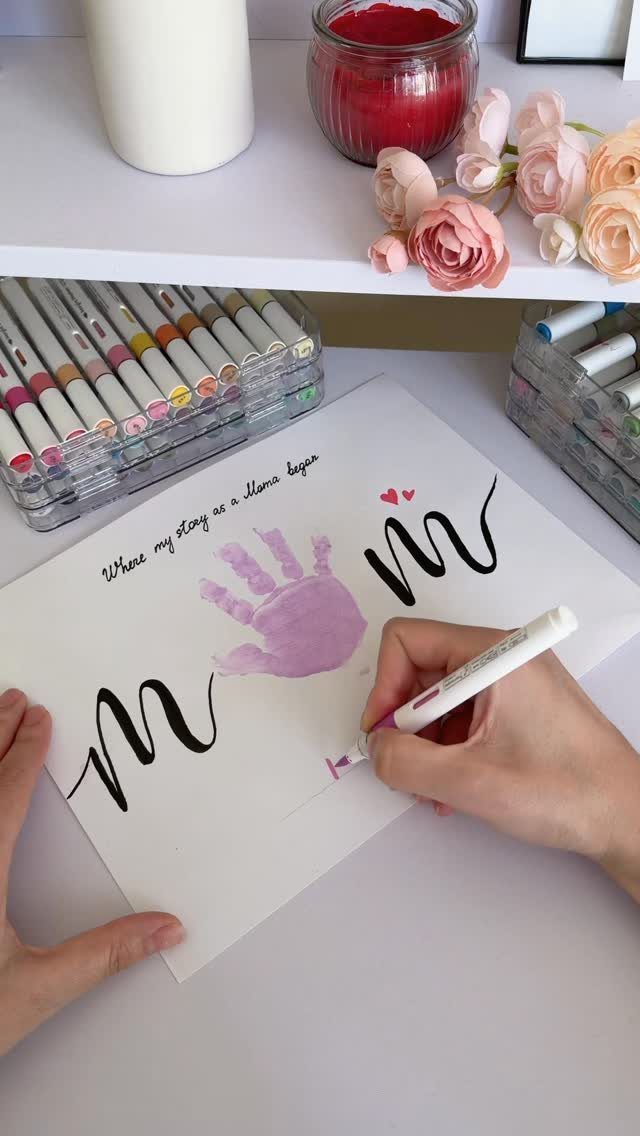
A poem with an empty spot for a handprint turns a few lines of writing into a gift.
Leave a clear space about the size of your child’s hand, then write the verse around it so the print becomes the centerpiece.
I’d plan the wording before the paint goes on, since the poem needs room around the handprint and a smudged hand is hard to fix.
Use a washable paint in one color, press once, and keep a damp cloth nearby. Plain white paper looks clean, and a short title like "Mom" in marker makes the page feel finished.
6. Handprint Keepsake
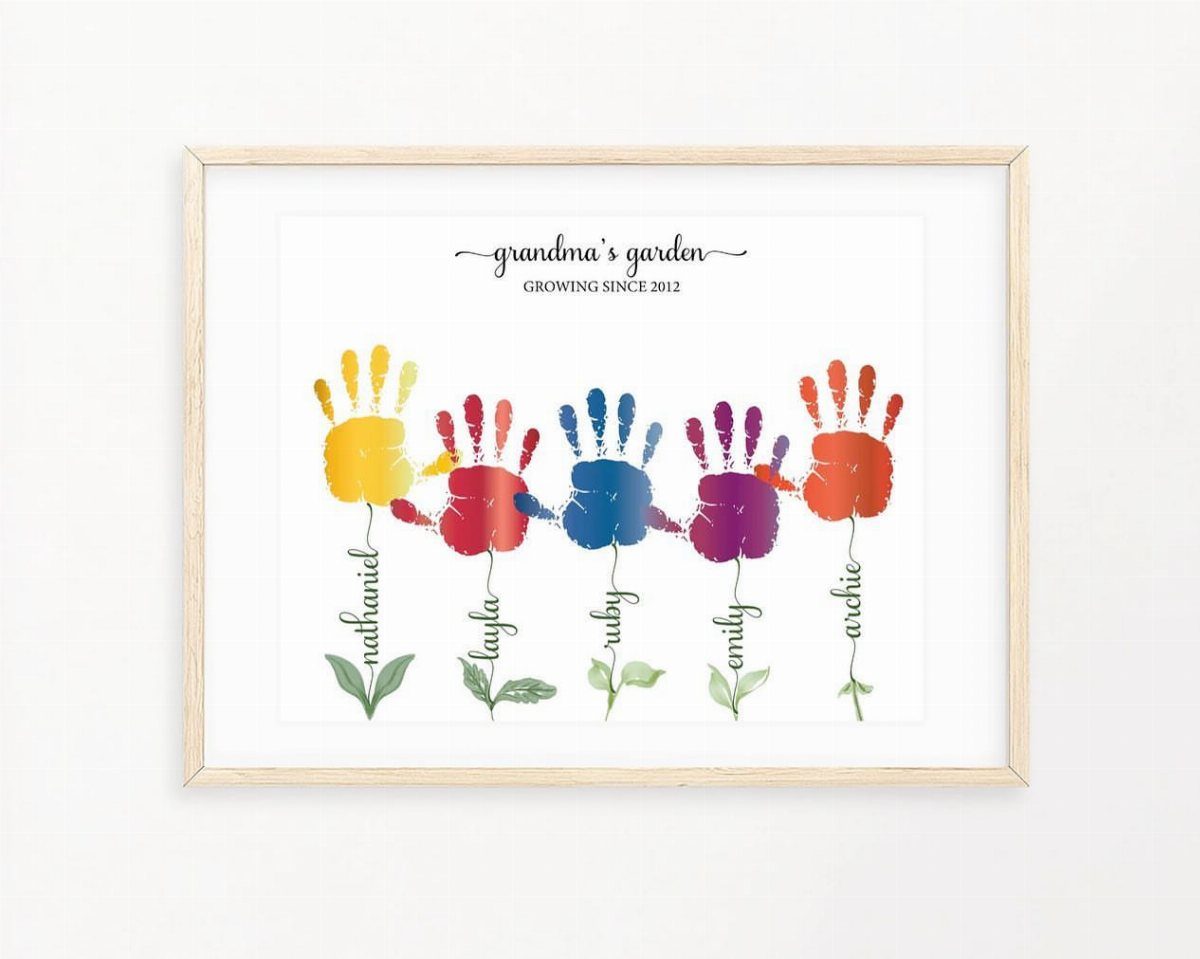
Handprints become flowers in a framed piece, and adding each child’s name turns it into something a grandparent will keep on display. Print each hand in a different color, then paint stems with a brush or a fingertip.
Frame size decides the layout, so measure before you paint.
A plain white background keeps the colors bright. If you’re printing several children, give each one a separate sheet and trim them to fit afterward, so one wobbly print doesn’t ruin the whole piece.
7. Heart Palm Print Idea
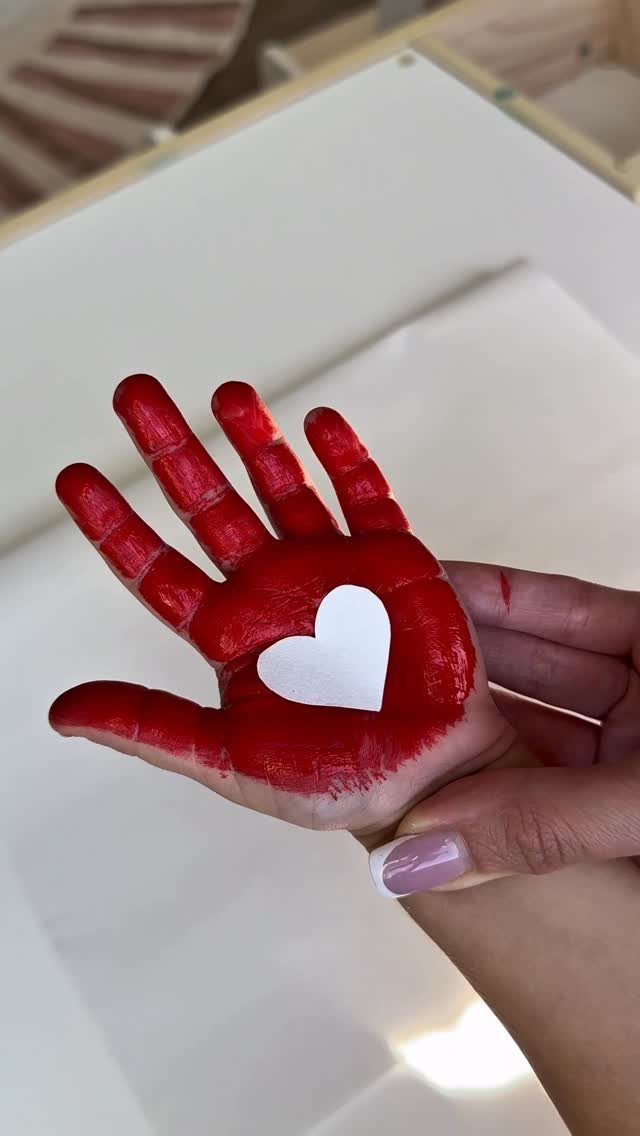
A heart on the palm comes from masking, not from painting a heart shape. Cut a small heart from white paper, set it in the center of the palm, and paint the rest of the hand red.
Press the hand onto a white sheet and the heart stays blank in the middle of the print.
Hold the paper heart steady with a light touch, since it slips once the paint is wet. Use only a little paint so it doesn’t seep under the edges.
A pencil-traced heart on the page works as a backup if the mask slides.
8. Watermelon Handprint Card
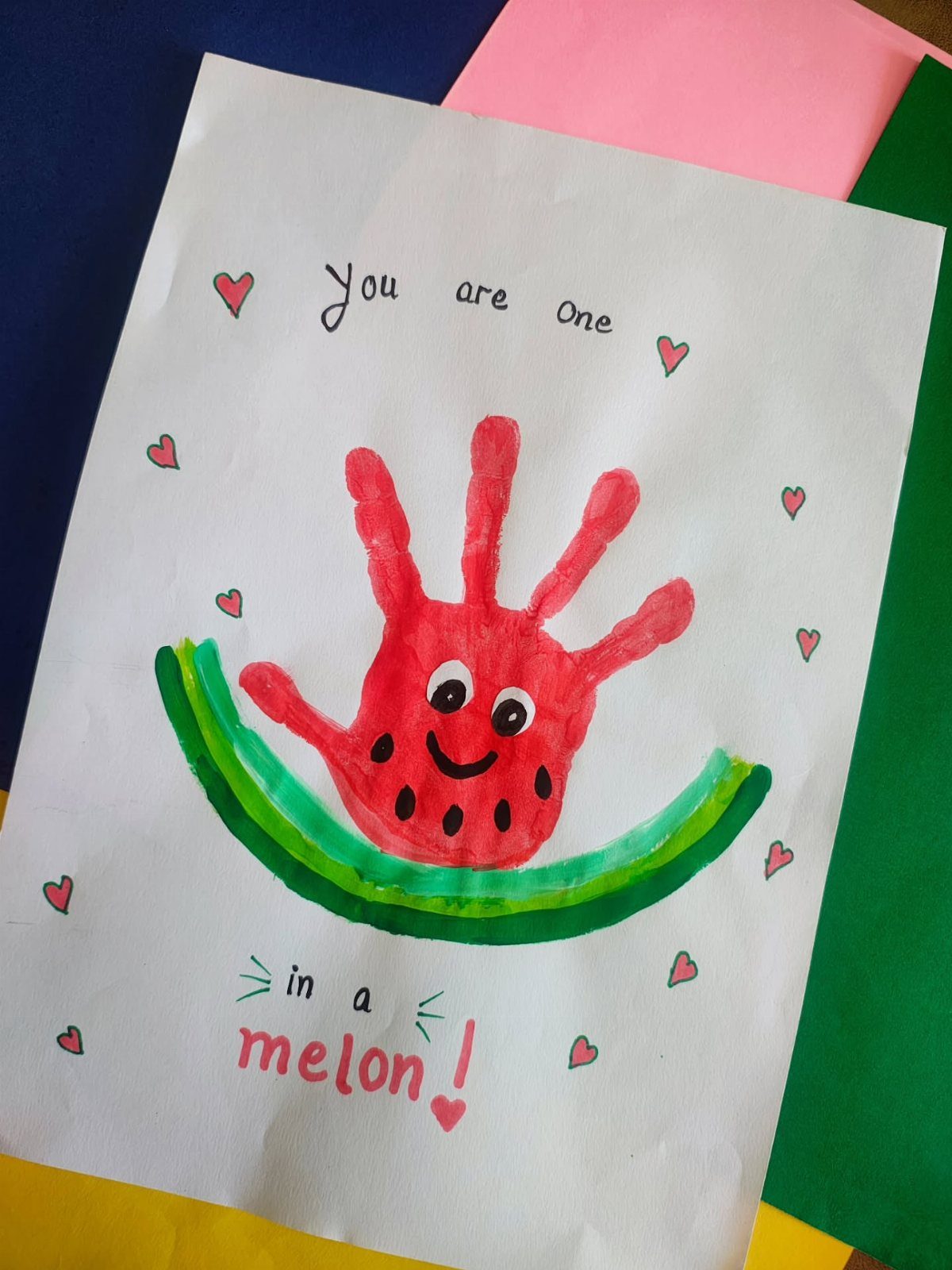
"You are one in a melon!" is the line that makes this card, and a red handprint does the rest.
Paint the palm and fingers red, press it on white paper, then add a green rind along the curved edge once the red is dry.
Seeds and eyes are small dots, so a marker beats a brush here. Writing the message by hand, with a few small red hearts around it, keeps the card personal.
I’d do the rind and the lettering myself and leave the pressing to the child, since that’s the part only they can do.
Best Materials for Handprint Art
Cardstock is the paper to buy. Wet paint makes thin copy paper buckle and sometimes tear, and a warped print is almost impossible to flatten again, so I reach for cardstock instead.
For a cleaner option, a washable, kid-safe ink pad leaves a crisp print with far less mess.
A foam brush spreads paint in a thin, even coat, which keeps the fingers from clumping. A thick coat blurs the fingers, and a thin one gives a cleaner print.
Heavy white cardstock also fits a standard 8.5×11 frame, so a finished print can go straight into one for a polished gift.
Give the paint a full day to dry before the print goes under glass, or moisture can fog the pane and stick the paper to it.
Tips for Printing Templates
Preview before you print. The print preview shows whether any part of the page is cut off, and choosing "Scale to Fit Paper" in the printer settings usually fixes that.
White cardstock is the better choice for templates. On plain printer paper, ink-heavy pages can wrinkle a little before any paint touches them.
Look at the ink or toner level before you start, since a fading cartridge leaves faint outlines. A template that runs out of ink halfway down the page wastes a sheet of good cardstock.
If you’re cutting out small pieces such as tags or cards, a paper trimmer keeps the edges straight. For large pages, a print shop such as Office Depot or Staples can give better quality than a home printer.
Laminating a finished handprint makes it last longer, and it’s a good move for a gift.
How to Prevent Smudging
Press the whole hand down flat, then rock it gently from the palm out to the fingertips.
When the print is done, pull the hand straight up off the paper without sliding or twisting it. Any sideways drag blurs the print, and it ruins the writing if the print sits near text.
Hold the paper still with your free hand while the child presses.
Frequently Asked Questions
What is handprint art?
A child presses a paint-covered hand onto paper, and that print becomes the starting point for a drawing or design.
The print might turn into butterfly wings, flower leaves or sun rays once a few marker details are added. It suits babies, toddlers and preschoolers, and it makes a personal gift for Mom.
What supplies are needed for handprint crafts?
Gather cardstock, washable kid-safe paint and a brush, and keep wipes close for cleanup. Cardstock matters because thin copy paper buckles and can tear under wet paint.
An ink pad leaves less mess than liquid paint, and a foam brush keeps the paint layer thin enough that fingers stay separate. A marker is handy for finishing details once the paint dries.
How do I download the templates?
Many sites send printable templates through a form where you enter your email address.
Once you have the file, check the print preview for cut-off edges and choose "Scale to Fit Paper" if needed. Cardstock holds its shape under wet paint better than standard copy paper.
How do I keep a handprint from smudging?
Set the hand down palm-first, roll the pressure out toward the fingertips, and pull straight up without sliding.
Any sideways slide or twist drags the paint and blurs the fingers. Your other hand braces the paper so it does not shift mid-press.