Ideas here run from a single nicho on a shelf corner to a full backdrop with life-sized skeletons that takes a few weekends, and the cost follows the size.
Room decides the choice: with a small apartment, a DIY nicho or a floral butterfly arch on the wall fits, while a spare room or party corner has space for a full ofrenda with candles and marigolds.
1. Papel Picado
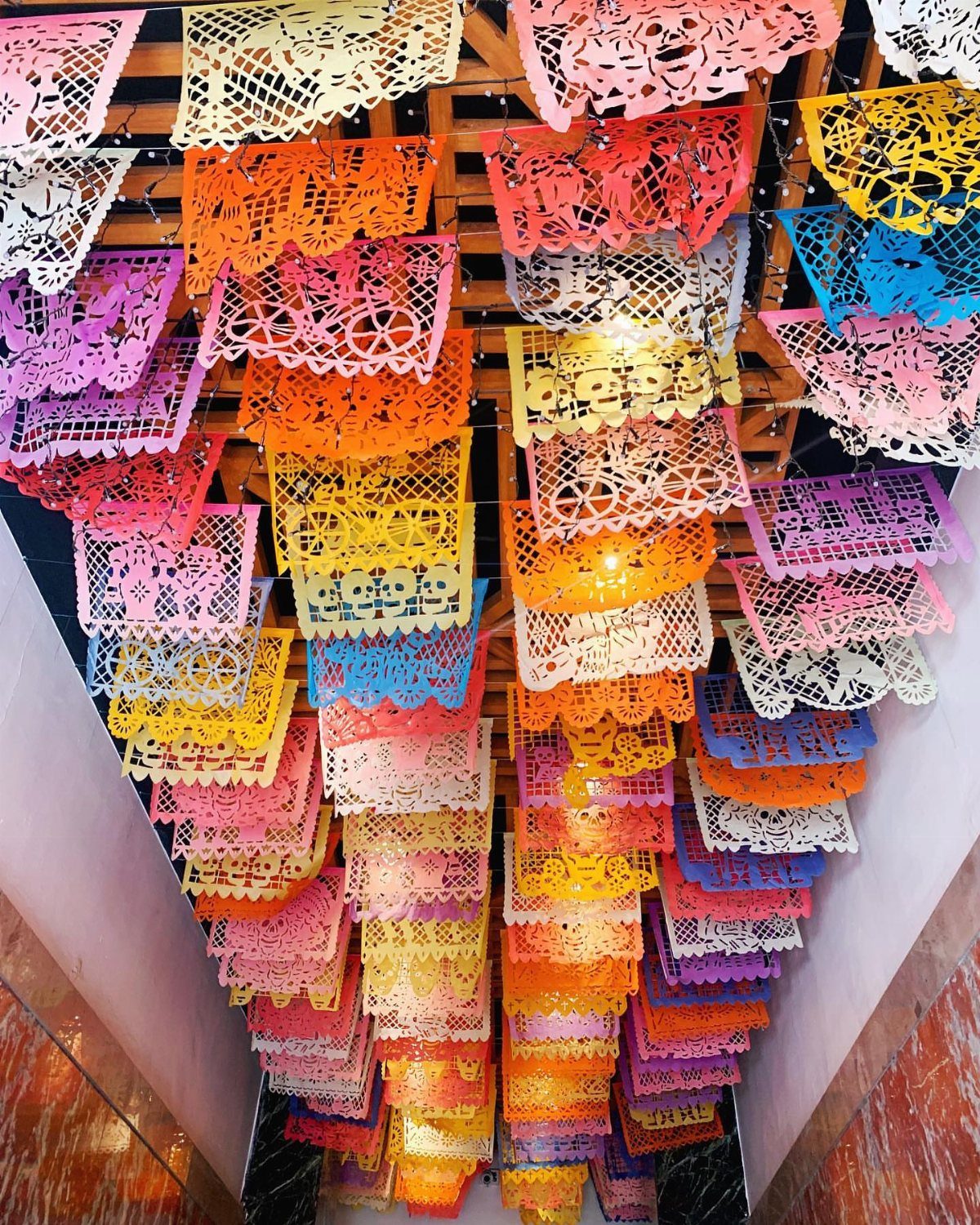
Cut tissue paper holds a banner’s whole design in its edges, so choose a pattern with bold shapes if you are cutting your own.
Fine lace-like detail tears easily, and the fragility is part of the meaning: the paper stands for how delicate life is.
Hang the banners in a doorway or hallway where air moves a little. A wooden beam or a taut string both work, and a few strips in mixed colors look fuller than one long run in a single shade.
Store-bought sets are the cheap shortcut.
2. Marigolds (Cempasúchil)
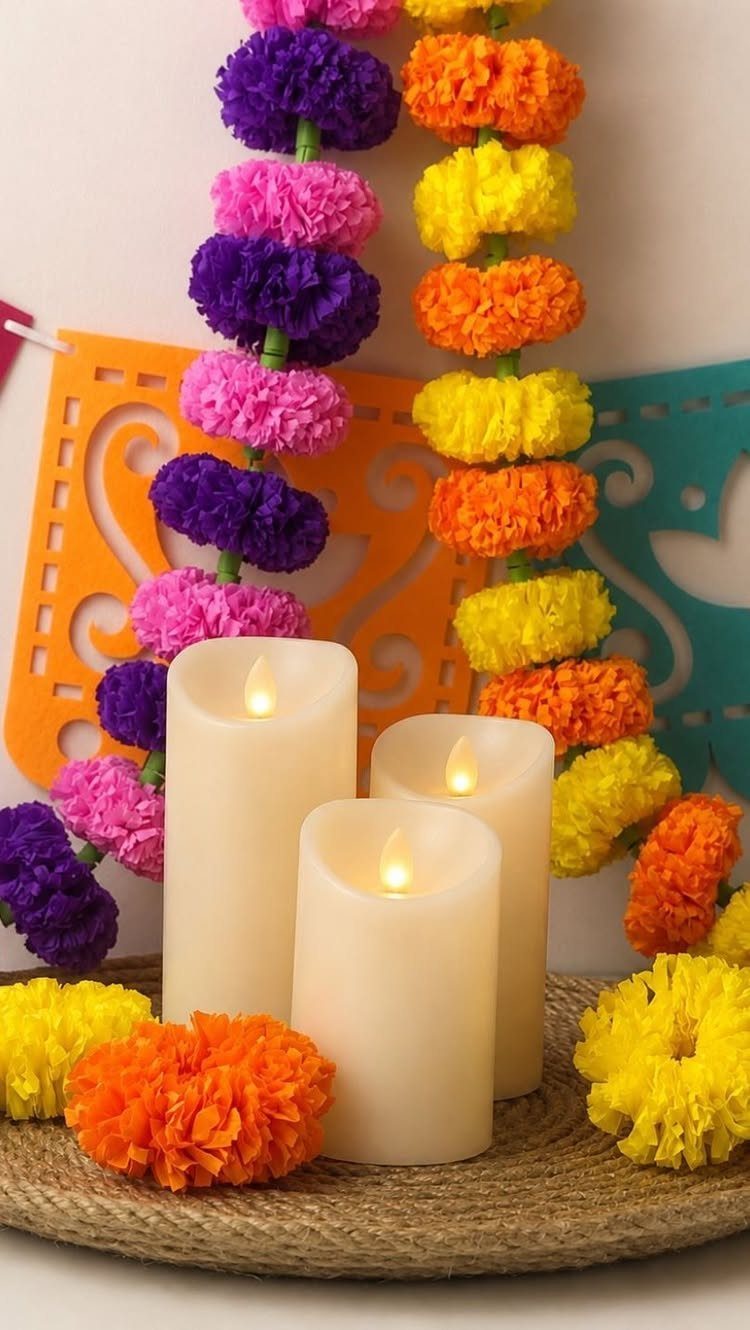
Crepe paper streamers make a marigold garland you can finish in an evening, and they hold their color in a way fresh petals cannot.
The maker of this setup turned streamers into handmade flowers and strung them together into a bold floral garland.
Cempasúchil comes in orange and golden yellow, and those 2 colors are the ones to buy or mimic with paper.
Mix paper blooms with a few real ones at the base of the candles, and keep the paper strands for draping, since they stay fresh-looking all season.
Marigolds are the flower of the dead, and their color is said to guide spirits home.
3. Candles
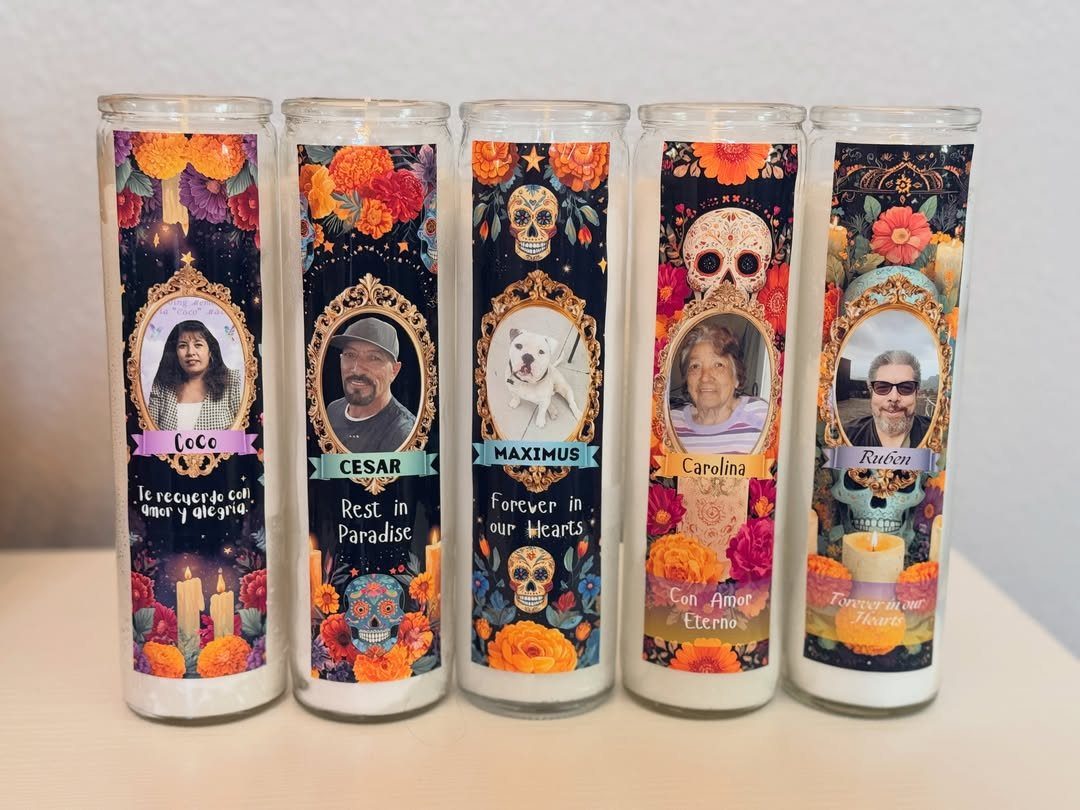
Personalized prayer candles turn a plain glass cylinder into a portrait. Each label carries a photo and a name, so one candle can stand for one person, or one dog, in the family.
I would order or print labels for every person you want to remember and keep the glass tall, so the faces read from across the room.
A row of candles reads as intentional, and orange marigolds laid around the bases tie them to the altar.
Candles are there to guide returning souls toward the altar, so place them where the glow reaches the front. Flameless versions give the same look at a table with children nearby.
4. DIY Nichos
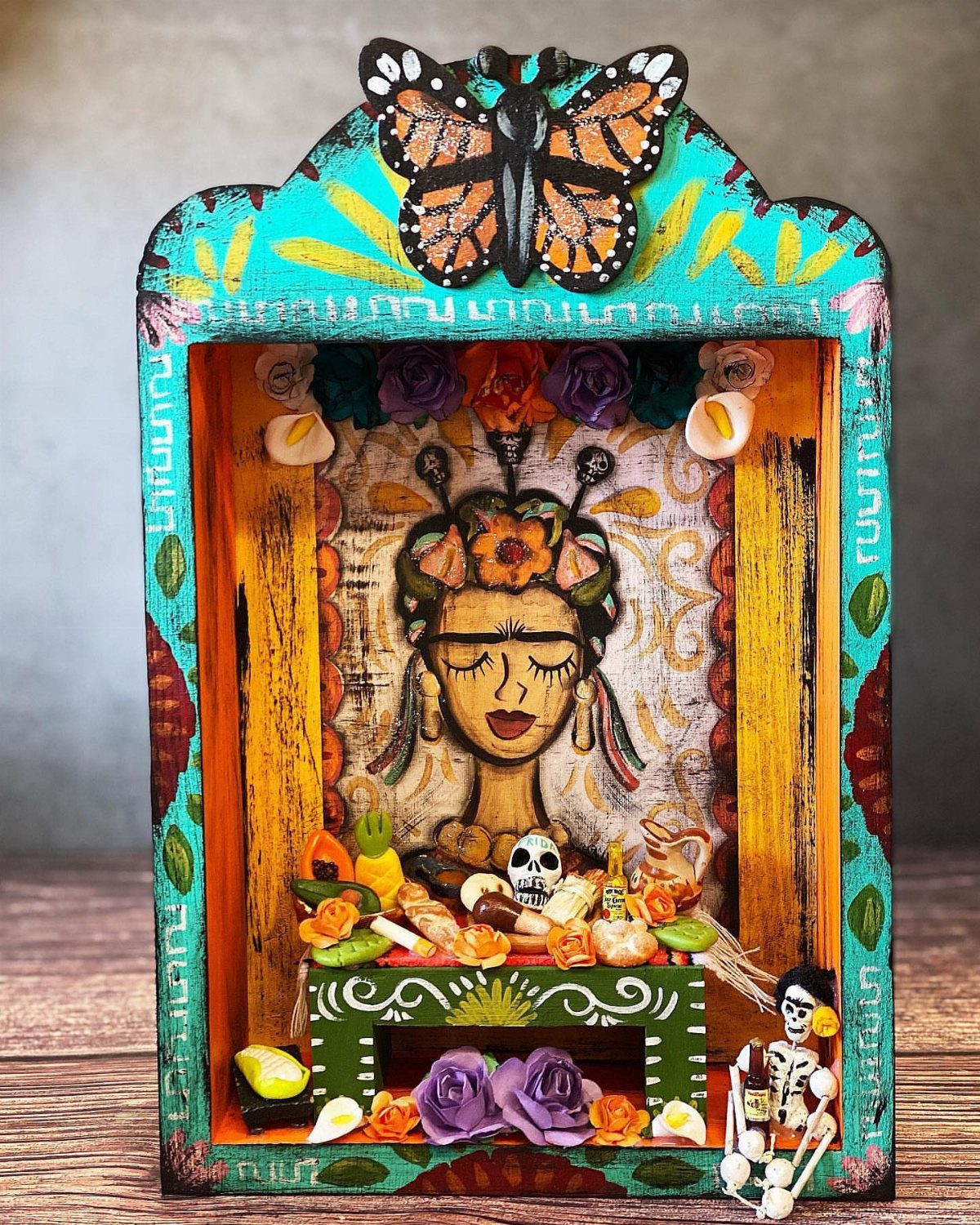
A nicho is a small shadow box, and that makes it the friendliest way to honor one person when you have no room for a full altar. A shelf or tabletop corner is enough.
Start with a shallow wooden box, then paint the inside in strong colors. Layering front to back gives the depth.
Keep objects light and flat-backed so the glue holds. Frida Kahlo is a fine subject, but a grandparent’s photo works better.
5. Ofrenda
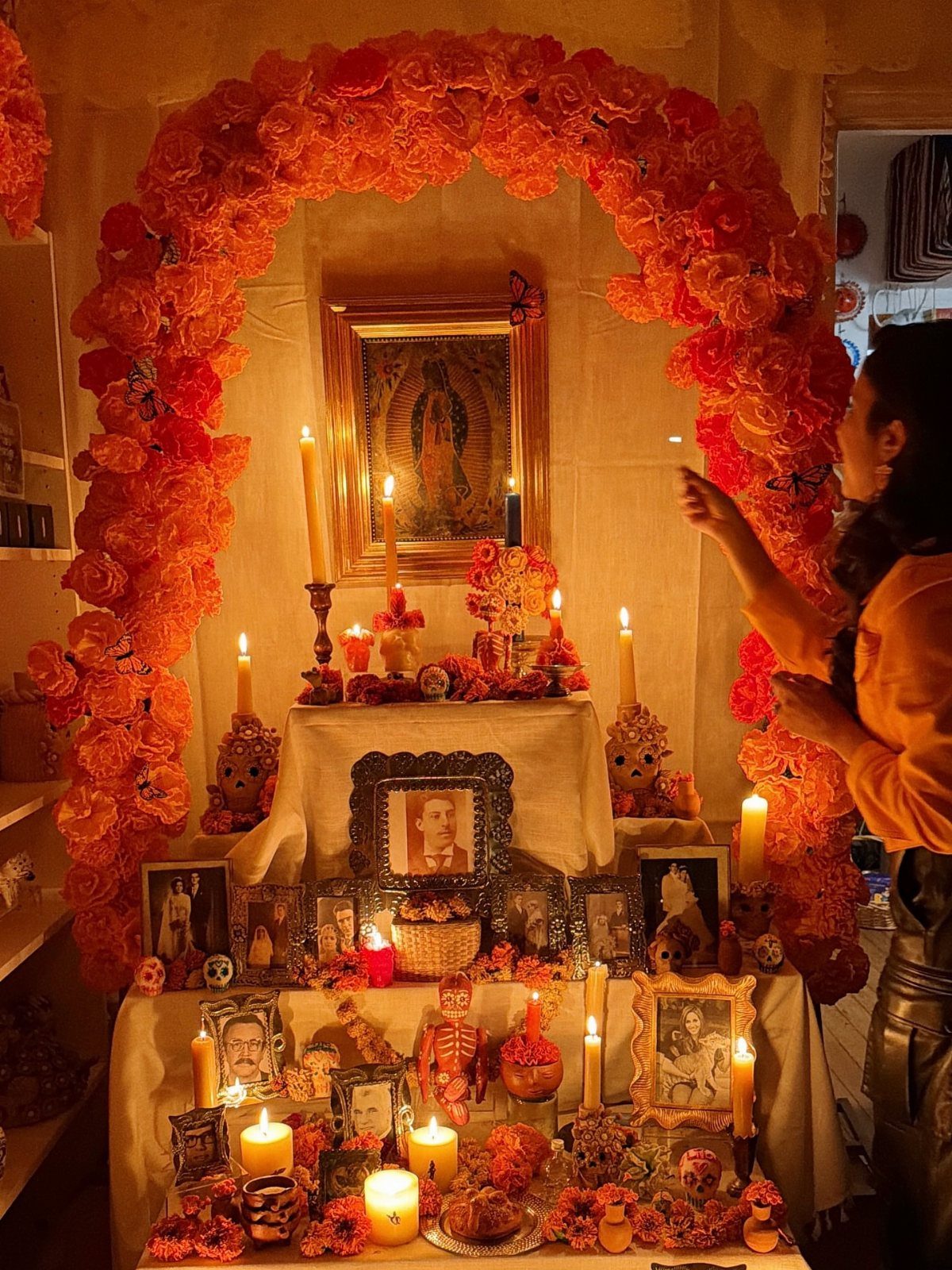
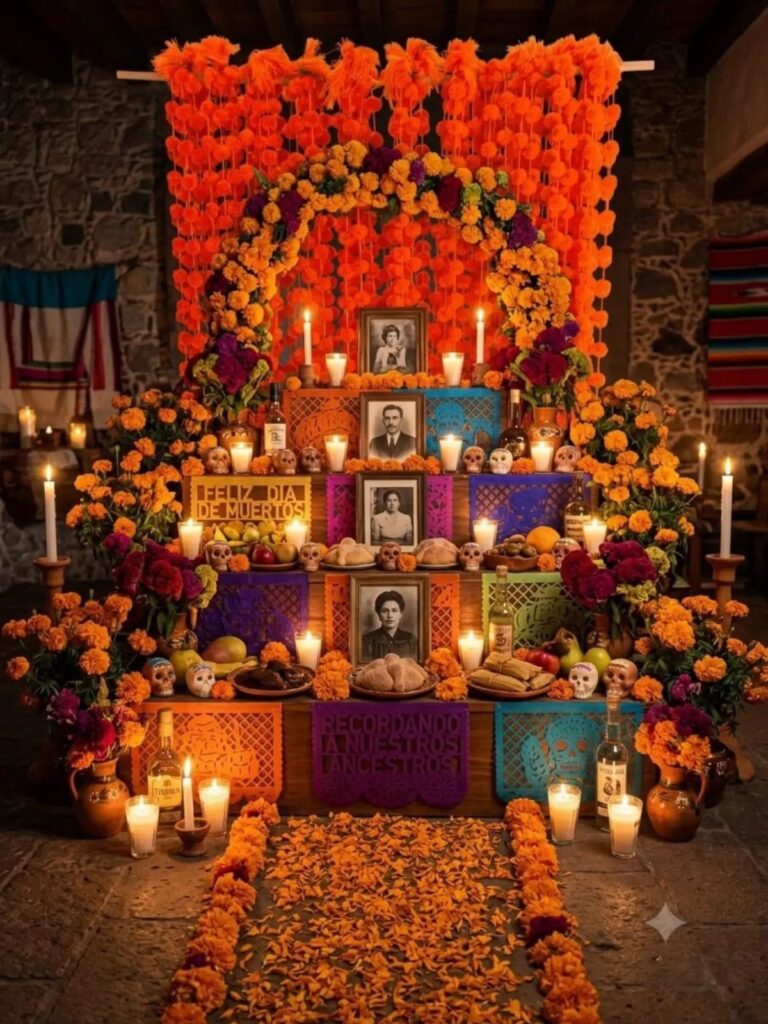
Marigolds, candles and framed photos are the core of an ofrenda, and everything else is a bonus.
Build it in tiers: a table with a box or two under a cloth gives you steps for the photos in back and the flowers and sugar skulls in front.
Put the people being remembered at the top, where eyes land first. Orange marigolds around the edge, candles between the frames, and a few sugar skulls fill the gaps.
An ofrenda costs as much as you decide. Family photos and a few flowers are enough, and you can add to it each year.
6. Full Backdrop Display with Skeletons
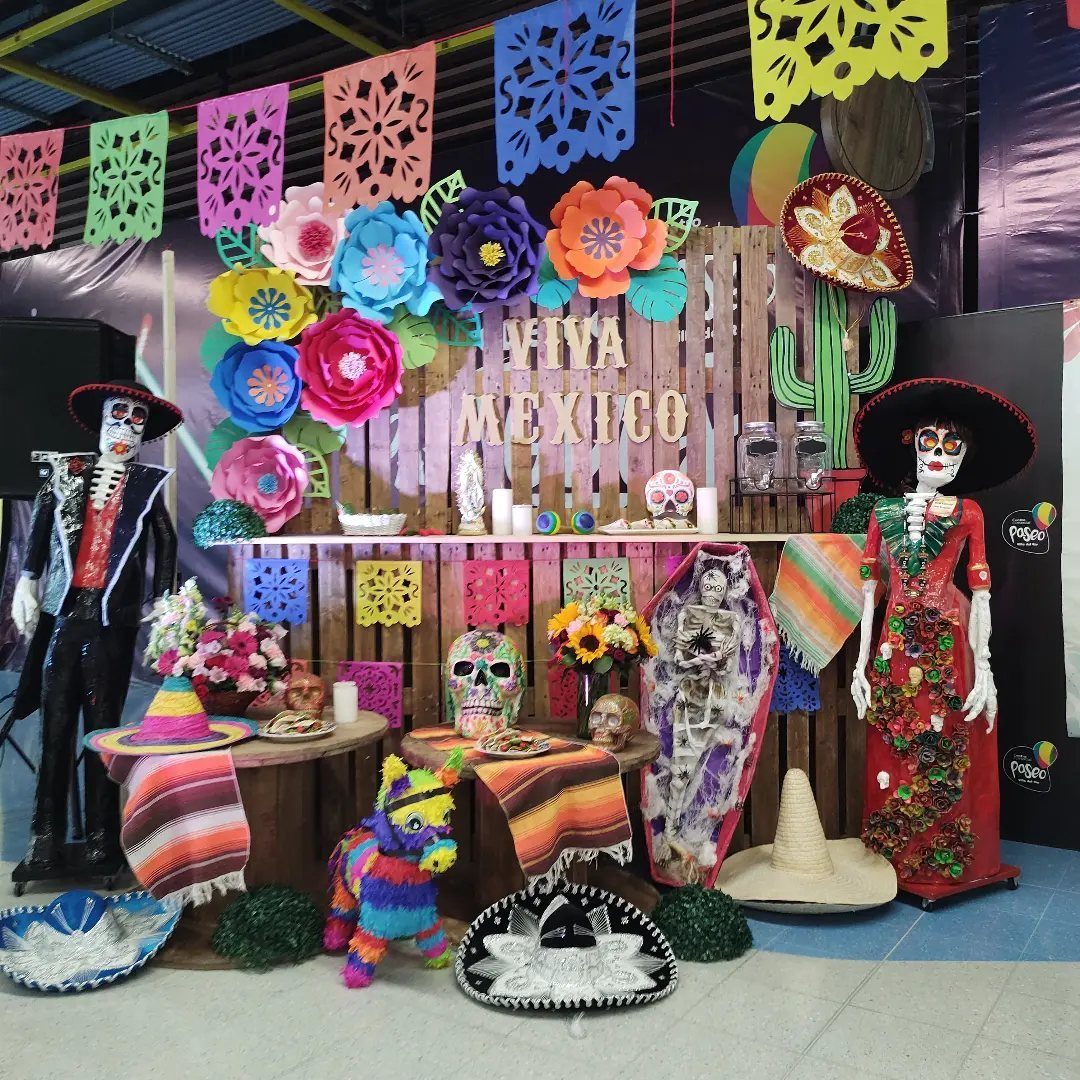
A wooden slat backdrop gives a party corner its frame, and life-sized skeletons in clothes give it a crowd. Dress them in real garments, since costume store outfits look flat beside paper flowers.
Layer the pieces: paper flowers and banners at the back, a piñata hung to one side, small altars and sugar skulls on tables in front.
Lettering such as "VIVA MEXICO" across the top tells guests what they are looking at.
This is the biggest build on the list, so spread the work over a few weekends. Skeleton figures are the main cost.
7. Sugar Skull Table Runner
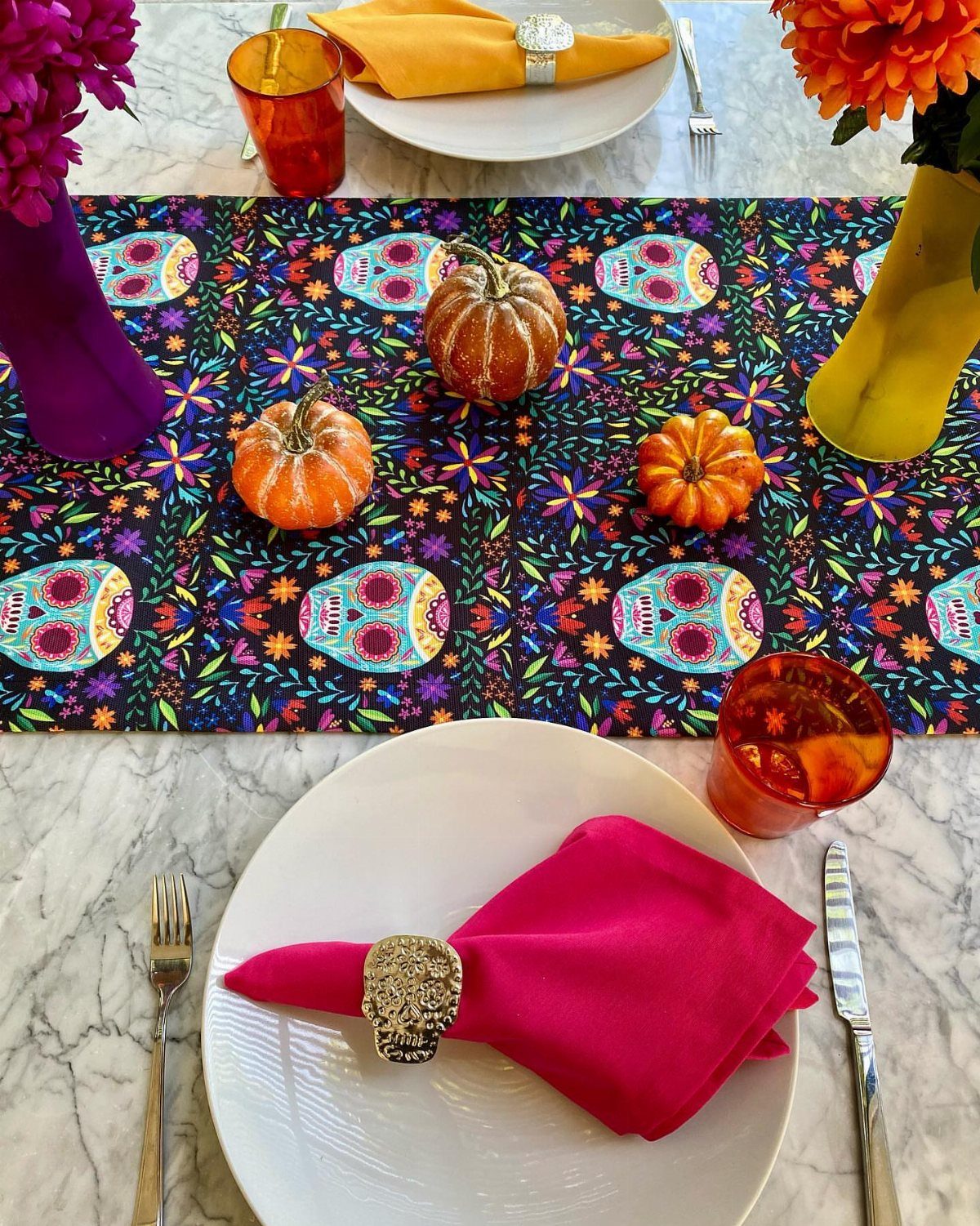
A printed sugar skull runner does most of the decorating by itself, so the rest of the table can stay simple.
Let the runner carry the pattern and keep the plates and glasses plain or bright, so nothing competes with it.
Small pumpkins set along the center add height without crowding the plates. Colorful napkins pick up the shades in the print.
A runner is the cheapest way to dress a table for Day of the Dead, and it folds away flat for next year.
8. Dia De Los Muertos Charcuterie Board
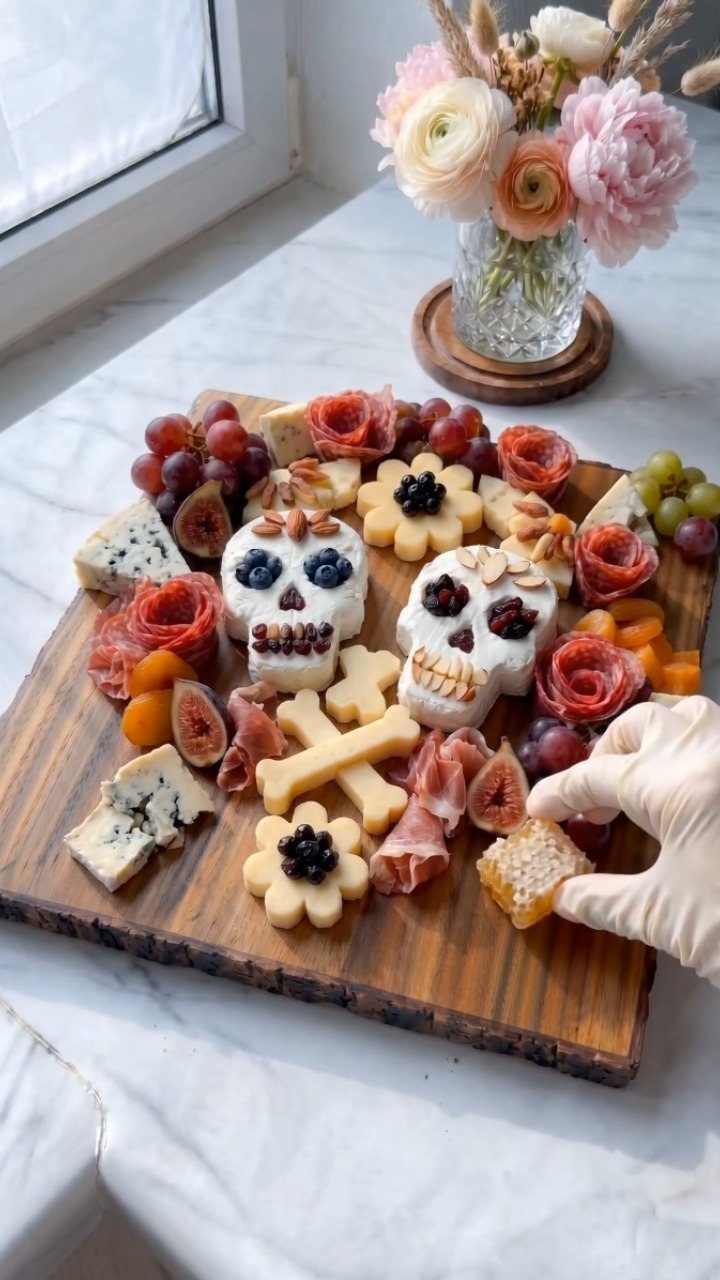
Skull-shaped cheeses turn an ordinary grazing board into a Day of the Dead centerpiece. A small skull cutter pressed into a firm, sliced cheese does the job, and you can finish the shaping by hand.
Surround the skulls with meats, fruits and crackers, and add a piece of honeycomb for a sweet note. Fresh flowers in a vase behind the board make it feel like part of the table.
Cut the cheese skulls just before guests arrive so the edges stay sharp. For a party, this is an easy shortcut that needs no baking.
9. Clay Miniature Accents
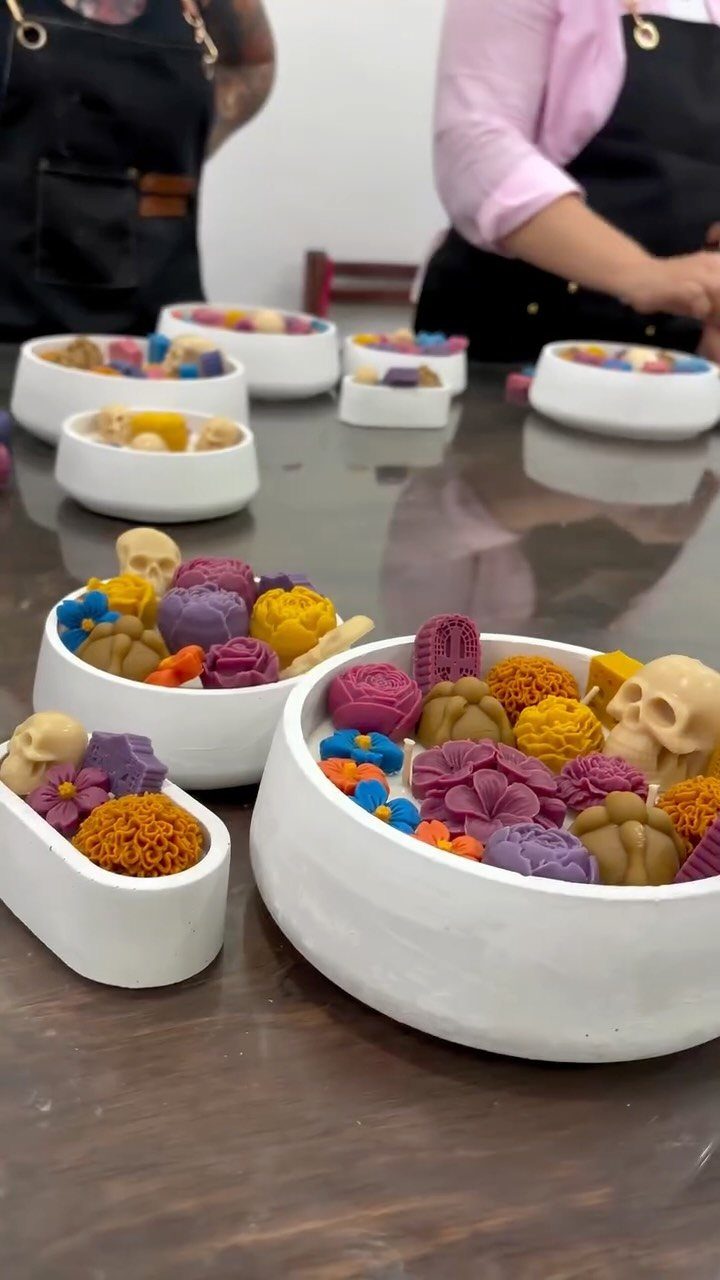
Tiny clay skulls and flowers cost little and fill a table fast. Piled into white bowls, they look like candy, and the white keeps the bright paint from fighting with anything else.
Paint them in strong colors with small brushes, one color at a time, so each layer dries before the next. Scatter a few at the foot of an altar, or set a bowl at each end of a table.
This is a good project to share, since each piece is small enough to finish in one sitting. Make extras, because guests tend to pocket them.
10. Floral Butterfly Arch
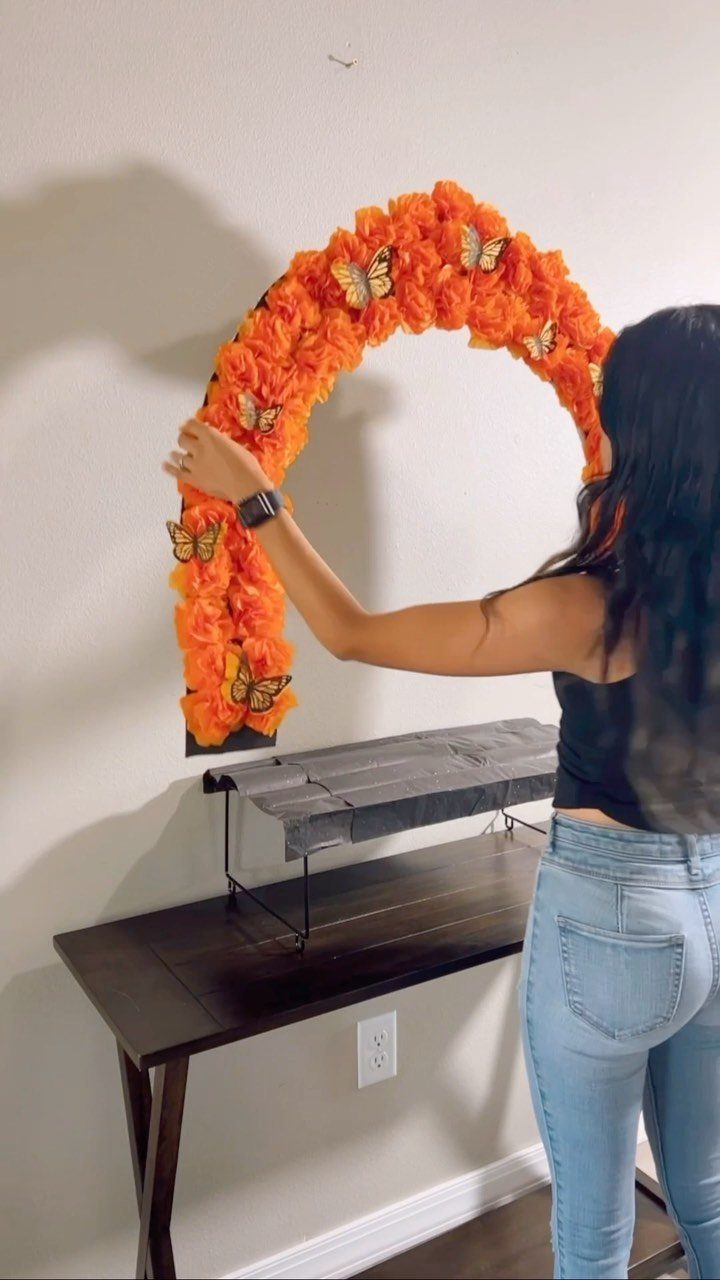
An arch of orange faux flowers with paper monarch butterflies gives a blank wall a focal point without taking up floor space. That makes it a fine pick for a small room or apartment.
Start with an arched frame and attach the flowers first, working from the outside in. Add the butterflies last, tucked among the blooms at different angles so they look as if they have just landed.
Faux flowers hold their color all season, and you can reuse the arch next year. Hang it above a table and it frames any display below.
11. Hanging Skeleton Tassel Dolls
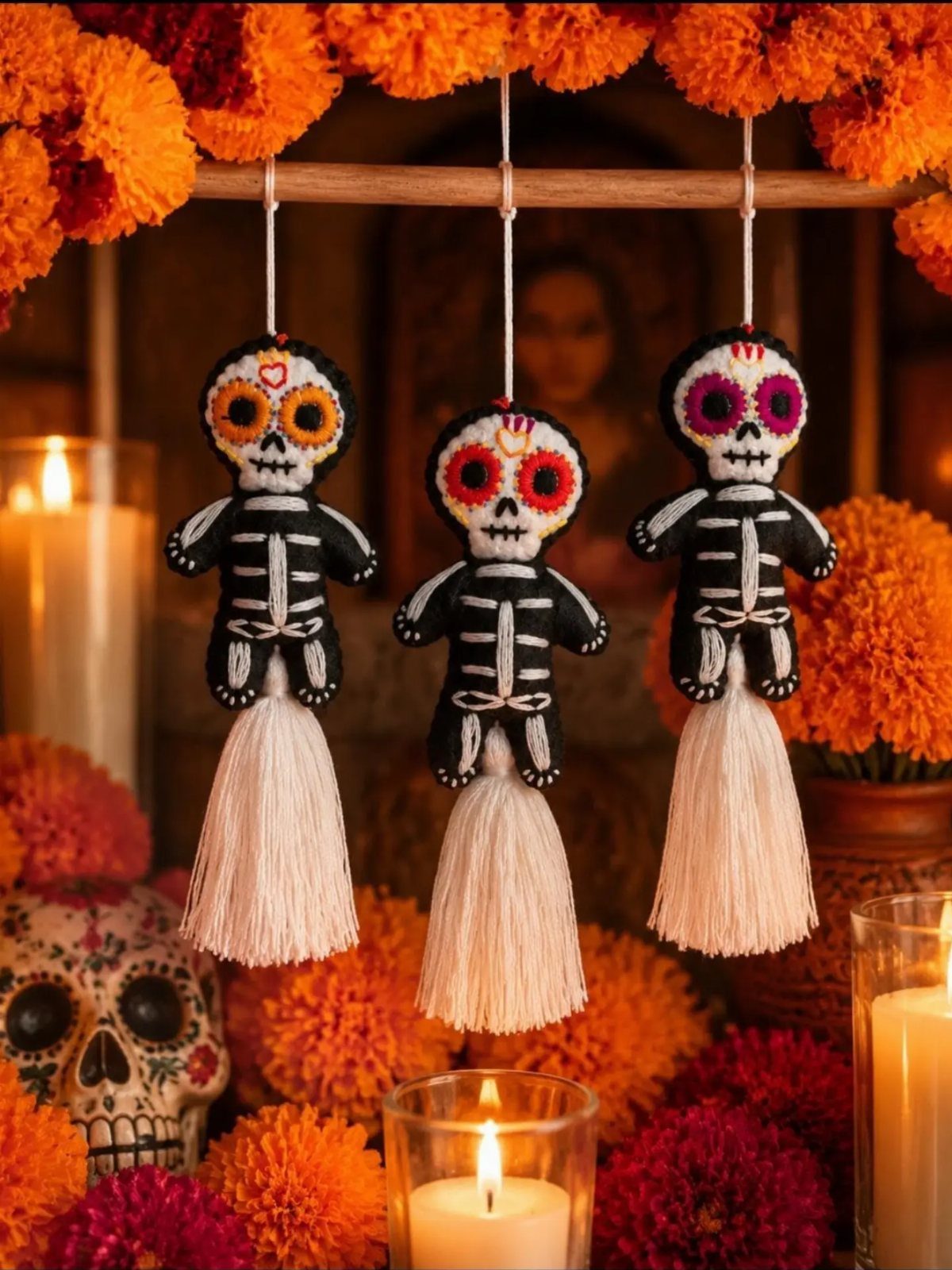
Felt skeleton dolls with tassel bottoms are small enough to hang in a row from a wooden rod. The tassel stands in for the lower body, which saves you from cutting and sewing legs.
Cut each figure from felt, add stitched or glued bones in contrasting thread, then attach a tassel at the base.
Hang the tassel dolls from a rod or dowel above the altar, a few inches over the marigolds and candles, and they sway with every draft and give the whole display some movement.
Keep flames well below the felt, since fabric and candles do not mix. Flameless candles are the safer choice here.
12. Egg Carton Sugar Skull Craft
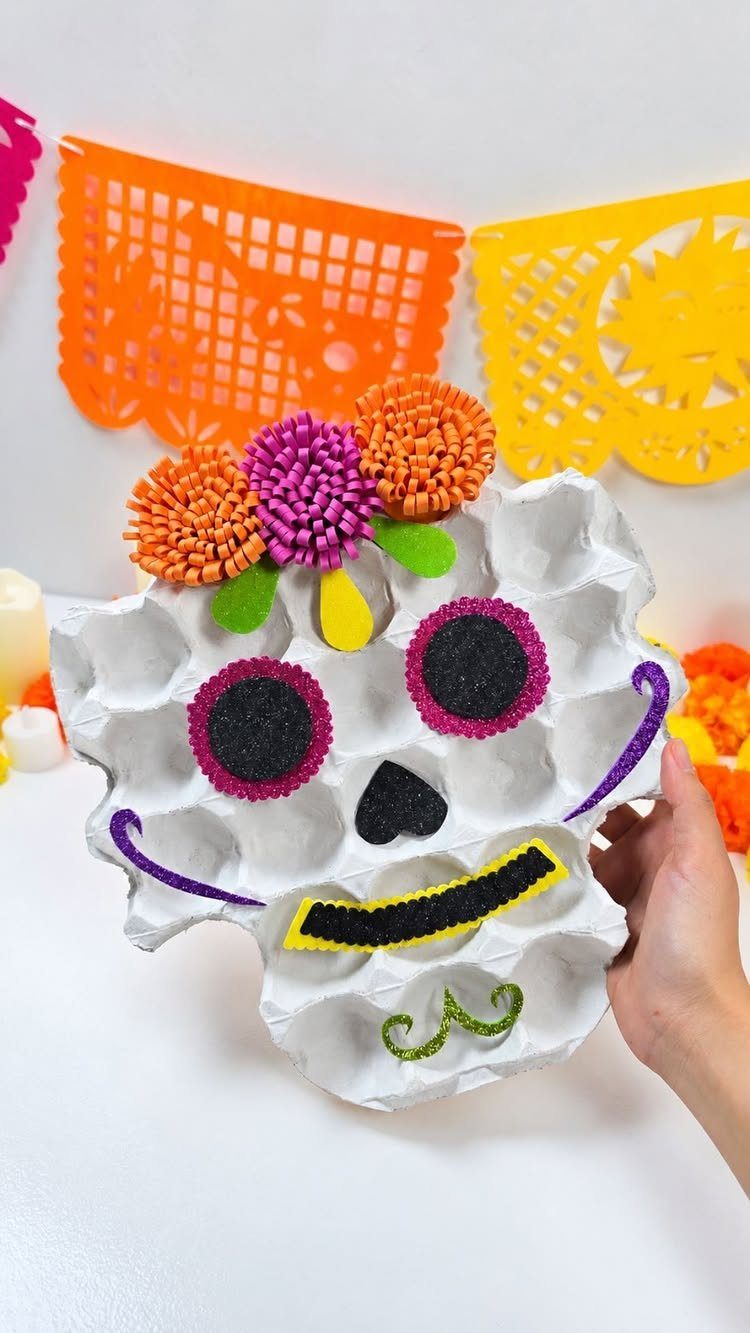
An egg carton makes a surprisingly good sugar skull mask. The cups shape the face, and the white surface takes paint, glitter and mini pom-poms well.
Cut out eye holes, paint the base in bright colors, then glue on pom-poms and glitter. Let the paint dry fully before adding glitter, or it will smear.
I like this one for kids, because it costs almost nothing and uses recycled material. Hang the finished masks against papel picado, or let children wear them to the party.
13. Cascading Paper Pom-Pom Garland
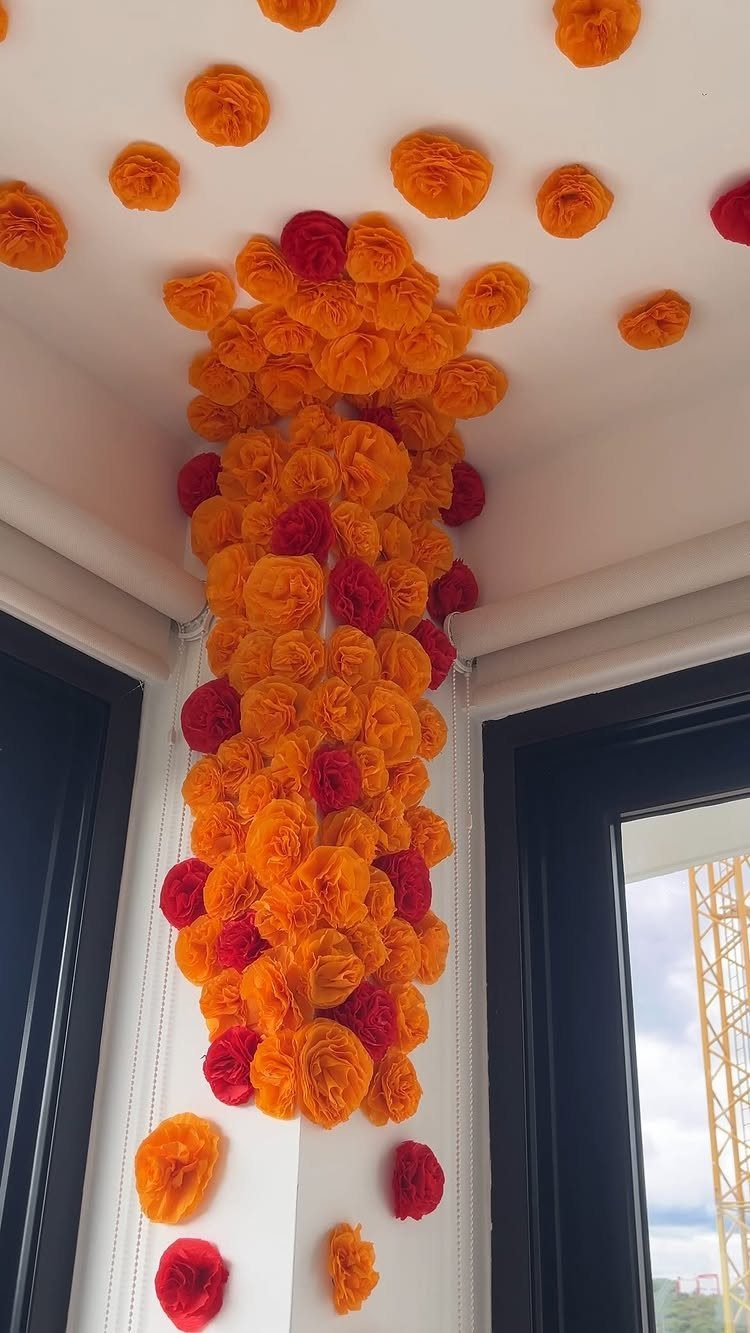
Tissue paper pom-poms in orange and red, hung in a falling cluster from the ceiling line down a wall, bring the marigold palette up to eye level without using any table space.
Fluffy tissue holds the color of cempasúchil well, and a mix of both shades looks fuller than a single one.
Make pom-poms in a few sizes so the cluster looks loose rather than lined up. Hang them at different lengths, with the biggest ones highest.
Store-bought pom-poms save an evening, but homemade ones cost only tissue paper and string. Pick a wall near the ofrenda, so the color leads the eye toward it.
Setting Up an Ofrenda
Aim to have the ofrenda standing by October 28th. That date honors people who died accidentally or tragically, and from there you add offerings on each day of the festivities, choosing things that mean something to the person being honored.
The base needs 3 height levels. Think of the ofrenda as a stack of 3 worlds: the base of the table is the underworld, the middle tier is Earth, and the top tier is Heaven.
Boxes, crates and cake stands all work for the upper levels, as long as each one stands on its own without wobbling.
Many families also place the 4 elements on the ofrenda: earth, wind, fire and water, with water usually set out in a pitcher for visiting spirits.
A pitcher of water is the usual way to include water, so the visiting spirits have something to drink.
Colors of Day of the Dead
Most people start with orange and yellow, but pink, red, purple, white and black belong on the table too. Newer decor also brings in turquoise and blue.
For a party, I would pick two or three main colors and let the rest appear in small touches.
Orange, yellow, pink and purple speak to life, joy and remembrance, so they make the safest base. Use white and black as accents, so the bright colors stay in charge.
Meaning of the Celebration
Plan your gathering for those dates, or the weekend nearest them if guests are traveling.
Despite the skulls, the mood is joyful. Living and dead are reunited, loss is acknowledged, and the lives of ancestors are celebrated.
Tell guests this in the invitation. Ask them to bring a photo or a story about someone they want to remember, and the evening will have a purpose beyond the decor.
Families pass their loved ones’ stories down through the generations, so I would leave some unhurried time at the table for guests to tell theirs.
Frequently Asked Questions
What are some decorations for Day of the Dead?
Marigolds, candles, framed photos and papel picado (cut tissue paper banners) are the core. Sugar skulls, skeleton figures and personal mementos fill in around them.
Cempasúchil, the orange and yellow marigold, is the classic flower for an ofrenda, and tradition holds that its bright color and strong scent lead spirits back to the living.
When should you set up your ofrenda?
Have it standing by October 28th.
October 28 is set aside for those who died suddenly or by accident, so I start the ofrenda that day and add new offerings as each day of the celebration arrives. Choose things that meant something to the person being remembered.